Commercial lighting is judged by how a space feels and functions, not only by the fixture specification sheet. Beam angle, CRI and visual comfort are three of the most important factors because they affect brightness perception, product appearance and user experience.
Understanding these terms helps buyers compare LED modules and downlights more accurately before sampling or project installation.
Send your application, ceiling condition, beam angle and dimming requirements for a practical review.
Beam angle shapes the light effect
Beam angle describes how widely light spreads from the fixture. A narrow beam creates focused light with stronger contrast. A wide beam creates broader coverage with softer emphasis.
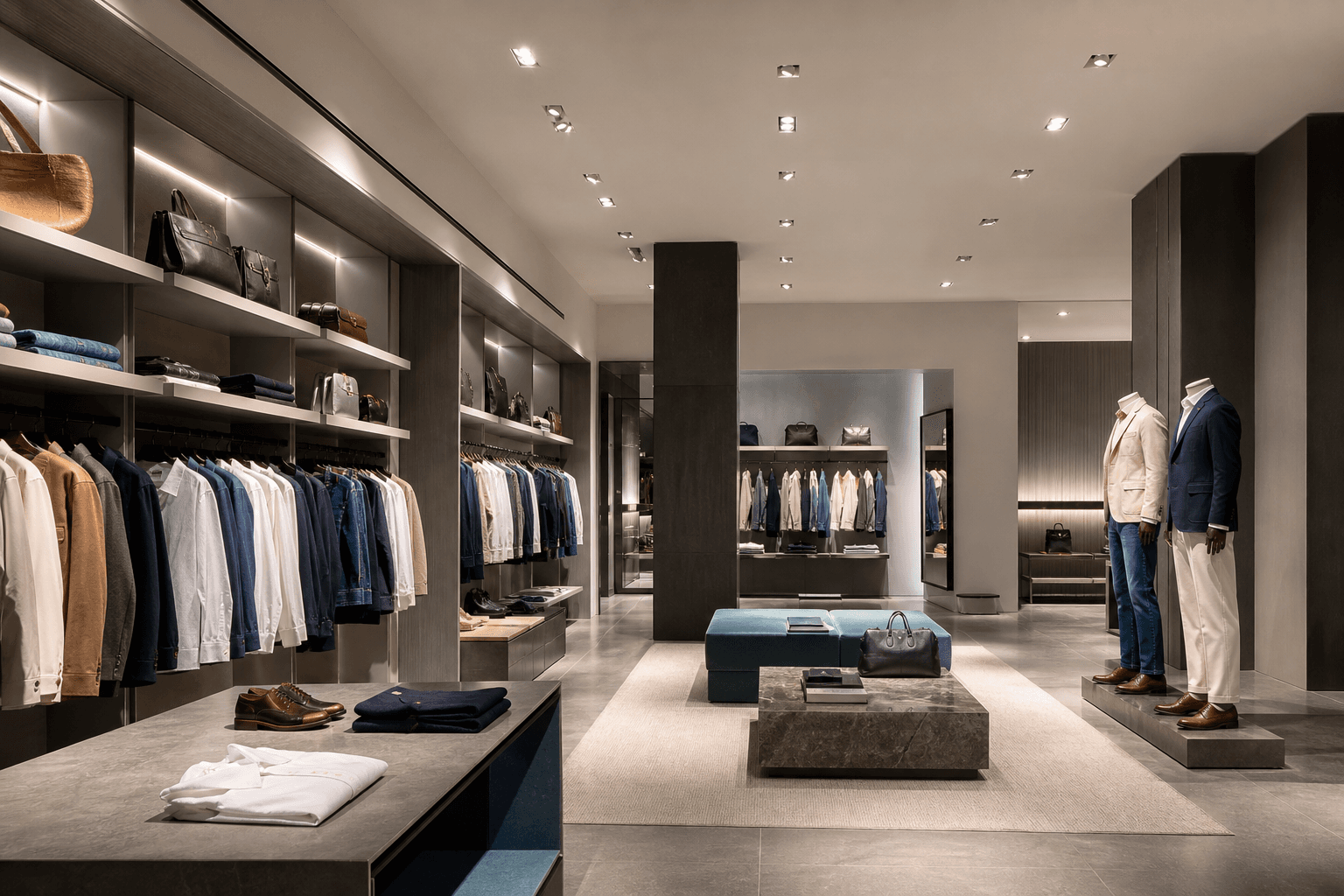
In retail, narrow and medium beams are often used to highlight products. In offices and corridors, wider beams may support more even illumination. The right choice depends on ceiling height, fixture spacing and the surface being lit.
CRI affects how colors appear
CRI, or Color Rendering Index, helps describe how accurately a light source reveals colors compared with a reference source. Higher CRI is valuable in retail, galleries, hotels and residential-like commercial spaces where material and product appearance matters.
A high-CRI LED module can make fabrics, food, artwork and interior finishes appear more natural. However, CRI should be reviewed together with CCT and beam control, because color quality alone does not guarantee a comfortable lighting result.
| Factor | What it affects | Buyer note |
|---|---|---|
| Beam angle | Focus and coverage | Match to ceiling height and target surface |
| CRI | Color quality | Important for retail, gallery and hospitality |
| CCT | Warm or cool appearance | Match brand atmosphere and task needs |
| Glare control | Comfort | Review fixture design and installation angle |
Visual comfort depends on the full fixture design
Visual comfort is influenced by glare, contrast, brightness distribution and viewing angle. A downlight with strong output but poor glare control can make a space uncomfortable even if the lux level is acceptable.
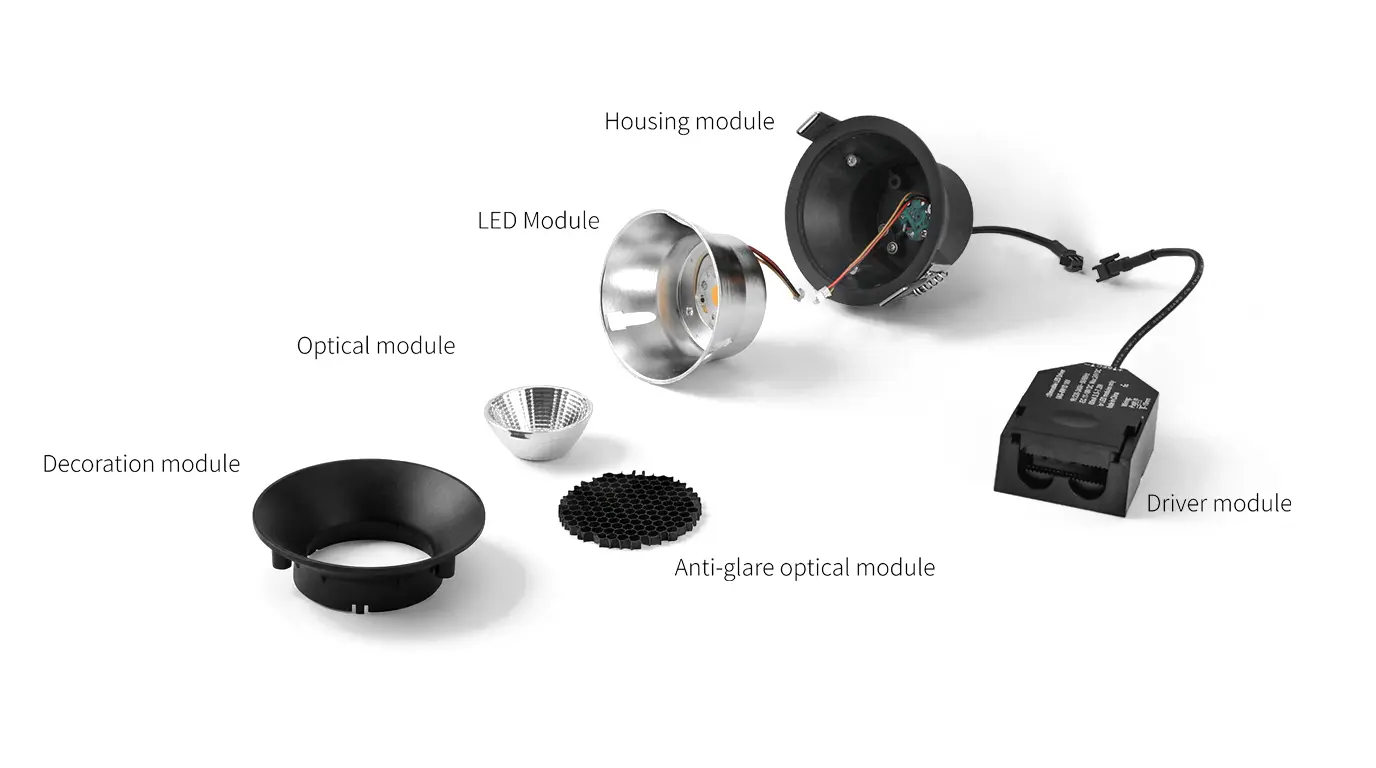
Deep anti-glare structures, reflector finishes, lens choices and careful spacing all help manage comfort. In sample testing, review the fixture from normal standing and seated positions, not only from directly below.
See how visual objectives are considered across our commercial lighting application experience.
Why sample testing is useful
Specification sheets help narrow the options, but sample testing shows how the product behaves in real viewing conditions. Buyers should inspect beam edge, color consistency, glare, dimming behavior and installation details before confirming production.
When possible, test several beam angles in the intended application. This makes the final decision easier and reduces the risk of changing products after installation.
Sample review can be organized within a broader testing and validation process.
Conclusion
Beam angle, CRI and visual comfort should be considered together. A strong commercial lighting solution balances focus, color quality, glare control and installation practicality.
For project selection, share the application and desired lighting effect first, then choose the LED module, optic and downlight frame around that goal.
For a configuration based on the intended space, discuss your lighting requirements.