Lighting Brands
Build coordinated fixture families around shared engine formats while keeping optical and control options clear.
 Get A Free Quote
ANOVA helps professional buyers configure a downlight as a coordinated system: LED engine, optic, trim, housing and driver. The platform supports product-range planning and project adaptation without treating every variation as an unrelated fixture.

The modular route is most useful when procurement decisions need to balance range breadth, compatibility, inventory and future project variations.
Build coordinated fixture families around shared engine formats while keeping optical and control options clear.
Plan compatible modules, frames and drivers for the applications and markets you serve.
Match downlight combinations to ceiling constraints, control systems and project schedules.
Review mechanical, optical, electrical and thermal relationships before approving a range.
A module is not interchangeable by name alone. The selected engine, optic, housing, visible frame and driver must be reviewed as one assembly.
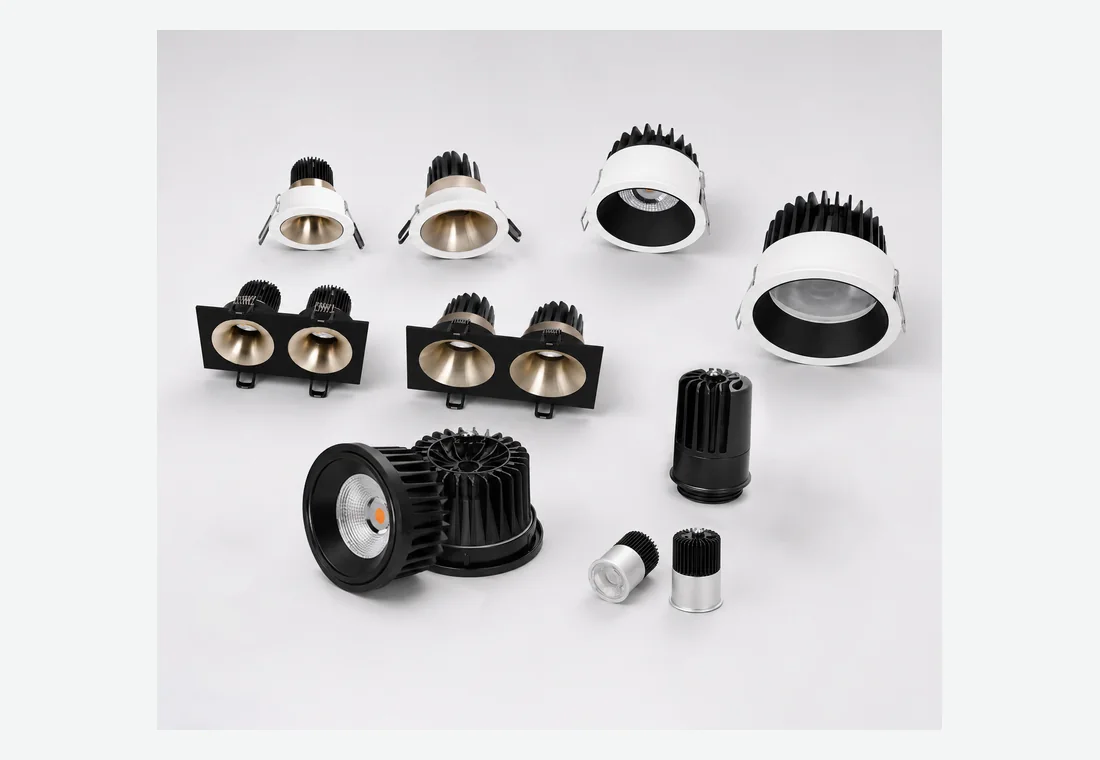
The repository catalog documents four core formats. The values below are starting points for model selection, not a promise that every option applies to every module.
A compact engine for joinery, display and smaller-aperture accent lighting.
The broadest documented platform, including fixed, zoomable, multi-CCT and selected IP-rated variants.
A larger engine for retail, galleries, restaurants and other professional accent applications.
A larger commercial platform for showrooms, high ceilings and broad product-range coverage.
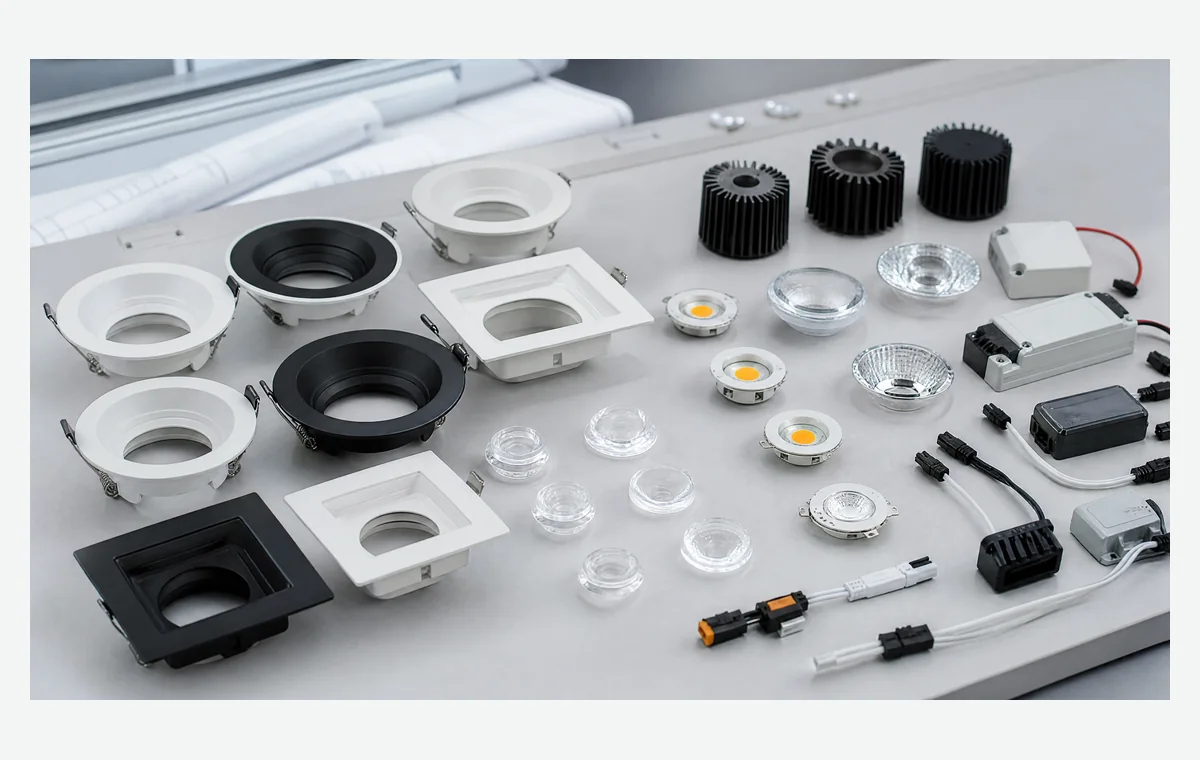
Use these verified catalog ranges to prepare a shortlist. ANOVA confirms the final combination and current item code during technical review.
| Selection point | Repository-supported range | Procurement note |
|---|---|---|
| Module formats | MR11, MR16, AR70 and AR111 | Mechanical interfaces and compatible frames differ by format. |
| Power examples | 7 W MR11; 4–18 W MR16; 12–14 W AR70; 25–36 W AR111 | Examples documented in the 2025 catalog, not a universal continuous range. |
| Beam options | 15° / 24° / 36° / 60° fixed; 20°–60° zoomable MR16 | Available angles depend on the selected model and optic. |
| Color quality | CRI 90; selected MR16 variants documented at CRI 97 | Confirm output and spectrum together with CRI. |
| CCT | 3000 K examples; 3000/4000/5000 K Tri-CCT; selected 2700–6500 K tunable-white modules | CCT architecture is model-specific. |
| Controls | Phase-cut/Triac, 0–10 V and DALI options; Casambi shown in the driver range | Driver, module and control system must be checked together. |
| Ingress protection | IP20 across standard examples; selected MR16 IP65 options | Verify which part of the assembly carries the rating. |
Evidence source: ANOVA 2025 Modular Design Catalog, module sections on catalog pages 18–35 and driver overview on page 56. No price, inventory or universal certification claim is made here.
Send what is already known. Unknown items can remain open for ANOVA to review with you.
| Application | Selection focus | Information to prepare |
|---|---|---|
| Hospitality | Visual comfort, warm ambience and compatible dimming | Room type, ceiling detail, CCT and control method |
| Retail & Display | Beam control, aiming and color quality | Target surface, beam preference, CRI and fixture position |
| Commercial Interiors | Family consistency and driver compatibility | Room schedule, cut-out, wattage and dimming method |
Send the target application and configuration. ANOVA can review the module, optic, frame, housing and driver as one system.
The same format can support different applications only after the optic, housing, color quality and control route are aligned with the space.
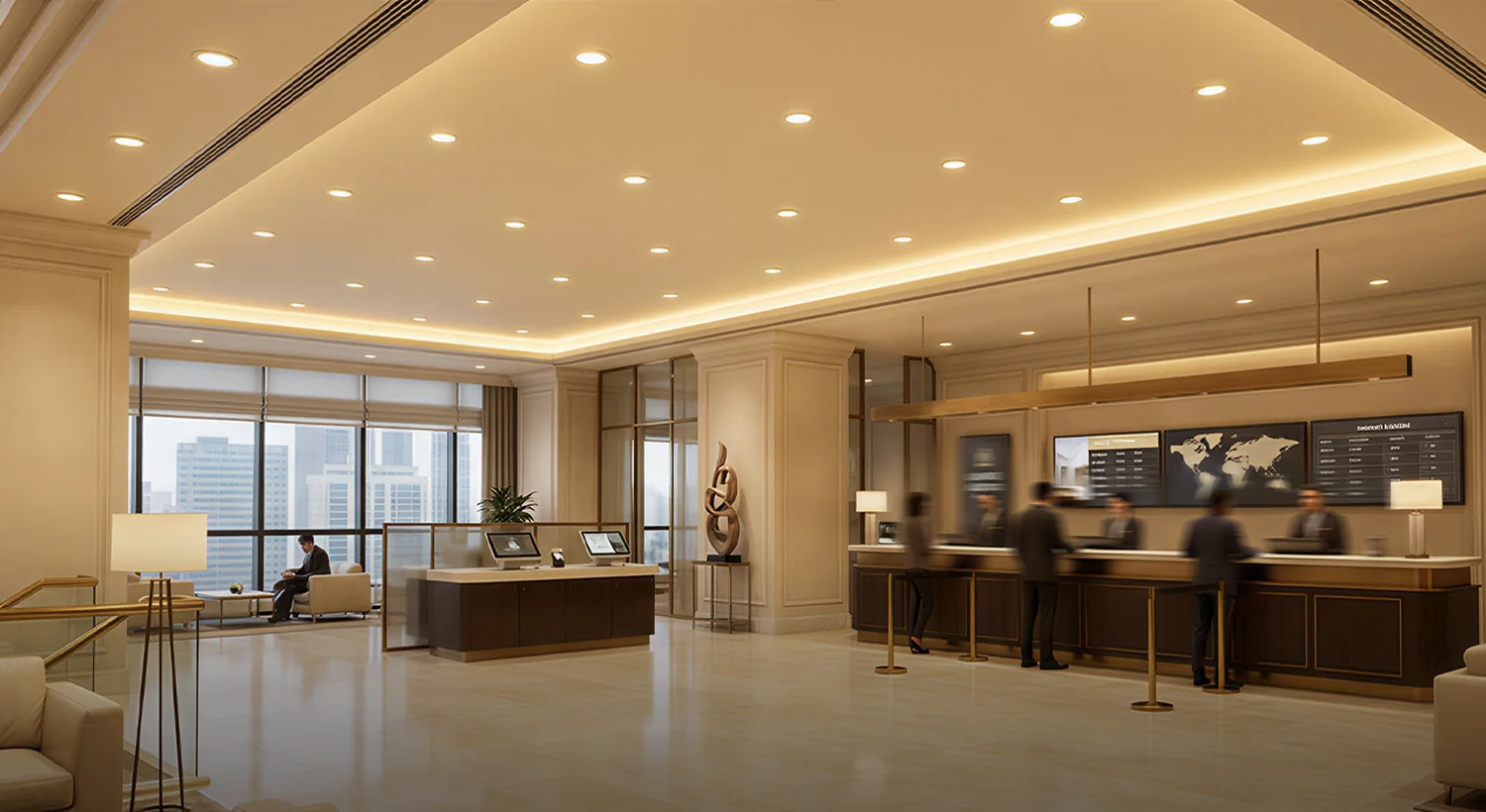
Warm, visually comfortable downlight combinations for lobbies, guestrooms, corridors and restaurants.
Narrow or medium beams, adjustable frames and color quality matched to merchandise.
Controlled accent beams and model-specific high color-rendering options for display surfaces.
Fixed or adjustable families coordinated across meeting rooms, circulation and feature areas.
OEM/ODM work can begin from the documented modular platform. Each requested change is reviewed for its effect on fit, thermal path, optical position, control and validation.
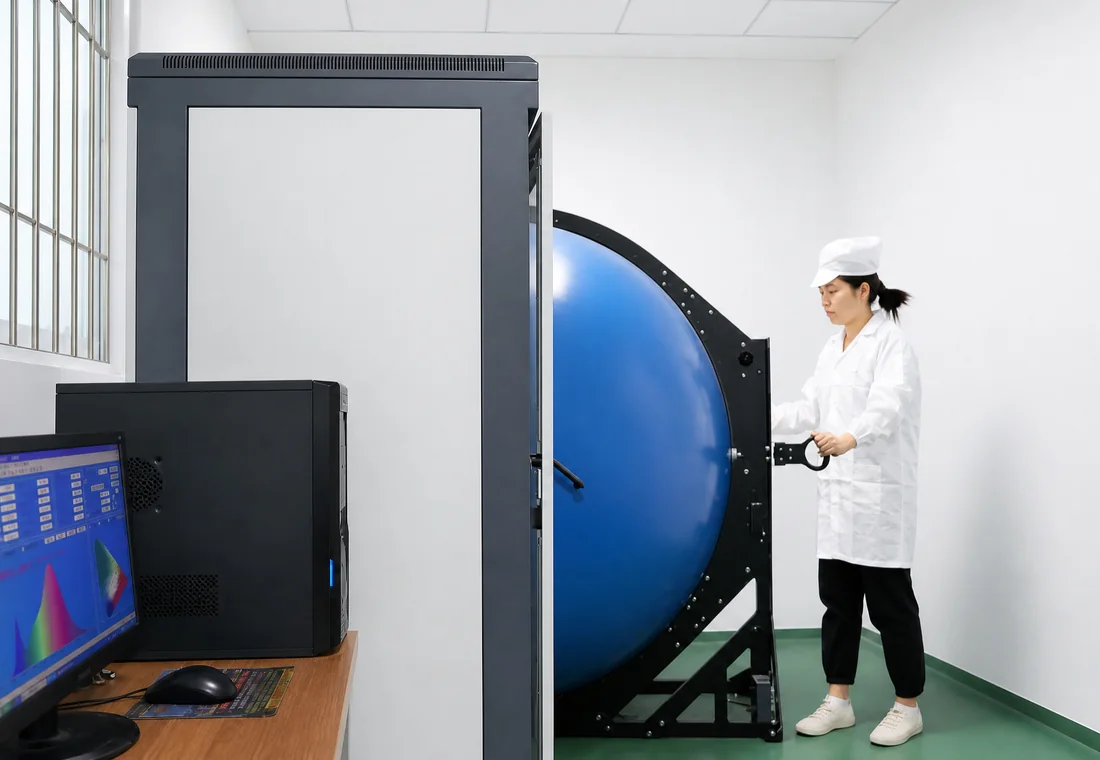
The repository documents integrating-sphere analysis, aging testing, production and environmental test facilities. The actual validation plan is matched to the selected product and project risk.
ANOVA does not publish one MOQ or lead time for every modular combination. Commercial terms are confirmed after the item codes, customization depth, quantity and documentation needs are understood.
Sample availability is checked against the selected module, optic, frame, housing and driver. Custom samples may require an engineering review first.
MOQ depends on whether the request uses a standard configuration, a finish change, private labeling or deeper mechanical development.
Sample and production lead times are quoted for the approved configuration and order quantity, with project milestones recorded in writing.
Start with aperture, ceiling depth, target surface, output and aiming requirement. MR11 is compact, MR16 offers the broadest documented options, while AR70 and AR111 support larger commercial formats.
A module can work with more than one compatible frame in the relevant range, but mechanical fit, thermal contact and optical position must be confirmed for every combination.
No. Fixed-beam, zoomable and driver options are model-specific. The inquiry should identify the required beam and control system so ANOVA can return an exact combination.
Yes, subject to sample availability and technical review. Buyers should define the intended production configuration so the sample remains representative.
They are quoted after the exact configuration, customization, quantity, packaging and documentation scope are understood.
Share enough project detail for a useful shortlist instead of a generic catalog response.