Lighting Designers
Balance concealed source position, beam, output, reflector finish and room brightness.
 Get A Free Quote
Low glare is the result of the complete optical and spatial arrangement. ANOVA helps buyers review the recessed source position, reflector, optic, beam, output and real viewing conditions before a product is approved.
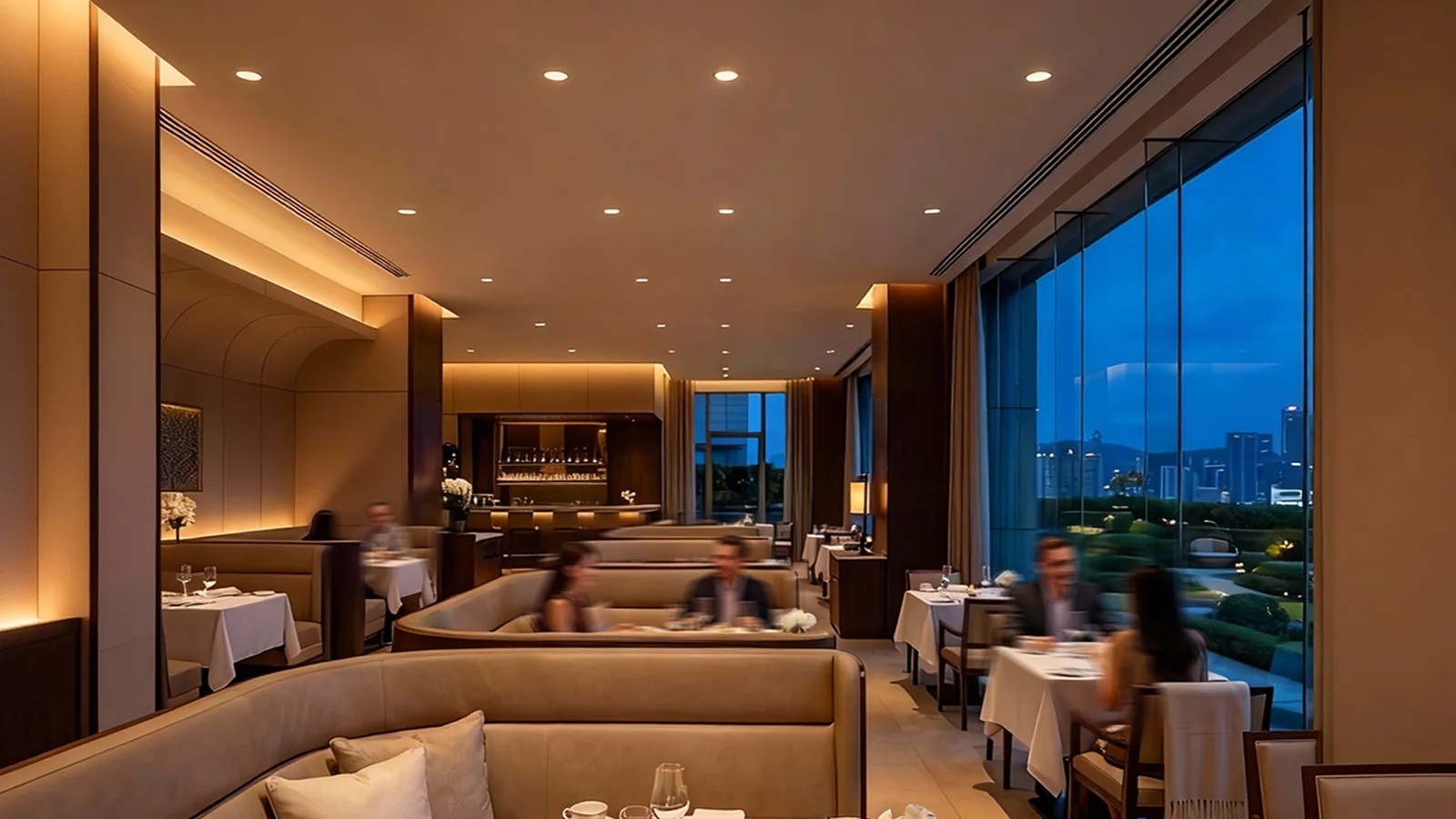
The right low-glare discussion connects product structure with the room, viewing direction, target surface and lighting layout.
Balance concealed source position, beam, output, reflector finish and room brightness.
Protect seated and reclining viewing positions while maintaining table and material emphasis.
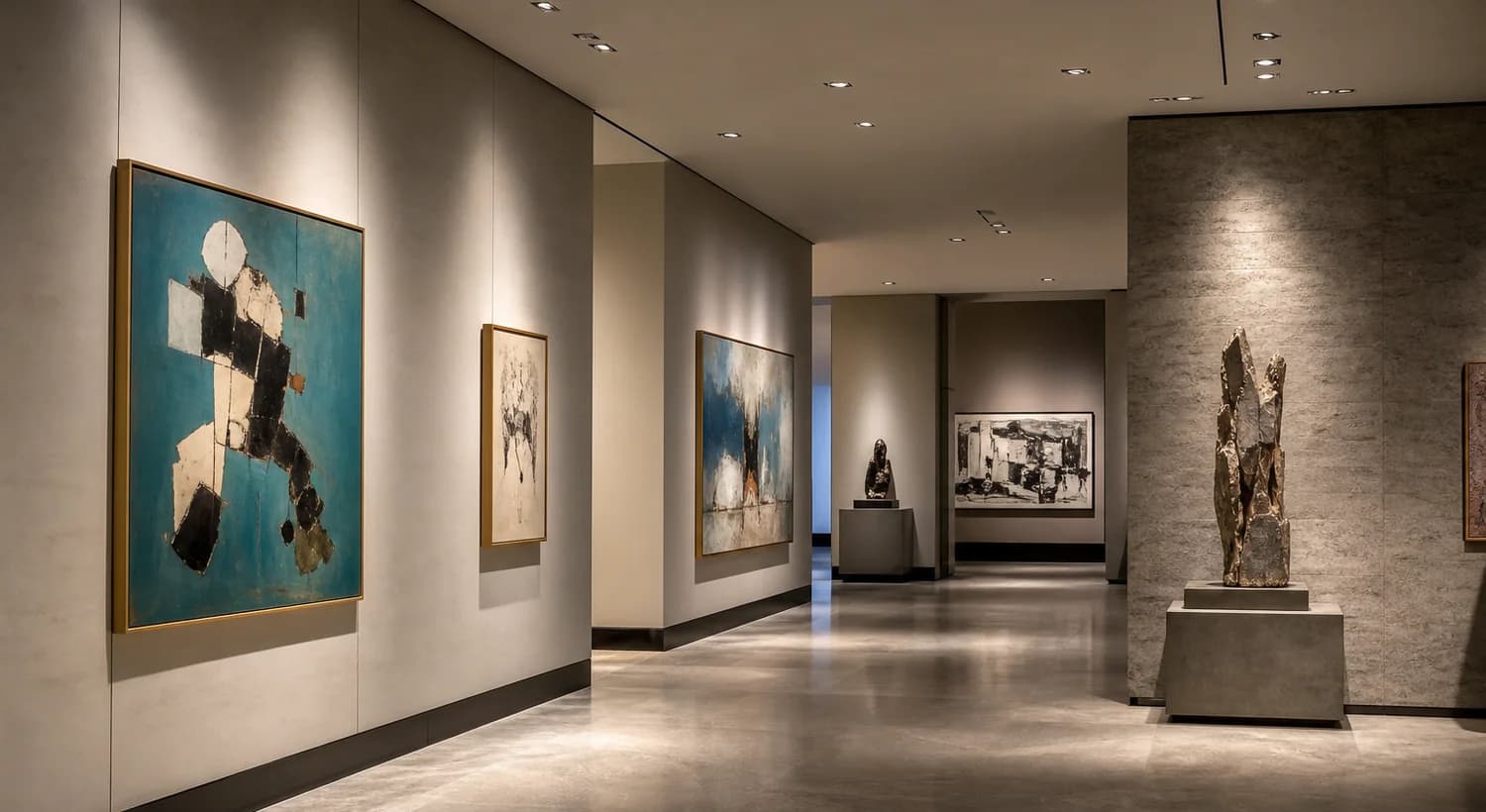
Control spill light and glare while keeping merchandise and display surfaces visible.
Confirm cut-outs, ceiling depth, product codes and model-specific optical options.
A product described as low glare can still be uncomfortable if output, spacing, aiming or viewing angles are wrong for the space.
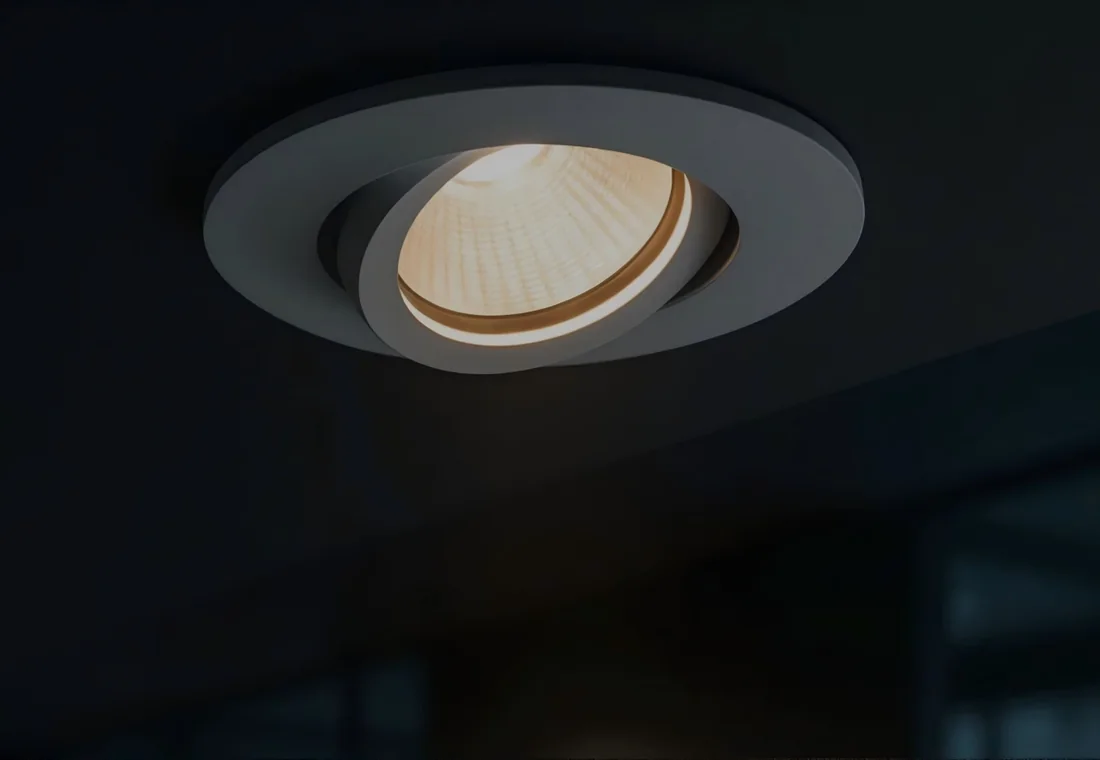
Each element changes what a person sees at the aperture and how the beam reaches the target.
Increase shielding from common viewing directions by recessing the light-emitting surface within the fixture.
Reflector geometry and finish influence source brightness, beam transition and the appearance of the aperture.
Choose a beam that reaches the target without unnecessary spill into adjacent viewing zones.
Selected modules support honeycomb or film options intended to change source visibility or distribution.
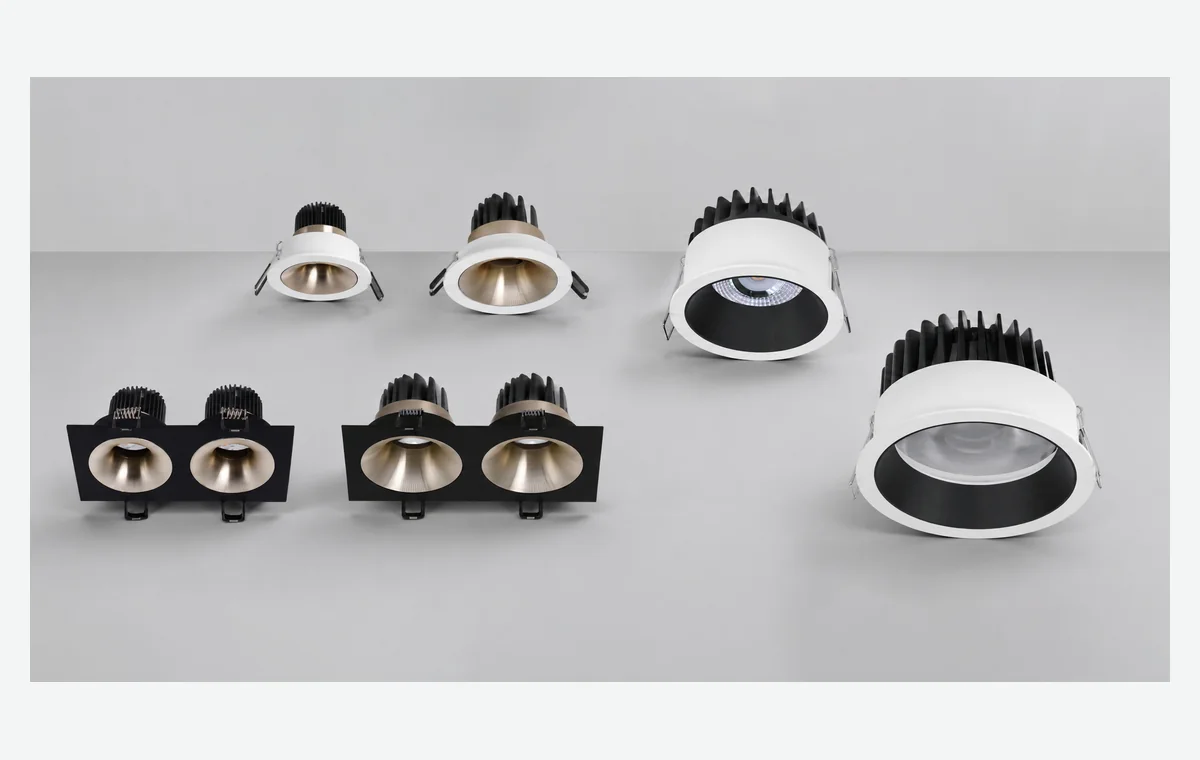
Seated hospitality guests, moving retail customers and gallery visitors encounter fixtures from different angles.
Protect seated sight lines while directing useful light toward tables, food and material surfaces.
Coordinate low source visibility with warm ambience, dimming and repeated room layouts.
Aim controlled accent beams at merchandise without exposing a bright aperture along circulation routes.
Balance precise beams, color quality and visitor viewing positions around changing exhibits.
Send what is already known. Unknown items can remain open for ANOVA to review with you.
| Application | Selection focus | Information to prepare |
|---|---|---|
| Hospitality | Source shielding, warm ambience and dimming | Viewer position, ceiling height, CCT and control method |
| Retail & Gallery | Accent beam, aiming and color quality | Target surface, fixture position, beam preference and CRI |
| Demanding Environments | Viewing pattern, installation constraints and applicable IP needs | Application, cut-out, sight line and IP requirement |
Share the ceiling, target surface, viewer position and desired lighting effect for a model-specific optical discussion.
ANOVA documents low-glare structures and optical targets, but a room-level result still depends on the chosen model and lighting layout.
| Selection point | Repository-supported range | Procurement note |
|---|---|---|
| Structural options | Deep-concealed frames, low-glare frames, honeycomb options and selected optical films | Compatibility and optical effect are model-specific. |
| Beam options | 15° / 24° / 36° / 60° fixed; selected 20°–60° zoomable MR16 | Use the beam that covers the target with controlled spill. |
| Color quality | CRI 90 examples and selected CRI 97 MR16 variants | Review color quality together with output and optic. |
| CCT | 3000 K examples; 3000/4000/5000 K Tri-CCT; selected 2700–6500 K tunable white | Not all optical combinations support all CCT routes. |
| Catalog glare references | UGR<19 deep-cup concept; selected anti-glare film described with a UGR<16 target | These are catalog references, not a guarantee for every luminaire or room layout. |
| Controls | Triac/phase-cut, 0–10 V, DALI, Casambi and non-dim driver routes | Smooth low-level behavior depends on the selected driver and control system. |
| Ingress protection | IP20 standard examples and selected IP65 options | Confirm the complete assembly and installation zone. |
Evidence source: ANOVA 2025 Modular Design Catalog pages 15, 18–31 and housing pages 36–55. Project UGR must be calculated or measured for the selected layout; no universal result is asserted.
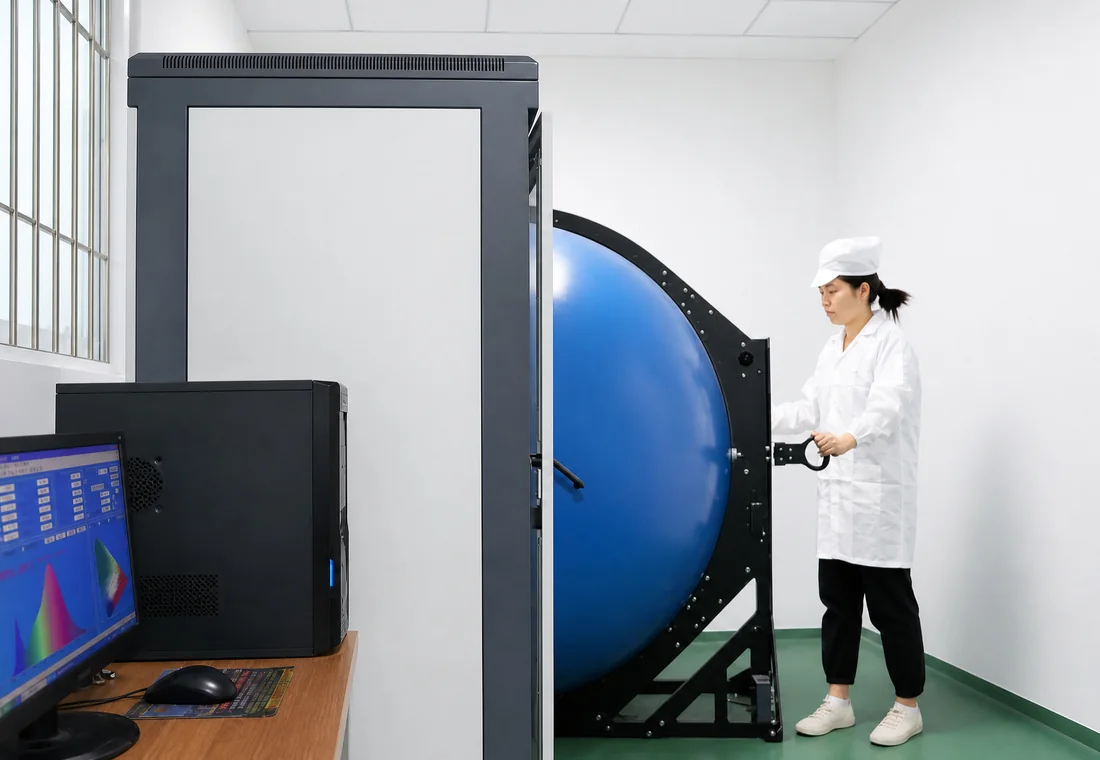
Testing equipment supports product-level optical and color checks. The shipment inspection must also confirm that the approved optics, reflectors and drivers were used.
Glare cannot be approved responsibly from a product photo alone. Representative samples should be viewed from the intended positions and under the expected dimming conditions.
Compare the intended reflector, beam, accessory and output in a critical room or mock-up. Record the exact combination.
MOQ depends on the selected standard product, reflector or finish changes, accessories, packaging and customization depth.
Timing is confirmed after sample configuration, quantity and any custom optical or finish requirement are approved.
Any change that affects source position, aperture, reflector, optic or output is reviewed for compatibility and optical consequences.
It can improve shielding, but comfort still depends on output, optic, aperture brightness, layout, room surfaces and viewing position.
Not without evaluating the exact product and room layout. The catalog presents low-glare structures and reference targets, while project UGR requires layout-specific calculation or measurement.
There is no single low-glare beam. Choose the beam that reaches the target with appropriate spacing and minimal spill, then evaluate source visibility from actual viewing positions.
Honeycombs can reduce source visibility from some angles but may change output and appearance. Confirm compatibility and review a sample before specification.
Send the room type, ceiling height, fixture position, viewer position, target surface, desired beam, CCT, CRI, dimming and any glare calculation requirement.
Send the real application conditions so the recommendation can address both the fixture and the viewing environment.