Lighting Brands
Develop a differentiated range around defined market, design and performance requirements.
 Get A Free Quote
ANOVA works as a custom LED lighting manufacturer for teams that need a buyer-specific product rather than a standard catalogue item. Bespoke LED lighting and custom lighting development can begin with an application problem, drawing, reference sample or product-range gap. We define what can be customized, document the project requirements, prepare and review a representative prototype, agree the validation scope and transfer the approved configuration into production preparation. OEM lighting development is treated as a controlled product-development program, with changes to optics, mechanics, finishes, electronics, installation details or packaging reviewed against the intended application and target market.
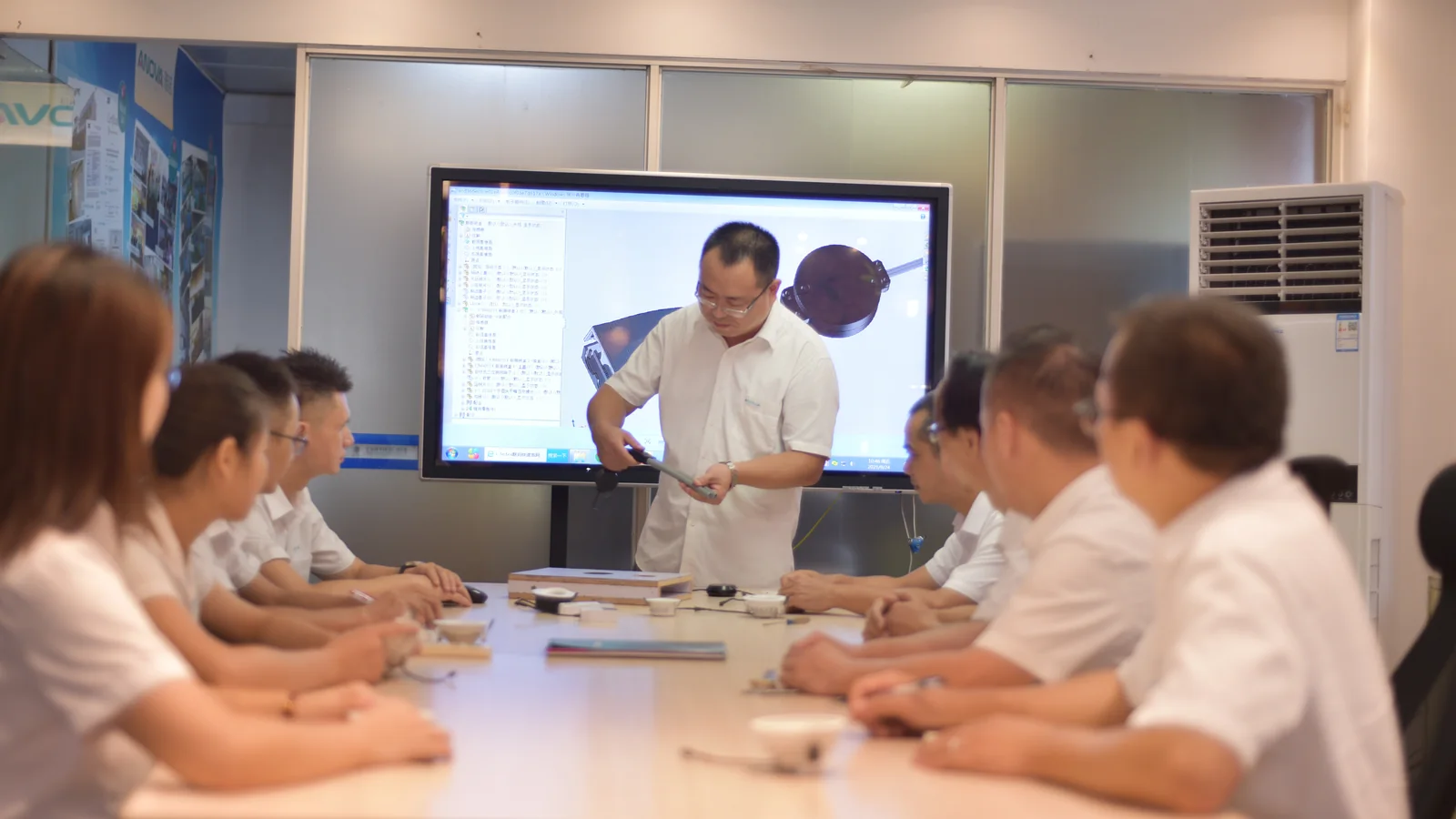
A clear cooperation model prevents a private-label request from being managed like a new invention—or a true engineering project from being priced like a catalog item.
Develop a differentiated range around defined market, design and performance requirements.
Adapt proven platforms through configuration, branding, packaging and market documentation.
Resolve installation, optical or control requirements that standard products do not cover.
Translate a concept, drawing or reference sample into a reviewable production brief.
Early information does not need to be perfect, but it should make the application, ownership and technical risks visible.
Each route changes the amount of engineering, buyer input, validation and commercial preparation required.
Start from an ANOVA platform and adjust configuration, optics, finishes, controls or installation details.
Develop against agreed drawings, samples and performance requirements supplied or approved by the buyer.
Use a standard product with agreed labels, packaging and documentation when deep product changes are unnecessary.
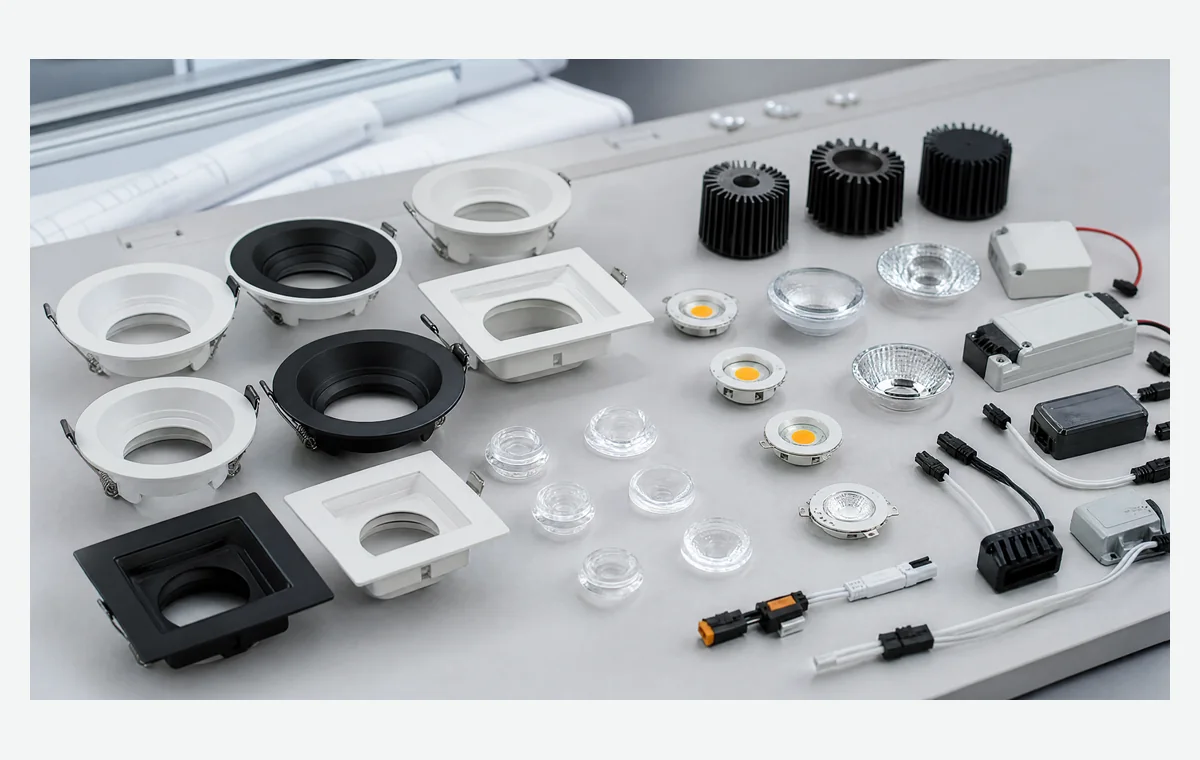
Combine documented LED engines, frames, optics and drivers into a differentiated product family.
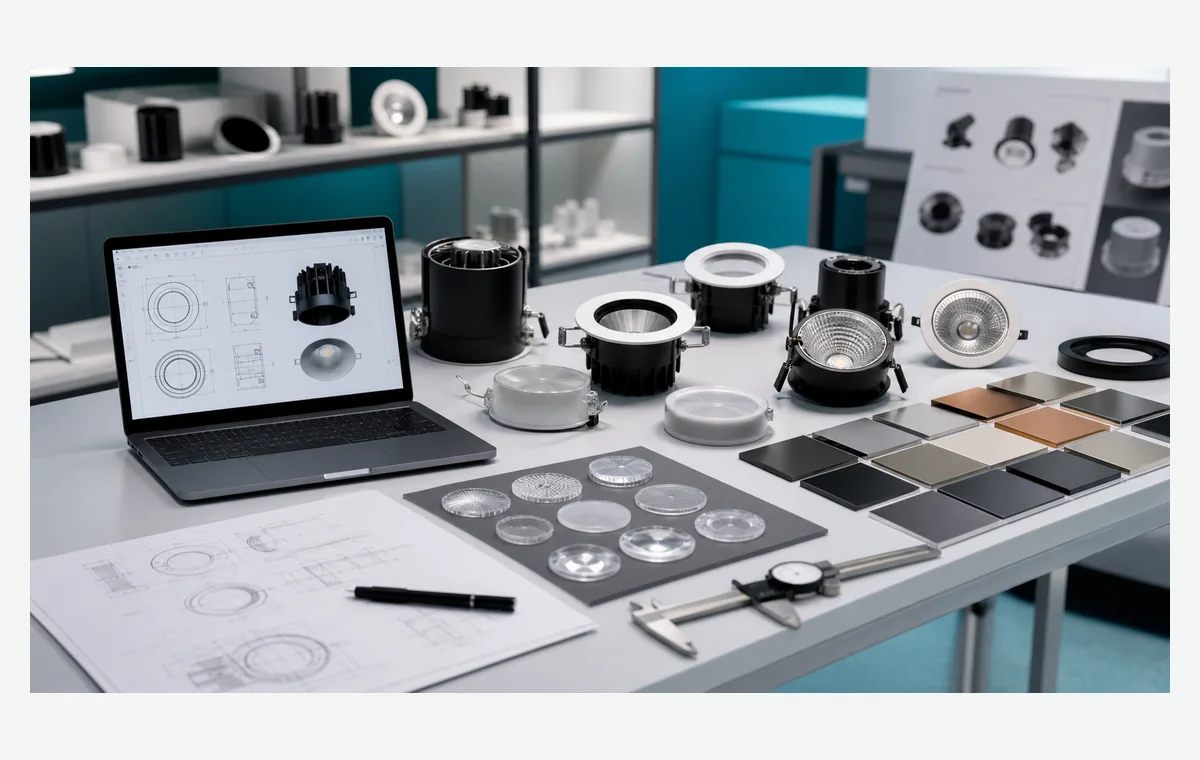
Customization scope is recorded before samples so design choices, affected validation and commercial consequences remain visible.
Send what is already known. Unknown items can remain open for ANOVA to review with you.
| Application | Selection focus | Information to prepare |
|---|---|---|
| Adapt an existing platform | Compatibility and the exact parts that change | Reference model, intended changes, quantity and target market |
| Develop to a defined brief | Feasibility, drawings and validation scope | Application, dimensions, performance brief and target date |
| Private-label supply | Product fit, branding and documentation | Selected product family, market, packaging and estimated quantity |
Send the application, reference material, intended changes, target market and timing to begin a custom development review.
Custom development may extend or change the starting product, but the current repository supports these reference ranges for early feasibility discussions.
| Selection point | Repository-supported range | Procurement note |
|---|---|---|
| Platform base | MR11, MR16, AR70 and AR111 modules with fixed, adjustable, trimless and other housing families | The platform route is evaluated before proposing new mechanics. |
| Documented power examples | 4–36 W across the current cataloged module examples | Not every format covers the entire range. |
| Beam architecture | 15° / 24° / 36° / 60° fixed and selected 20°–60° zoomable MR16 | Custom optics require separate feasibility and validation. |
| Color quality | CRI 90 and selected CRI 97 examples | Spectrum, output and thermal conditions must be reviewed together. |
| CCT architecture | Single-CCT examples, 3000/4000/5000 K Tri-CCT and selected 2700–6500 K tunable white | Available architecture depends on module and driver. |
| Control routes | Non-dim, Triac/phase-cut, 0–10 V, DALI and Casambi | Control integration is confirmed against the target market and wiring. |
| Housing categories | Fixed, adjustable/gyro, low-glare, trimless, wall washer and selected IP65 | Installation and rating scope are reviewed by exact assembly. |
Evidence source: the current ANOVA 2025 Modular Design Catalog and existing OEM/ODM product page. These are feasibility references, not universal custom-product commitments.

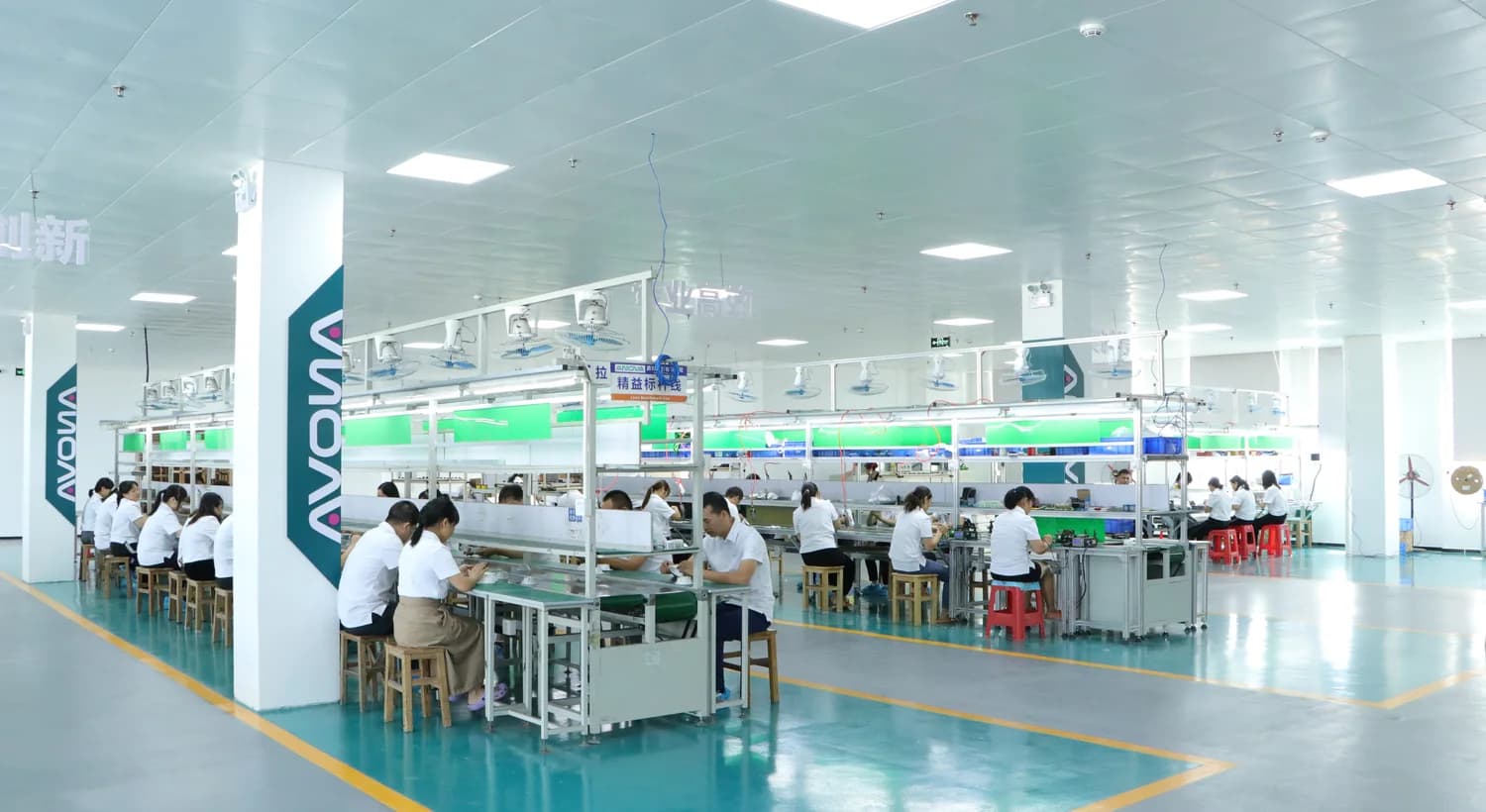
The repository documents production, assembly, aging, integrating-sphere and environmental test environments. The required checks are selected for the actual product and change scope.
A representative prototype is reviewed against agreed criteria before the approved configuration, documentation, quality checkpoints and commercial terms move into production preparation.
The prototype may confirm appearance, fit, optics, electrical function or installation. Approval criteria state what the sample is intended to prove.
Approved drawings, configuration, materials, labels, packaging and inspection checkpoints are aligned before release.
Commercial terms follow the defined customization depth, sample iterations, validation scope, production method and expected quantity.
The development route should respond to a defined commercial or technical need, not customization for its own sake.
Create coordinated downlight or module families for a defined market position and sales channel.
Review controls, wiring, packaging, labels and documentation for the intended destination.
Resolve ceiling, optical, environmental or maintenance conditions not covered by the standard shortlist.
Review an existing concept for platform reuse, component rationalization and production practicality.
ODM adapts an existing ANOVA platform, while OEM normally begins with a more defined buyer requirement, drawing or approved reference. Private label keeps the standard product substantially unchanged.
Yes. Provide legally usable drawings, samples or reference information and identify which aspects must change. ANOVA will assess whether an existing platform or new work is appropriate.
After the customization depth, parts, sample route, validation, packaging and expected quantity are understood. They should not be assumed from a different project.
The validation plan depends on product type, market and what has changed. Optical, electrical, thermal, mechanical, aging and environmental checks may be included where relevant.
Yes, a private-label route can be reviewed when an existing product meets the functional requirement and the main changes concern labels, packaging or documents.
A concise project brief is enough to identify the customization scope, open technical questions, prototype route and next review step.