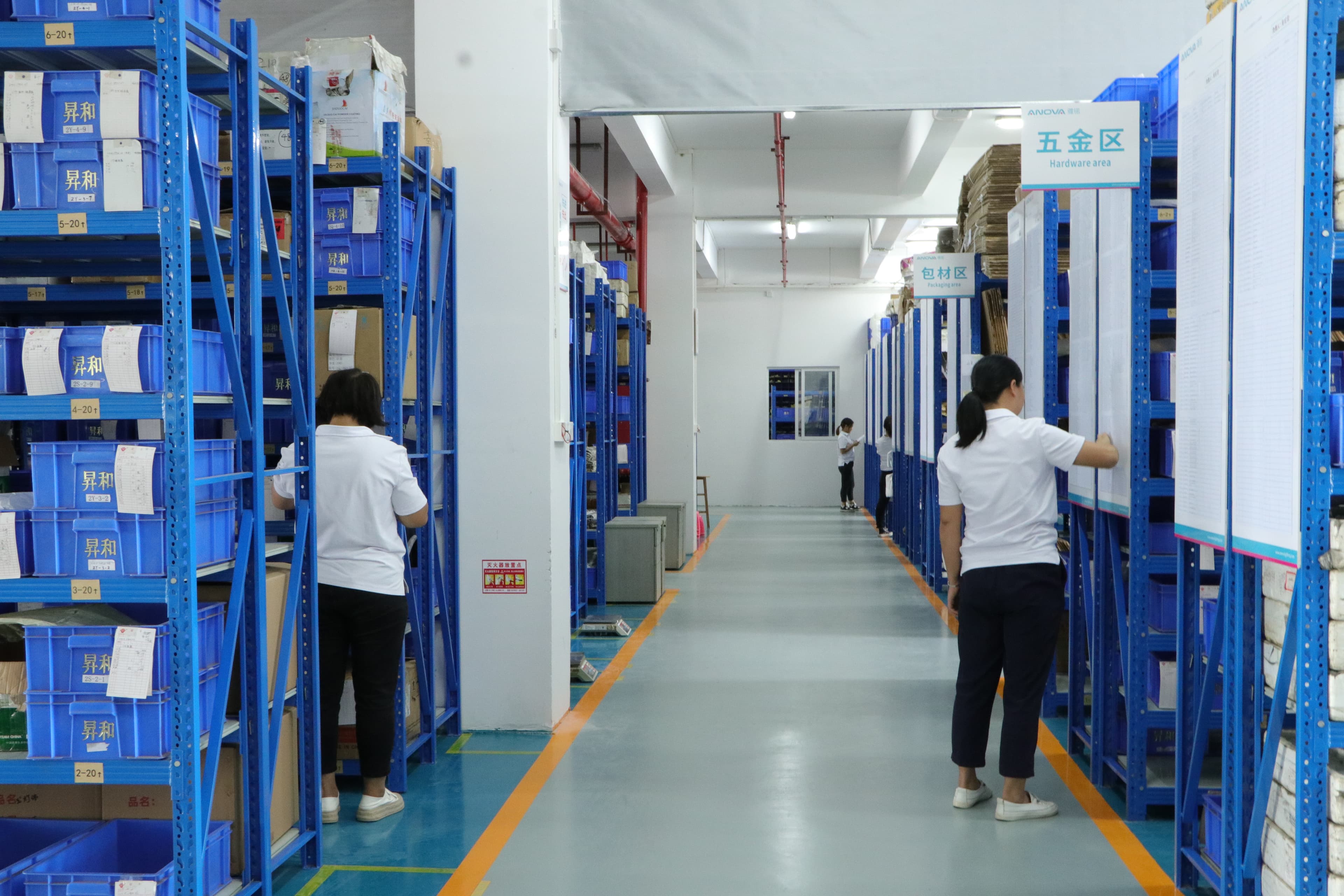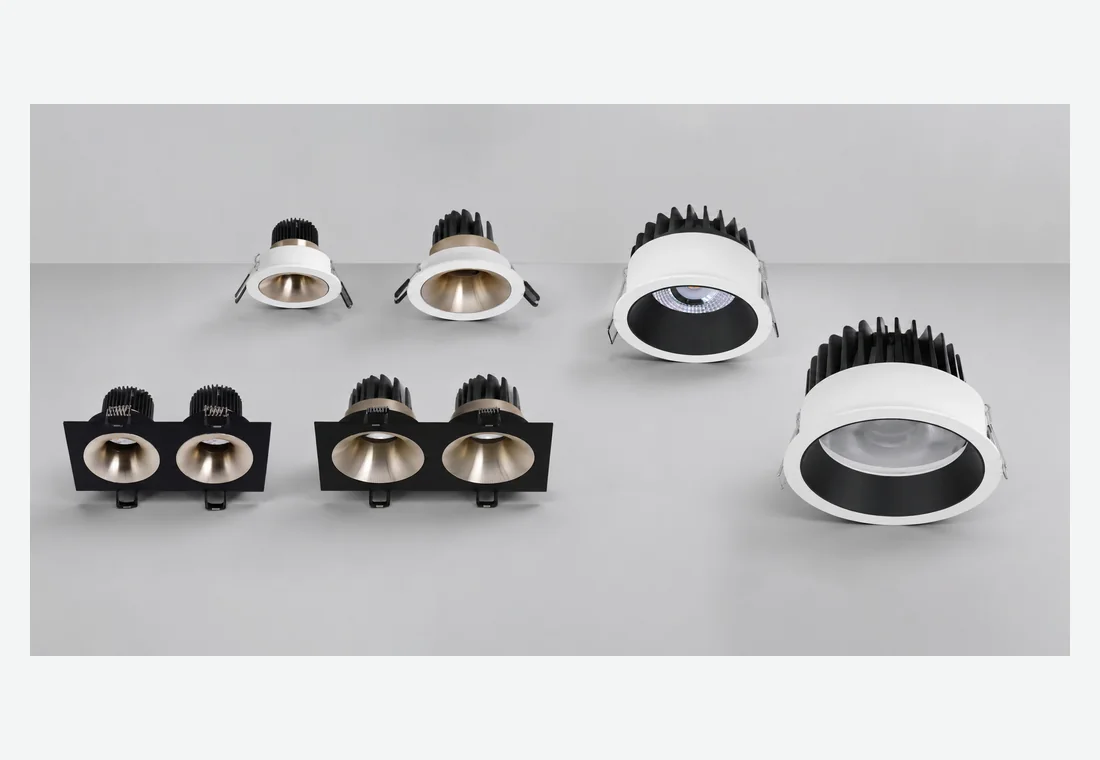
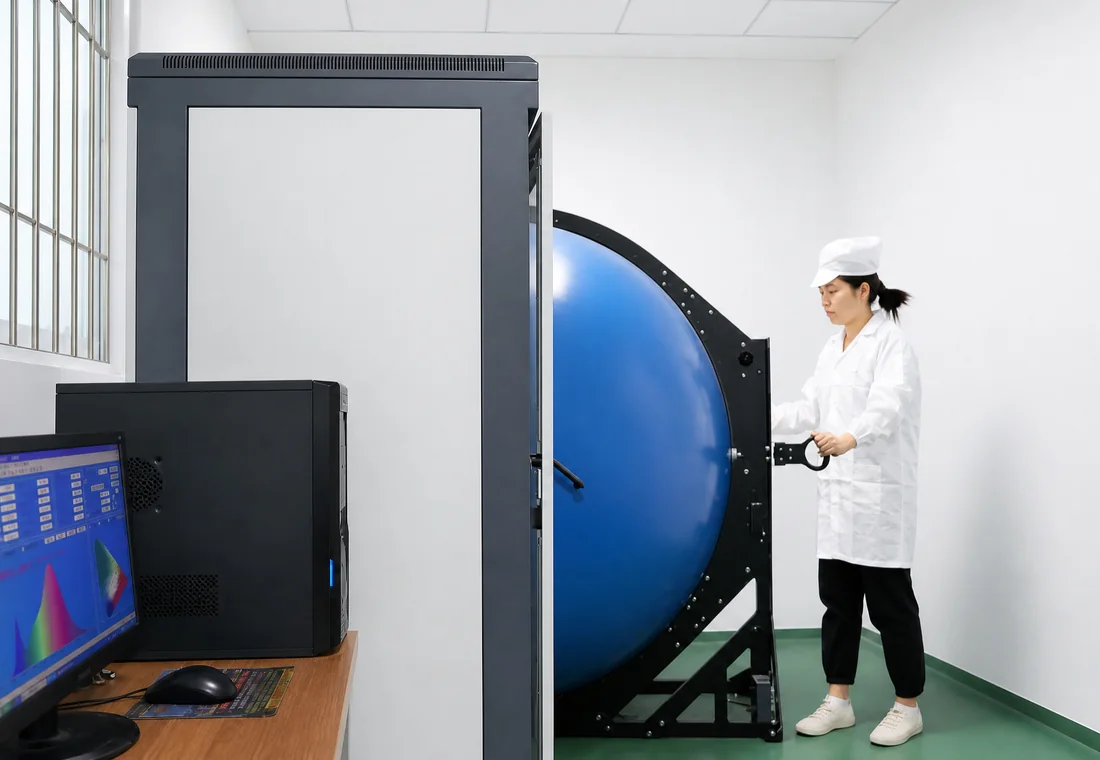
A modular downlight should not be evaluated as a collection of interchangeable parts. The light engine, frame, optical accessory, thermal path and driver form an approved system. A procurement team therefore needs to judge both the product platform and the manufacturer's ability to define, document and repeat each configuration.
This guide explains how to assess a supplier, how to compare the component relationship and which information should be confirmed before sampling or production. Buyers can use it alongside ANOVA's modular LED downlight manufacturer overview when preparing a shortlist.
Compare module formats, trims, optics, housings and driver choices before preparing a project-specific sample request.
What should buyers evaluate beyond the product catalogue?
A catalogue can show available shapes and options, but it does not prove that every module, trim, optic and driver works together. Ask the manufacturer to identify approved combinations and explain how a configuration is recorded from quotation through production.
The supplier should be able to discuss the application, ceiling condition, target beam, color requirement, control system and service strategy before recommending a model. If the conversation remains limited to wattage and unit appearance, important compatibility and maintenance questions may be missed.
- Clear component codes for the LED module, frame, optic, housing and driver.
- Drawings and installation information for the proposed combination.
- Model-specific optical, electrical and color information rather than family-wide assumptions.
- A documented sample and revision process before production approval.
- A practical answer to replacement-part identification and future service requests.
How the module, frame, optics and driver work together
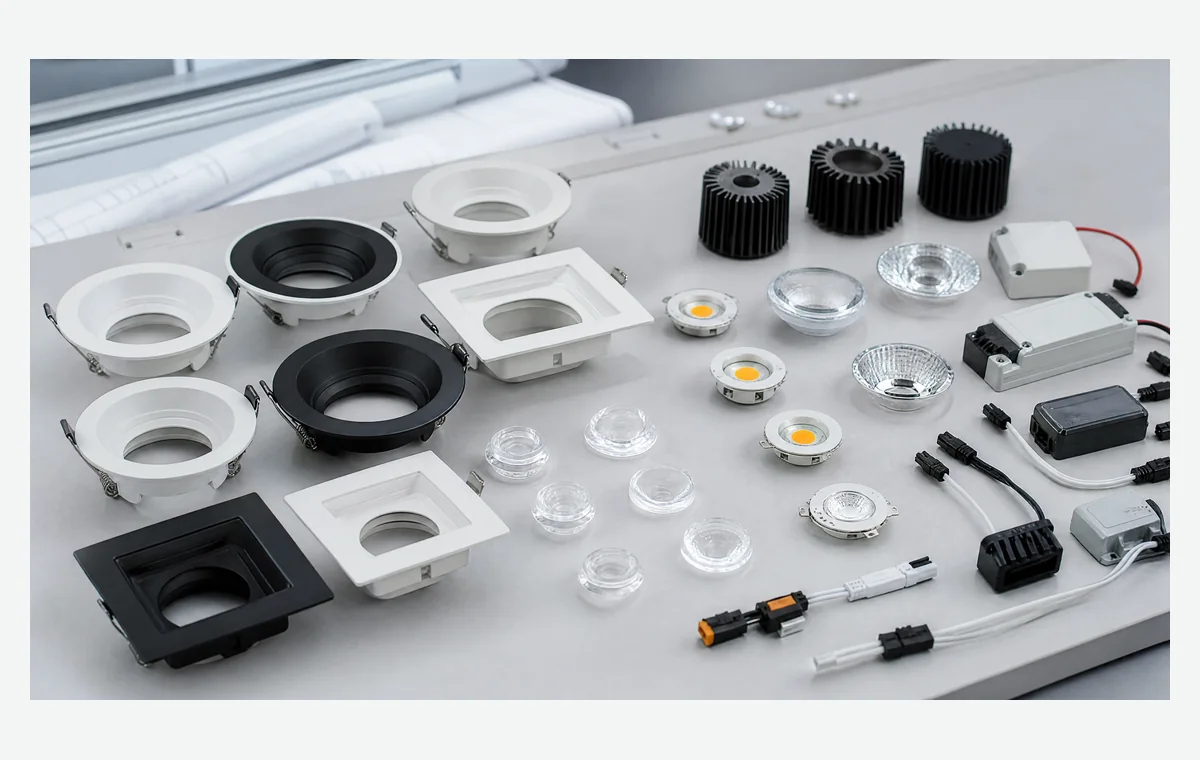
The LED module provides the light source and its thermal and electrical interface. The frame and housing define the ceiling aperture, aiming function, visible trim and heat-dissipation arrangement. A reflector or lens shapes the beam, while the driver must match the electrical requirement and requested control protocol.
A buyer can review available engine formats on the LED module platform page, but the final selection still needs a complete system check. A similar diameter does not prove mechanical, thermal, optical or electrical compatibility.
| Component | What it controls | What the buyer should confirm |
|---|---|---|
| LED module | Light source, electrical and thermal interface | Format, power, output data, CRI, CCT and replacement code |
| Frame and housing | Aperture, aiming, ceiling detail and thermal arrangement | Cut-out, depth, fixed or adjustable function and service access |
| Reflector or lens | Beam distribution and visual shielding | Beam option, optical position, finish and compatibility |
| Driver | Electrical supply and control behavior | Input, output matching, dimming protocol, wiring and access |
See how ANOVA reviews materials, interfaces and thermal behavior through an engineering review of the complete product system.
Confirm beam angle, CRI, CCT, dimming and installation
A project specification should connect the lighting effect to the exact product configuration. Values copied from a different module or optic can lead to a sample that does not match the intended ceiling and application.
Beam angle and optical control
Confirm the target surface, mounting distance and desired spot size. A narrow beam can support focused accent lighting, while a wider distribution covers a larger area. Beam shape, edge quality and glare should be reviewed on a sample, not inferred from the nominal angle alone.
CRI, CCT and color consistency
Define the materials or merchandise that need accurate color appearance, then request CRI and relevant color information for the selected configuration. Specify the required CCT and discuss batch consistency when several luminaires will be visible together or replacement stock will be needed later.
Dimming and control
Identify the control system before driver approval. The driver, control wiring and expected dimming behavior should be tested as one arrangement, especially where the project requires a specific protocol or low-level dimming behavior.
Installation method
Confirm ceiling cut-out, available depth, trim or trimless detail, fixed or adjustable aiming, access for the driver and any environmental constraint. Installation drawings should match the approved sample and order code.
What to check before sample approval and mass production
The sample should represent the intended module, optic, frame, driver, finish and accessories. Record the approved revision instead of relying on photographs or informal messages. If a component changes, the supplier and buyer should determine whether optical, electrical, thermal, installation or appearance checks need to be repeated.
Testing should be appropriate to the exact model and destination requirements. Procurement teams should request the records needed for their market and application rather than assuming that a document for one product covers a complete family.

- Check appearance, dimensions, cut-out and installation fit.
- Review beam effect, color appearance and glare in the intended application.
- Confirm the driver, wiring and dimming behavior with the project control system.
- Record labels, accessories, packaging and the approved component codes.
- Agree inspection criteria and how non-conforming results will be handled before production.
Compare these approval checks with our pre-production testing and validation process.
Why a replaceable LED module can support maintenance planning
A replaceable module may allow a service team to retain a compatible frame or housing while replacing the affected light engine. This can reduce ceiling disturbance and make spare-part planning more focused than replacing a complete fixture.
Replaceability is only useful when the interface, driver matching and replacement code are documented. Buyers should ask how modules and drivers will be identified, what tools or access are required and whether a replacement changes the light distribution or color appearance. No supplier should be assumed to provide indefinite compatibility without a documented policy.
What project information should be included in an inquiry?
A complete inquiry helps the manufacturer narrow the system before quoting or preparing samples. If some values are undecided, describe the application and desired lighting effect so the supplier can identify the questions that still need a project decision.
For a configuration outside an existing platform, review the custom LED lighting OEM/ODM process before submitting the brief.
- Buyer type, target market and project application.
- Estimated quantity and expected schedule stage, without assuming a production commitment.
- Ceiling cut-out, available depth, mounting method and aiming requirement.
- Target beam, CRI, CCT, dimming protocol and any color-consistency requirement.
- Reference drawings, room information or the target surface and mounting distance.
- Required samples, documentation, labeling, packaging and inspection expectations.
Once the project brief is defined, it can move into a structured custom lighting development process.
Evaluate the system and the process together
A capable modular downlight manufacturer should make the relationship between components understandable and repeatable. Buyers need an approved configuration, a realistic sample review and a clear record for production and future maintenance.
When the application, ceiling and control requirements are ready, submit the modular downlight project brief for a configuration review.
FAQ
What is the first question to ask a modular downlight manufacturer?
Ask which module, frame, optic, housing and driver combinations are approved for the intended application, then request the model-specific drawing and configuration record.
Are modular LED downlight components interchangeable between suppliers?
Not automatically. Mechanical dimensions, thermal contact, optical position, driver requirements and fixing methods can differ even when components appear similar.
What should be tested on a downlight sample?
Review installation fit, appearance, beam effect, color, glare, driver behavior, dimming, accessories and packaging against the intended production configuration.
Why is a replaceable LED module useful?
A documented replaceable module can support targeted service and spare-part planning while retaining compatible ceiling components, subject to the supplier's approved interface and replacement policy.
What should buyers send with a modular downlight inquiry?
Send the application, target market, quantity, ceiling constraints, beam, CRI, CCT, control method, installation details and sample or documentation requirements.