Importers, distributors and project contractors need more than a competitive quotation. A useful supplier shortlist should show whether the downlight range fits the intended spaces, whether the technical data supports specification and whether replacement orders can be identified after installation.
This checklist can be used when comparing an architectural lighting supplier or preparing a request through ANOVA's commercial downlight supplier page.
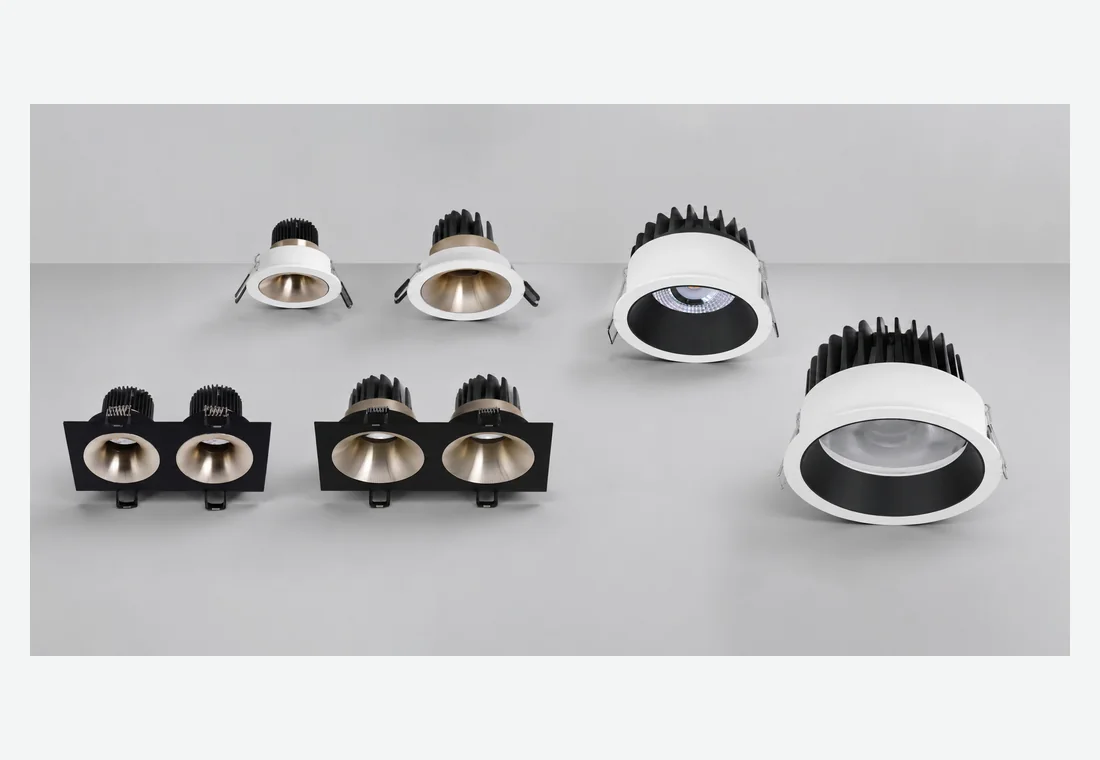
Compare fixed, adjustable, trimless and project-focused downlight configurations before preparing a supplier brief.
Start with the supplier's product and documentation structure
A supplier should be able to separate product families by function, aperture, installation method and optical role. Buyers should not have to infer whether a decorative photograph, one sample and a general specification represent the complete range.
Ask for model-level drawings, option tables and the relationship between the light engine, visible frame, optic and driver. A structured family makes quotations easier to compare and reduces the risk of ordering similar-looking products with different installation or electrical requirements.
- Product family and model codes are consistent across quotations, drawings and packaging.
- Cut-out, depth and mounting information are available before sample approval.
- Optical and electrical values are tied to the proposed model and driver.
- Optional trims, reflectors and accessories are shown as approved combinations.
- The supplier can explain sample, revision and inspection records.
Choose fixed, adjustable, trimless and wall-washer types by task
Different commercial areas need different distributions and ceiling details. The fixture type should follow the target surface, aiming requirement, visual appearance and installation access rather than one standard model being applied across every space.
Use the commercial LED downlight range as a starting point, then confirm the exact function and compatible configuration.
| Type | Typical role | Key checks |
|---|---|---|
| Fixed | General or stable downward lighting | Beam, spacing, shielding, cut-out and ceiling depth |
| Adjustable | Accent lighting for displays, walls or changing layouts | Aiming range, locking, glare from viewing positions and cable clearance |
| Trimless | Integrated ceiling appearance | Installation sequence, plaster detail, service access and replacement method |
| Wall washer | Vertical illumination for walls, displays or circulation edges | Setback, orientation, distribution uniformity and installation direction |
Confirm optical, electrical and installation information
Optical data should help the project team understand distribution, not only the nominal beam angle. Request the relevant photometric information when layout calculations or precise wall and display effects are required. Review color information for the intended materials and ask how the selected CCT and color consistency will be controlled for the order.
Electrical information should identify the driver arrangement, input requirements, output matching, control protocol and wiring. Installation information should show the cut-out, overall depth, ceiling detail, aiming direction, accessory set and access needed for maintenance.
Optical checklist
- Beam option and light distribution for the exact configuration.
- CRI and relevant color-rendering information for the application.
- CCT and color-consistency requirement for repeated installations.
- Glare shielding, source recess and normal viewing positions.
Electrical and control checklist
- Driver input and output relationship.
- Requested dimming or control protocol.
- Wiring arrangement and driver access.
- Compatibility testing with the project control system.
Installation checklist
- Ceiling cut-out, depth and construction.
- Fixed, adjustable, trim or trimless detail.
- Mounting accessories and installation sequence.
- Service access for the light engine and driver.
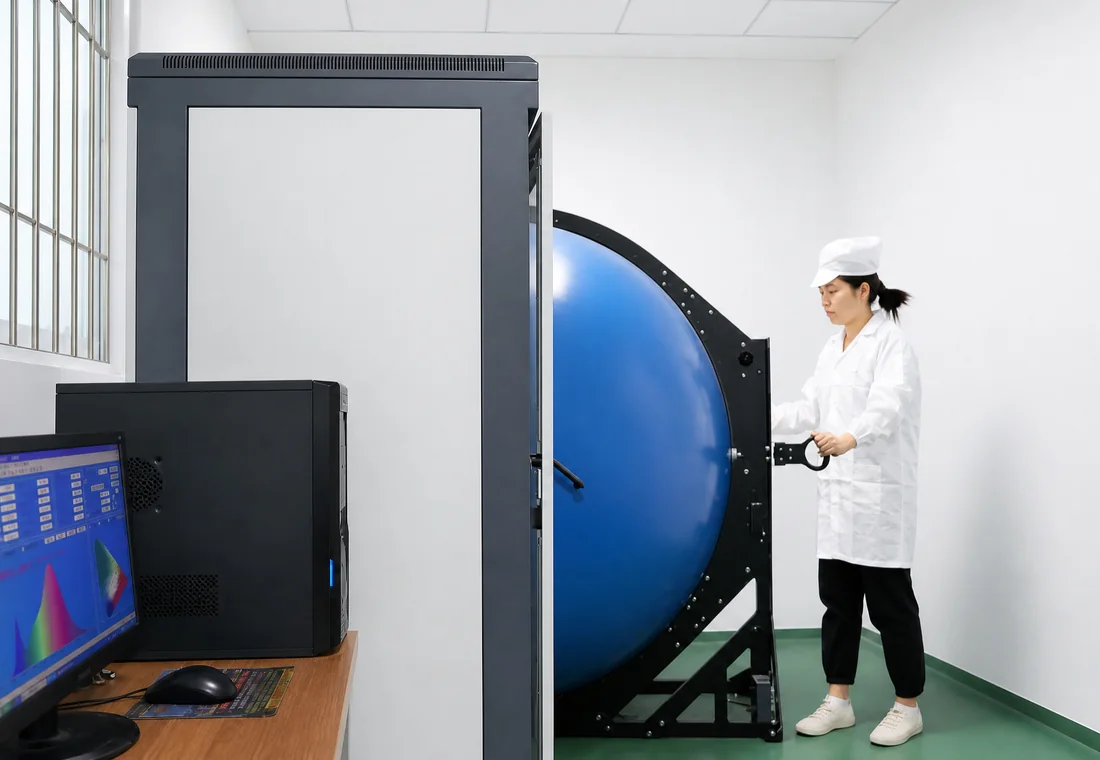
Technical documentation is most useful when it reflects the supplier's engineering capability behind the product range.
Can the product family cover several commercial spaces?
A coordinated range can simplify specifications across hotel public areas, restaurants, retail stores, offices and circulation spaces. Coordination does not mean using the same downlight everywhere. It means maintaining a clear family relationship while changing the beam, aiming function, trim, output or control arrangement where the application requires it.
Compare aperture and trim consistency, available optical choices, driver options and installation details across the shortlisted family. Ask which components are shared and which combinations require a different housing or thermal arrangement.

Range planning can also be compared with ANOVA's commercial project application experience.
Reduce excessive SKUs, difficult replenishment and maintenance gaps
If every beam, trim, CCT and driver combination becomes an unrelated complete fixture, importers can face a large number of finished-product codes. Contractors and facility teams may then struggle to identify a replacement after the original installation.
A documented modular LED downlight platform can organize several approved configurations around shared components. The benefit depends on controlled compatibility, component coding and a realistic spare-parts plan.
Before committing to a range, record the installed model, module, optic, driver and trim. Ask how replacement parts are identified and whether a later substitute would change the cut-out, appearance, color or beam.
Use samples and inspection criteria to confirm the supplier
A sample should be checked in the intended ceiling and application where possible. Review fit, visible finish, beam effect, color, glare, aiming, driver behavior and dimming. Record the approved component and revision references before the order is released.
Inspection criteria should cover the characteristics that matter to the project. Buyers should agree how appearance, dimensions, electrical function, optical configuration, accessories, labels and packaging will be checked and how deviations will be documented.

For a closer look at verification methods, review our sample testing and validation process.
What should buyers prepare before requesting a quotation?
A supplier cannot recommend a dependable commercial downlight from quantity alone. Provide enough project context to connect the model, optic, driver and installation arrangement to the intended space.
- Buyer role, target market and application type.
- Estimated quantity by area or model, if available.
- Ceiling cut-out, depth, construction and installation method.
- Fixed, adjustable, trimless or wall-washer function.
- Target beam, CRI, CCT, dimming protocol and visual-comfort priorities.
- Drawings, ceiling plans, mounting heights or target-surface information.
- Sample, documentation, packaging, labeling and inspection requirements.
Use one checklist for product, supplier and project fit
A strong commercial downlight supplier should help buyers connect product function, technical data, installation and future replenishment. The best shortlist is not the one with the most models; it is the one that makes approved choices easier to specify and repeat.
When the quantity, installation, control and target-market information are ready, submit the commercial downlight inquiry for a project review.
FAQ
What should importers check first when comparing commercial downlight suppliers?
Start with the product-family structure, model-level drawings, optical and electrical data, approved component relationships and the supplier's sample and revision process.
When should a project use adjustable instead of fixed downlights?
Use adjustable downlights where the target position or display changes, or where walls and objects need aimed accent light. Confirm the aiming range and glare from normal viewing positions.
What makes a trimless downlight harder to source?
Trimless products require early coordination of the ceiling detail, installation sequence, cut-out, service access and replacement method, not only the visible aperture.
How can buyers reduce commercial downlight SKUs?
Use a controlled product family or modular platform with documented component codes and approved combinations, while keeping model-level optical, electrical and installation differences clear.
What information is needed for a wholesale commercial downlight inquiry?
Provide the target market, buyer role, application, quantity, installation constraints, downlight type, beam, CRI, CCT, dimming, samples and documentation requirements.