A reading light may appear to be a small fixture, but poor beam control, an unstable gooseneck or an oversized mounting base can quickly affect the user experience in a hotel room or compact cabin. A suitable LED reading light has to illuminate a book or device without creating distracting spill light, awkward controls or a maintenance problem inside the furniture.
This guide explains how reading lights differ from standard wall lights, how to compare beam coverage, adjustable structures and control methods, and which mounting details should be agreed before furniture production. It also provides a practical sample-testing process for hotel furniture suppliers, interior designers, project buyers and lighting distributors. Specifications vary by model and project configuration.
Share your application, mounting position, headboard dimensions, preferred beam, control method, surface finish and estimated quantity. ANOVA can help review a suitable reading-light configuration and prepare samples for project testing.
How Is an LED Reading Light Different from a Standard Wall Light?
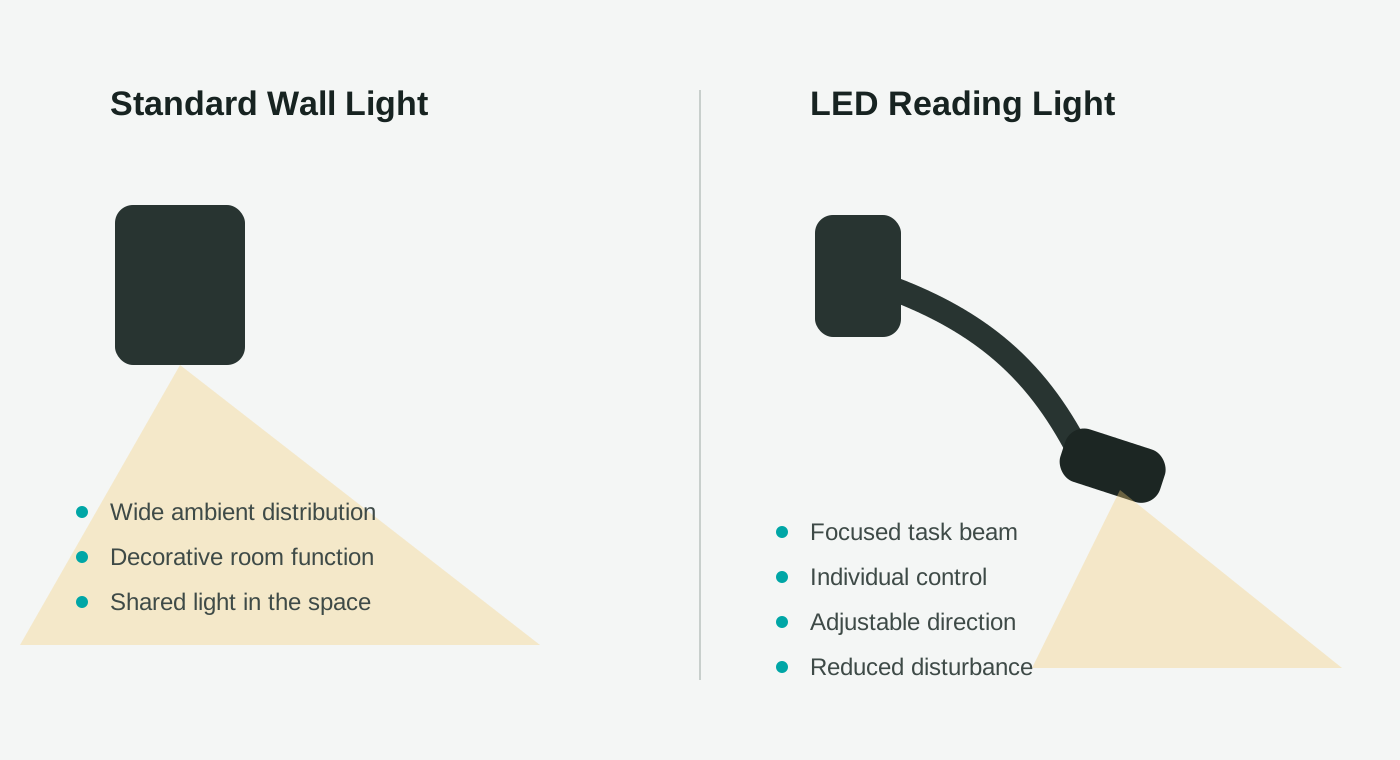
A standard wall light normally contributes ambient illumination, decoration or a general layer of room light. Its distribution may intentionally reach the wall, ceiling and surrounding furniture. A bedside reading light has a narrower task: it should illuminate a book, tablet or local work area, offer individual control and reduce disturbance to another person in the room.
That difference changes the selection process. The buyer has to review where the user will sit or lie, how the head can be aimed, whether the switch is reachable and what the neighboring user can see. A visually compact luminaire is not automatically a good task light if the source remains visible or the beam misses the page.
Beam Angle and Illumination Area
Beam angle only becomes useful when it is considered with mounting distance, aiming direction and the size of the reading area. As the distance between lamp and page increases, the same optical distribution creates a larger illuminated area. A narrow beam can work well in a compact bedside position, but it allows less aiming error. A wider beam covers more of the bed or seat and can create more spill light.
Project teams should test the light at the intended mounting height with a real book and device. Product photography cannot show whether the page is evenly covered or whether the beam reaches the adjacent pillow. The lens or reflector, source recess and head movement are as important as the beam description.
| Beam approach | Main effect | Suitable use | Main risk |
|---|---|---|---|
| Narrow controlled beam | Focused illumination | Compact bedside and cabin use | Small aiming tolerance |
| Medium beam | Wider reading area | Hotel beds and lounge seats | More spill light |
| Wide beam | General local illumination | Multi-purpose wall lighting | May disturb nearby users |
How to Reduce Light Disturbing a Partner
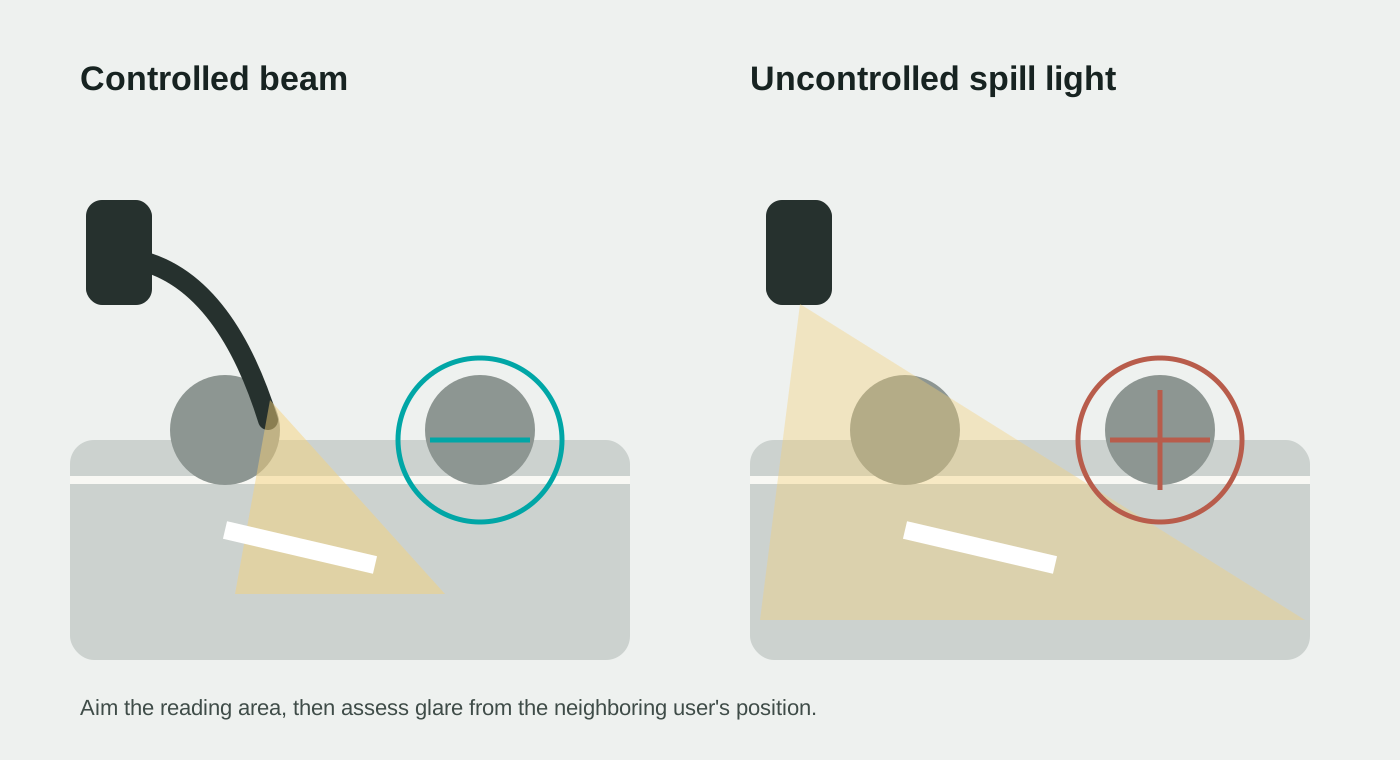
Light disturbing a partner is usually an optical and positioning problem rather than a wattage problem alone. A controlled beam, precise aiming, a recessed source and a suitable mounting point can keep useful light on the page. Individual switching and dimming, where supported, then let each user adjust the result without changing the whole room scene.
During sample approval, sit in the normal reading position and then move to the adjacent bed or seat. Check direct glare from the lamp head, spill light on the pillow, reflections from a tablet and the result when the head is aimed through its full range. Lower output cannot compensate for poor beam control if the bright source remains in the neighboring user's field of view.
Gooseneck Reading Light vs Fixed-Head Reading Light
Gooseneck reading light
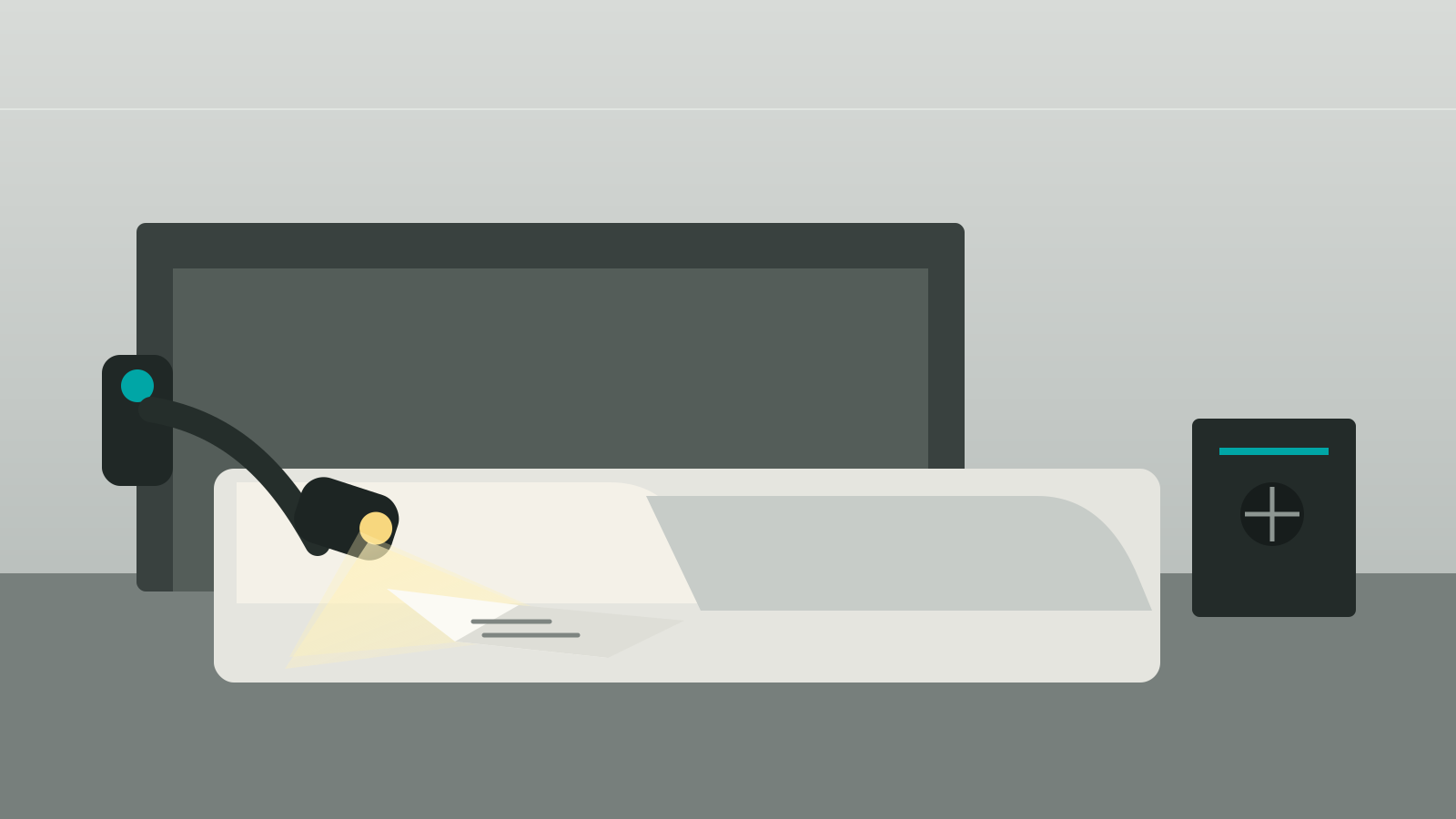
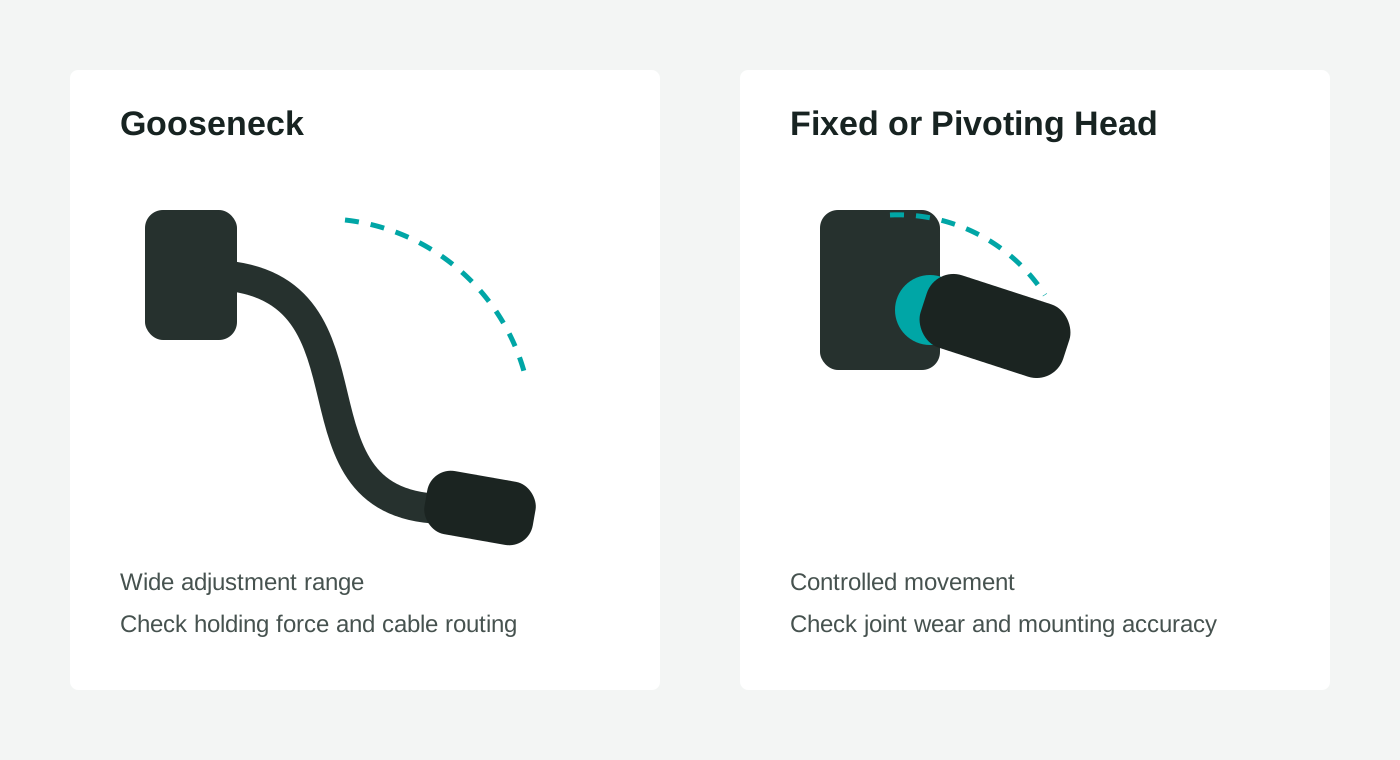
A gooseneck reading light offers a wide adjustment range and can move closer to the page. It suits different user positions and can be helpful where the mounting point is fixed by a compact headboard or cabin structure. The selection should cover bending smoothness, holding force, cable routing inside the neck, surface wear and whether the lamp head remains in position after repeated adjustment.
Common problems include a loose gooseneck, gradual head drop, uneven bending and stress on an internal cable. A new sample may feel stable, so repeated adjustment is essential before approval.
Fixed or pivoting reading light
A fixed or pivoting head can provide a cleaner appearance and a controlled movement range. It may be easier to standardize across hotel furniture, but the mounting location must be more accurate because the user has less freedom to compensate. Joint wear, stop positions and the direct view of the source still need review.
| Item | Gooseneck | Fixed or pivoting head |
|---|---|---|
| Adjustment range | High | Controlled |
| User flexibility | High | Medium |
| Visual appearance | Technical and flexible | Clean and compact |
| Stability concern | Neck holding force | Joint wear |
| Installation accuracy | Medium | High |
| Suitable project | Cabins, bedside, compact rooms | Standardized hotel rooms and furniture |
Touch Control, Push Button and Central Control
Touch control
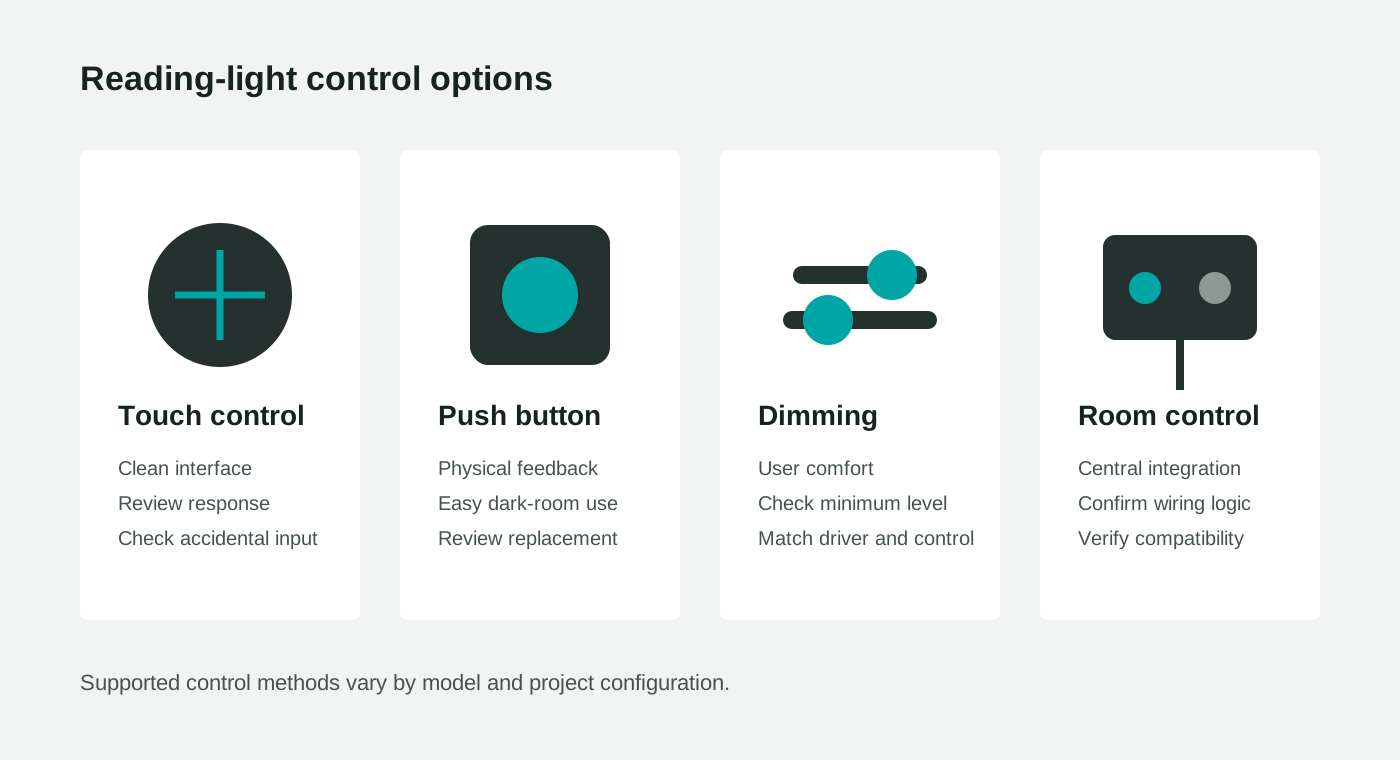
Touch control gives a clean bedside appearance and removes a protruding mechanical button. Buyers should review the touch location, response, accidental activation, indicator light, standby behavior and dimming logic when included. A control that works on a sample bench can still be awkward when it sits behind a pillow or near other metal furniture parts.
Push button
A push button provides clear physical feedback and is easy to identify in a dark room. Check operating noise, reach, replacement access and the way the switch is fixed into the base. For a high-use project, the control should be evaluated as part of the complete luminaire rather than as a separate catalog component.
Central or room control
A hotel control panel or centralized bedside system may require defined wiring, driver compatibility, control voltage, dimming protocol and master-off behavior. These details should be confirmed before electrical and furniture drawings are frozen. Not every reading light supports every control method.
Dimming and User Comfort
Dimming can adapt the task light to paper, a backlit device and different nighttime preferences. It can also reduce disturbance before sleep. Where dimming is required, project teams should confirm the minimum usable level, flicker behavior, response delay, switching noise, memory function and compatibility between the control and driver.
Do not assume that a touch switch includes dimming or that a dimmable driver will work with every room-control system. The required behavior should be written into the project brief and checked on the approved sample.
Mounting Dimensions for Bedsides, Cabins and Compact Spaces
Compact installations leave little room for late changes. Confirm the base diameter or width, base depth, mounting holes, screw spacing, cable entry, wall or headboard thickness and any recessed box. Also review lamp-head size, gooseneck length, wall projection, adjustment clearance, driver location and access for replacement.
Common failures are practical rather than optical: a base looks oversized on the headboard, a head strikes the wall during adjustment, a fixing screw conflicts with a furniture frame, or the driver cannot be hidden. The switch can also become inaccessible behind a pillow or bedside table. These dimensions should be approved on coordinated furniture and electrical drawings.
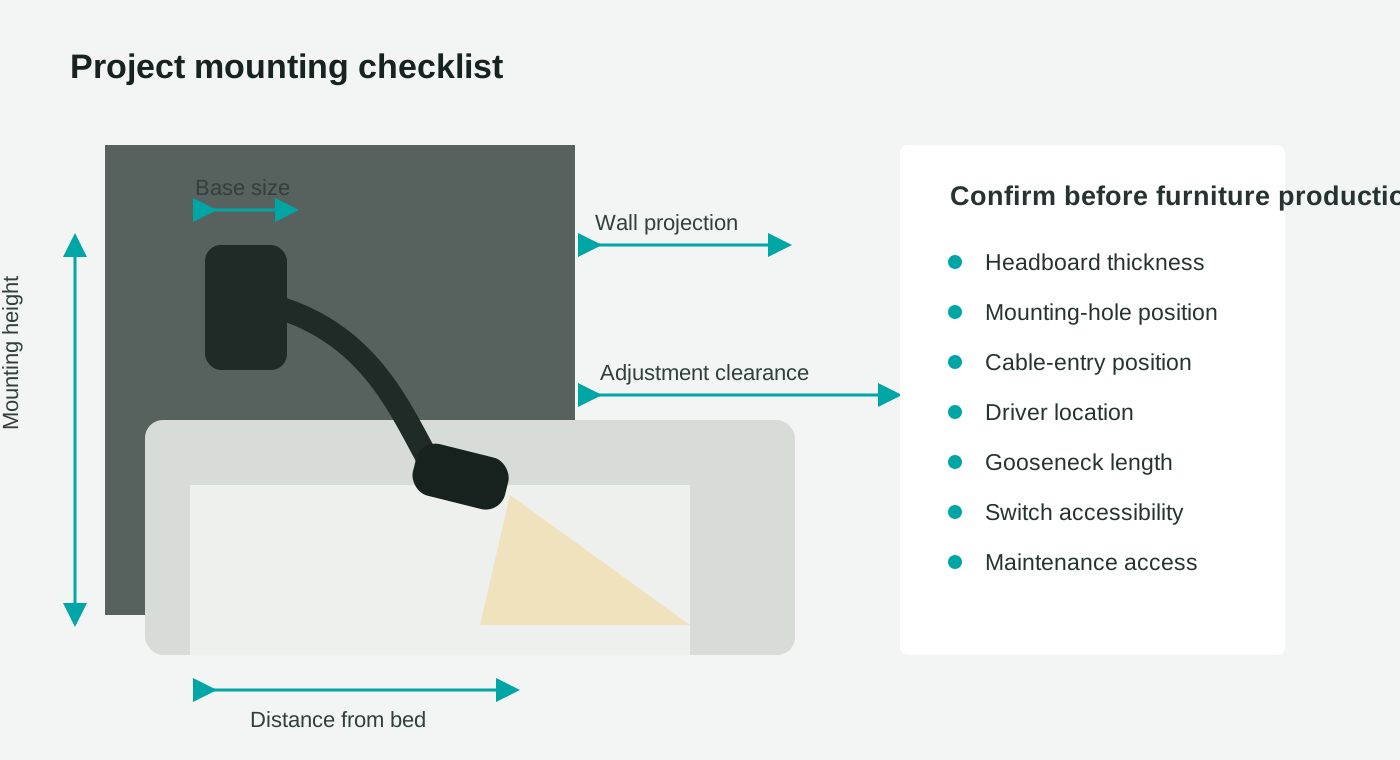
Headboard Lighting Installation
Headboard lighting has to coordinate the bed size, user position, left and right layout, mounting height and the distance from the mattress. Glossy finishes may create reflections, while deep upholstery can interfere with a small base or switch. Hidden wiring, connectors and fixing screws should remain serviceable after the furniture is installed.
A hotel furniture supplier and lighting supplier should agree the opening, mounting plate, cable, driver, connector and installation tolerance before furniture production. For a wider project-development discussion, review ANOVA's OEM and custom lighting development route rather than waiting for completed furniture to reveal a dimensional conflict.
Cabin and Compact-Space Installation
Cabin lighting often requires a compact base, limited projection, precise beam control, accessible switching and concealed wiring within shallow construction. A ship reading light may also need secure adjustment, controlled heat near upholstery and straightforward maintenance. Where vibration, material, flame, electrical or environmental requirements apply, they must be confirmed for the specific model and project.
The same caution applies to ship cabin lighting and cruise ship lighting programs: a familiar product shape does not prove compliance with a project specification. Buyers should review installation direction, cable and connector details, applicable documentation and the complete sample. ANOVA does not treat one reading-light configuration as suitable for every compact-space environment.
Related installation contexts are included in our hospitality and compact-space application experience.
Heat Management and Overheating
A small reading light still contains an LED source and may include a compact driver. Heat can become concentrated in the lamp head, mounting base or enclosed wall cavity, especially near wood, fabric or upholstered panels. The product review should cover heat-sink structure, driver position, ventilation, mounting material, operating duration and clearance around the fixture.
Overheating can affect user comfort, LED and driver reliability, surface finish and nearby furniture. Because temperature depends on configuration and installation, buyers should request relevant thermal information and test the approved sample in a representative assembly rather than relying on touch during a brief demonstration.
See how heat paths and enclosure decisions are considered in our thermal and mechanical engineering approach.
Surface Finishes and Interior Coordination
Black, white, brushed metal, polished metal and custom project finishes can coordinate the light with handles, furniture fittings and the room palette. Selection should also consider fingerprints, cleaning frequency, scratch resistance, coating adhesion and color consistency between production batches.
Replacement parts matter in long-running hotel programs. A changed sheen or color can be obvious when one bedside light is replaced later. The finish reference, cleaning method and approved physical sample should therefore become part of the project record.
Long-Term Durability of the Gooseneck and Joints
Repeated adjustment can change neck holding force, joint looseness, cable fatigue, surface wear and screw stability. Switches and connectors also experience regular use in guestrooms and compact accommodation. Buyers should ask how the supplier evaluates these parts and should compare the sample again after repeated movement.
A gooseneck reading light should be evaluated after repeated adjustment, not only when it is new. If verified cycle or life-test information is available for a particular model, it can support the review; an unconfirmed test count should never be assumed.
Common Purchasing Mistakes
- Selecting by appearance without verifying the useful reading area.
- Ignoring the real beam size at the intended mounting distance.
- Using a wide beam beside a shared bed.
- Assuming every gooseneck has the same holding force.
- Confirming the mounting base after furniture production.
- Placing the switch where a pillow or furniture panel blocks it.
- Ignoring driver, connector and wiring space.
- Approving a lamp head that becomes uncomfortable to touch.
- Using one mounting position for every bed size.
- Ignoring left and right installation direction.
- Reviewing one sample instead of an installed pair.
- Failing to observe the light from the adjacent user's position.
- Ignoring replacement parts and future availability.
- Assuming touch control suits every hotel control strategy.
How to Test Reading Light Samples
A sample should be installed in a representative room or furniture mock-up. Holding it by hand on a table cannot reproduce mounting distance, user position, reflections, cable space or the neighboring user's view.
- Install the sample at the intended height.
- Use the actual bed, headboard or seating position.
- Test with a book, tablet and phone.
- Check the illuminated area and spill light.
- Observe from the neighboring bed or seat.
- Adjust the gooseneck or joint repeatedly.
- Confirm that the lamp head stays in position.
- Test the switch in a dark room.
- Test dimming where applicable.
- Operate the light for an extended period and review heat.
- Check cable entry, connector and driver space.
- Confirm the surface finish under room lighting.
- Install left and right samples as a pair.
- Record the approved model, finish, control and mounting dimensions.
These checks can be coordinated with a defined reading-light sample validation process.
What Project Buyers Should Confirm
An LED reading light supplier should provide enough optical, mechanical and installation information for the light to be tested in the real furniture or cabin structure. The approval package should identify product and base dimensions, mounting depth, gooseneck length, adjustment range, beam information, illuminated area, electrical data, switch and driver type, cable and connector, finish, installation drawing and replacement-part plan.
Where the catalog does not contain a ready configuration, custom reading-light development should begin with a controlled brief covering left and right versions, input and control requirements, sample quantity, project volume and delivery schedule.
- Product, mounting-base and mounting-depth dimensions
- Adjustment range, beam information and illuminated area
- Wattage, lumen output, CCT and CRI for the selected model
- Switch, dimming, driver, input voltage and wiring
- Cable length, connector and installation drawing
- Surface finish, left and right versions and mounting screws
- Sample availability, replacement parts and future supply
- OEM requirement, project quantity and delivery schedule
How ANOVA Supports Reading Light Projects
ANOVA can review focused-beam and adjustable reading-light requirements against a specific project brief. The existing modular product design process provides a practical framework for matching optics, mechanics, drivers and installation needs before samples are approved.
Depending on the selected model and project, the discussion can include gooseneck or wall-mounted structures, compact bases, touch or push-button control where applicable, finishes, mounting methods, driver and wiring arrangements, samples, and OEM appearance development. Specific dimensions, switching, dimming, finish and optical performance must be confirmed for the chosen configuration.
For hospitality context, ANOVA's existing hotel lighting application section shows the broader layered-lighting approach. A reading light remains an individually controlled task layer within that room design.
Custom requirements can be organized through a staged custom reading-light development workflow.
Reading Light Project Checklist
- Application, room type, bed or seat type
- Mounting height, position and left or right installation
- Base dimensions, mounting depth and headboard material
- Cable entry, connector and driver location
- Gooseneck length, adjustment range and holding stability
- Beam angle, illumination area, spill light and glare control
- Wattage, lumen output, CCT and CRI for the selected model
- Switch type, dimming requirement and input voltage
- Surface finish, cleaning method and batch consistency
- Heat management and clearance from furniture materials
- Installation drawing, replacement parts and maintenance access
- Sample testing, OEM requirement, quantity and delivery schedule
Contact ANOVA
Reading-light selection needs a coordinated review of beam control, mounting position, adjustment structure, gooseneck stability, switching, dimming, base size, wiring, heat, finish, maintenance and sample performance. No single appearance or wattage value can answer all of those project questions.
As an LED reading light supplier and reading light manufacturer, ANOVA can discuss OEM requirements such as a custom finish or custom mounting base against a defined project sample. Request project samples with the installation drawing and furniture dimensions so the optical and mechanical configuration can be reviewed together.
FAQ
What beam angle is suitable for an LED reading light?
There is no universal angle. Select the beam by mounting distance, page size, aiming range and acceptable spill light, then test it at the real bedside position.
How can a bedside reading light avoid disturbing a partner?
Use a controlled beam, suitable source recess, precise aiming and individual control. Always check glare and spill light from the neighboring user's normal position.
Is a gooseneck reading light better than a fixed reading light?
A gooseneck offers greater flexibility, while a fixed or pivoting head can look cleaner and control movement. The better choice depends on user positions, mounting accuracy and durability requirements.
What size should a wall mounted reading light base be?
The base must fit the headboard or wall structure, fixing points, cable entry and service space. Confirm the actual product drawing before furniture production.
Is touch control suitable for hotel room reading lights?
It can be suitable when the touch point is easy to find and accidental activation, response, dimming logic and room-control compatibility have been tested.
How should an adjustable LED reading light for hotel rooms and cabin projects be tested?
Install a pair at the intended height, use real reading materials, review both user positions, adjust the heads repeatedly, test controls and inspect heat, wiring and finish.
Why does a reading-light gooseneck become loose?
Holding force may change through repeated bending, joint wear, material fatigue or an unsuitable head load. Evaluate stability after repeated adjustment rather than only when new.
What should be checked when selecting a ship reading light?
Check the compact mounting structure, beam control, secure adjustment, wiring, heat, maintenance access and every project-specific environmental or documentation requirement.
Can reading lights be customized for cruise ship lighting or compact cabin projects?
OEM options may include finish, mounting, control or appearance changes where applicable. The final configuration and any project compliance requirements must be reviewed for the specific model.