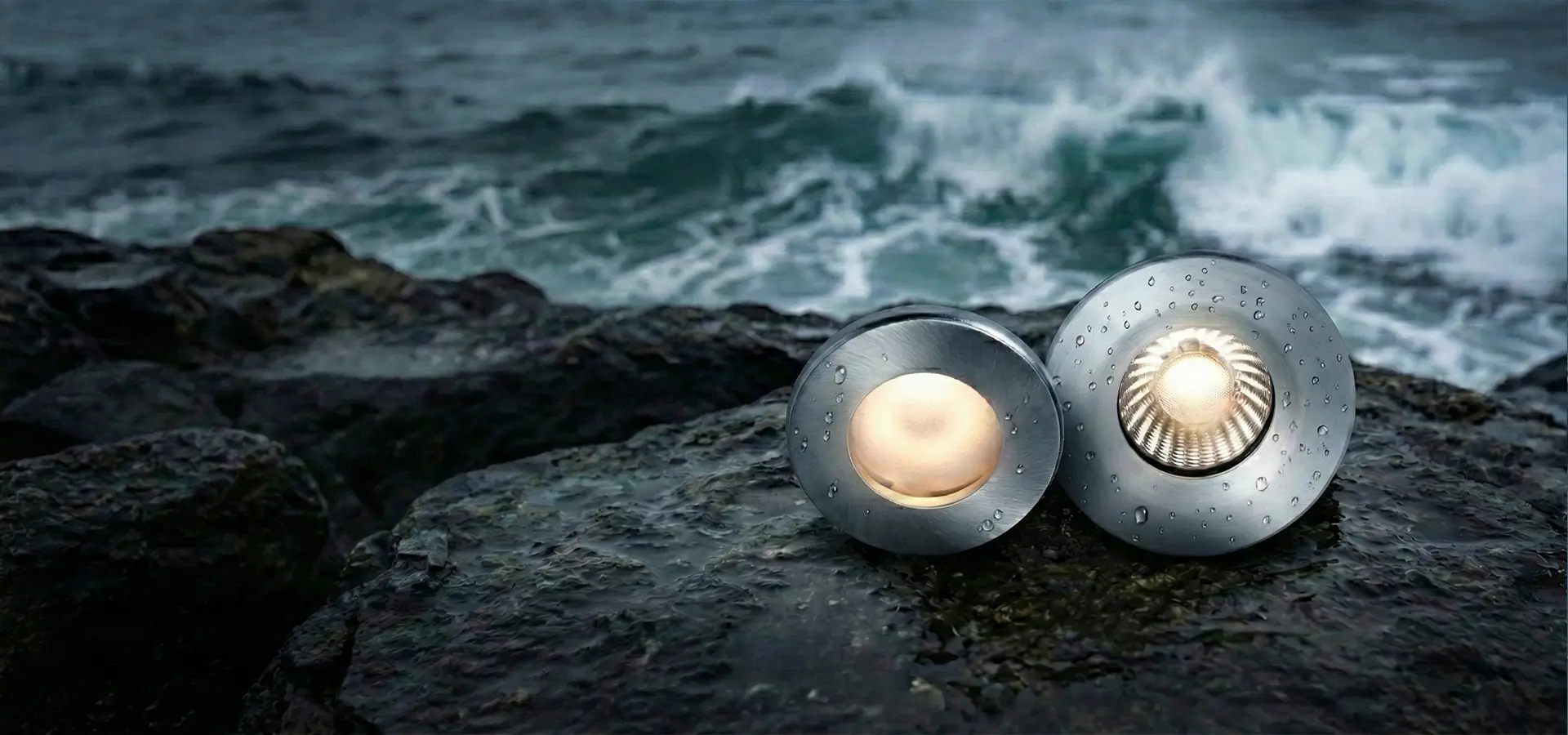
This complete guide explains how corrosion-resistant LED lighting should be evaluated as a full material and protection system. LED fixtures can corrode when moisture, salt deposits, cleaning chemicals and temperature cycling create conductive films or remain trapped around joints. Failures often begin at screws, fasteners, cut edges, coating defects, sealing faces, cable entries, connectors and driver connections—not only on the visible housing. A corrosion-resistant housing alone is therefore not enough.
Corrosion-resistant materials establish the base protection; pretreatment, anodizing or powder coating protect exposed surfaces; sealed LED lighting structures use gaskets, O-rings and cable glands to control moisture paths; and drainage helps prevent standing water. IP, salt-spray and environmental testing provide different evidence for the approved sample. High-humidity lighting reliability still depends on the actual environment, installation and maintenance conditions, because no single material, coating, seal or test makes a luminaire universally corrosion proof.
Share the corrosive environment, salt or humidity exposure, mounting direction, housing and fastener requirements, sealing approach and validation needs for an engineering review.
Why LED Luminaires Corrode in Demanding Environments
Corrosion rarely has one cause. Moisture, oxygen, salt deposits, pollutants and cleaning chemicals can create an electrically conductive film on a surface. Temperature cycling moves moisture through joints, while trapped water and poor drainage keep vulnerable areas wet. Coating damage, contaminated assembly surfaces, dissimilar metals and the wrong fastener can accelerate the process.
The result may first appear cosmetic, such as staining or paint peeling. It can later affect screw removal, sealing faces, connectors, terminals and driver reliability. A project review should therefore include the housing, trim, screws, gasket, cable entry, connector, junction box and driver location.
IP Rating and Corrosion Resistance Are Different
IP65 and IP67 primarily describe protection against dust and defined water exposure. The complete installation still depends on drainage, wiring, connectors and mounting direction.
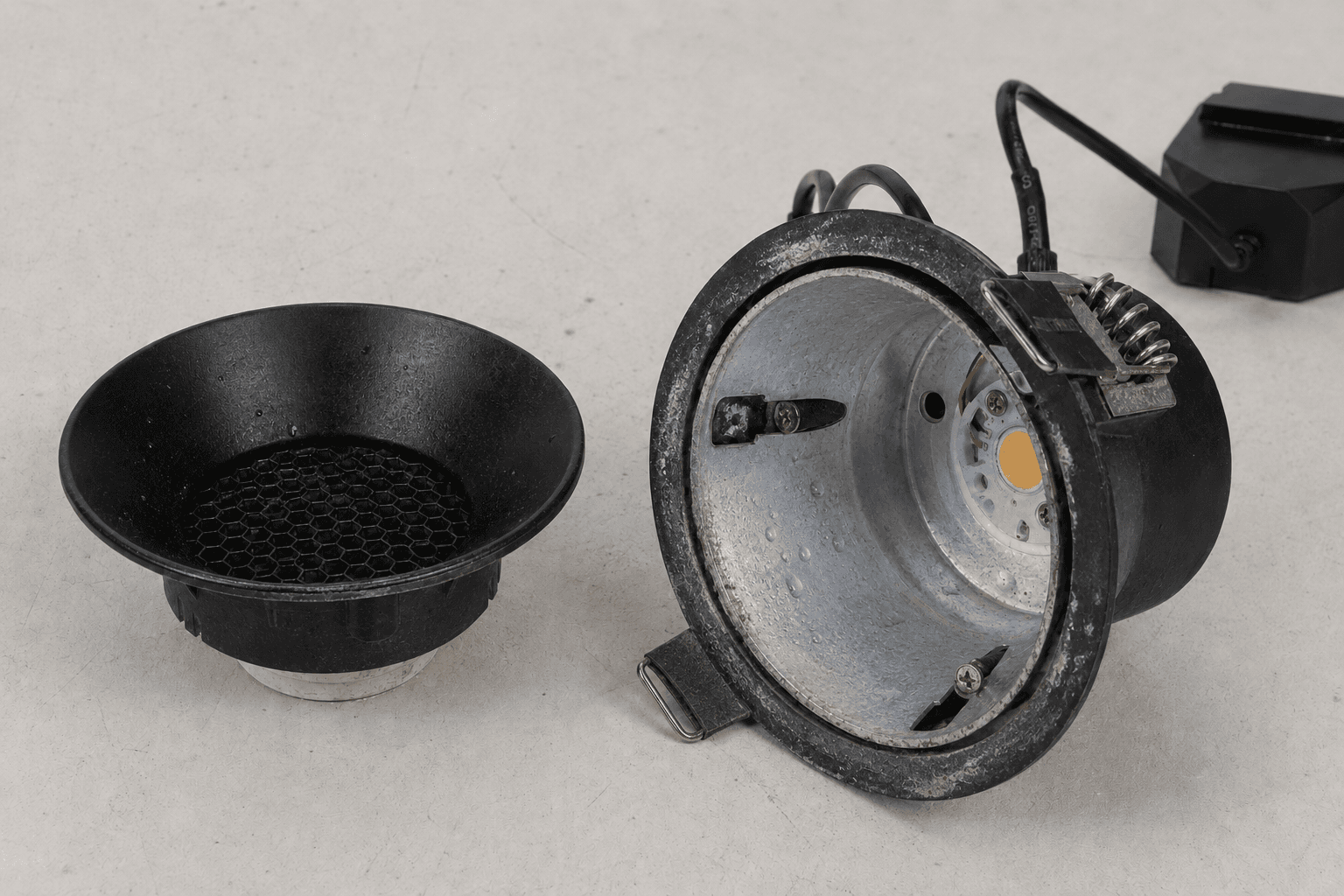
An IP67 luminaire can still develop rusted screws, coating failure or connector oxidation. A product may prevent water ingress during a specified test while its exposed metals remain unsuitable for prolonged salt-spray conditions. Corrosion can also damage a sealing surface over time and create a later water-ingress path. IP evidence and corrosion evidence answer different questions.
Material Selection for Corrosion Resistant LED Lighting
Stainless steel
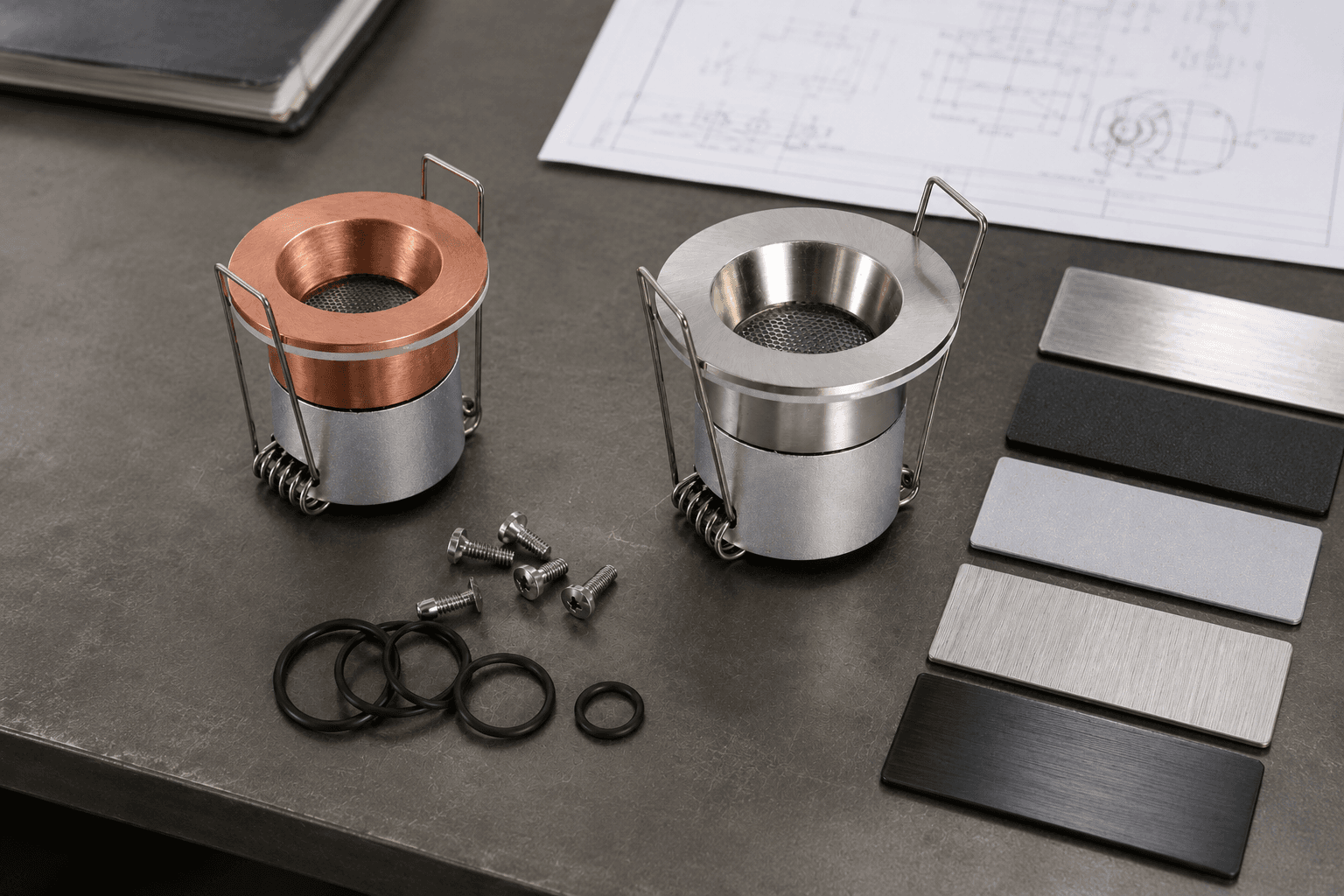
The words stainless steel are not a complete specification. Grade, casting or machining method, surface finish, welding contamination, crevices, fasteners and contact with other metals all influence performance. 316L components can be considered for some humid and salt-exposed projects. Its alloy composition is generally more suitable than common grades for certain chloride conditions, while its low carbon content can help in some fabrication situations.
However, 316L is not rust-proof in every environment. Surface contamination, deposits, crevices, chemical concentration and maintenance conditions still matter. The exact part and exposure must be reviewed rather than assuming one material name solves the full project.
Aluminum
Aluminum performance depends on alloy selection, pretreatment, anodizing or coating, edge coverage, machined surfaces, drainage and the fastener interface. Paint peeling may result from insufficient pretreatment, poor adhesion, sharp edges, impact damage, trapped moisture or incompatible materials. A coated aluminum housing should be assessed at joints, screw holes and cut edges, not only across a flat front surface.
Engineering plastics and sealing materials
Plastics, silicone and elastomer seals do not corrode like metal, but they can still age. UV exposure, temperature, chemicals, compression set, salt and mechanical movement may change flexibility or sealing pressure. Material compatibility has to cover the expected environment and service cycle.
Why Screws and Fasteners Often Fail First
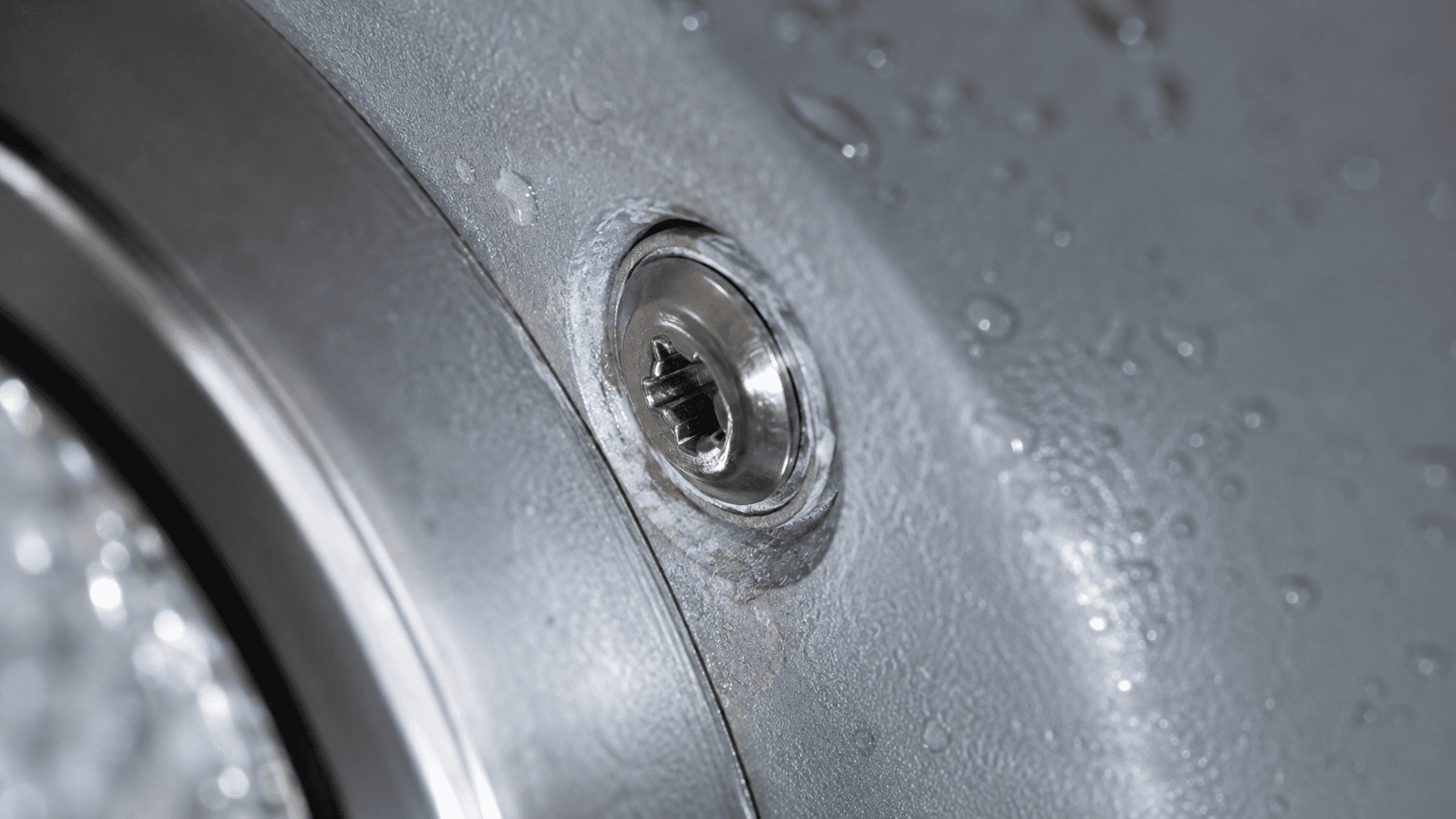
Fasteners are small exposed components with edges, threads and tool contact. They may use a lower grade than the luminaire body, retain water in a recess, or lose protective coating during tightening. Metal dust left after installation and an unsuitable replacement screw can create additional corrosion sites.
Project specifications should identify screw material, washer or barrier, coating where used, compatibility with aluminum, replacement specification and tightening method. Over-tightening can deform a joint or gasket; under-tightening can leave a gap. Maintenance instructions should preserve the original fastening system.
Galvanic Corrosion Between Different Metals
Galvanic corrosion can occur when two dissimilar conductive materials are in electrical contact and moisture acts as an electrolyte. Possible interfaces include stainless-steel screws in an aluminum housing, copper conductors near aluminum parts, or brackets that expose different metals at a wet mounting surface.
Risk can be reduced through compatible material selection, isolation washers or barriers, continuous coating, controlled fastener choice, drainage and avoidance of trapped moisture. No metal pairing should be treated as universally compatible without considering surface area, exposure and the actual electrolyte.
Surface Treatment and Coating Quality
Surface treatment is a process, not a color choice. Cleaning, pretreatment, conversion layers, primer where applicable, coating continuity, curing, adhesion and repair all influence the finished surface. Sharp edges, screw holes, machined faces and concealed joints deserve specific inspection because coating can be thin, removed or damaged there.
Installation handling matters as well. Scratches from tools, incompatible sealant and unprotected cut edges can defeat a good factory finish. A useful inspection plan identifies the difficult areas before samples are approved.
| Area | Common Risk | Design or Process Check |
|---|---|---|
| Sharp edges | Thin coating | Edge radius and coating coverage |
| Screw holes | Exposed metal | Material and sealing review |
| Housing joints | Trapped moisture | Drainage and seal design |
| Machined surfaces | Removed coating | Secondary protection |
| Mounting contact | Galvanic corrosion | Material isolation |
Sealed LED Lighting and Moisture Control
Sealed LED lighting may use a gasket, O-ring, sealed glass, compressed joint, adhesive seal, cable gland or waterproof connector. The result depends on mating-surface accuracy, gasket material and cleanliness, compression, screw torque, housing stiffness, cable diameter and assembly control.
A serviceable structure can be valuable, but reopening it introduces a maintenance step. Seals must be inspected, cleaned, correctly seated and replaced when required. Excessive tightening can deform the housing or damage the seal, while insufficient compression can leave a path for moisture.
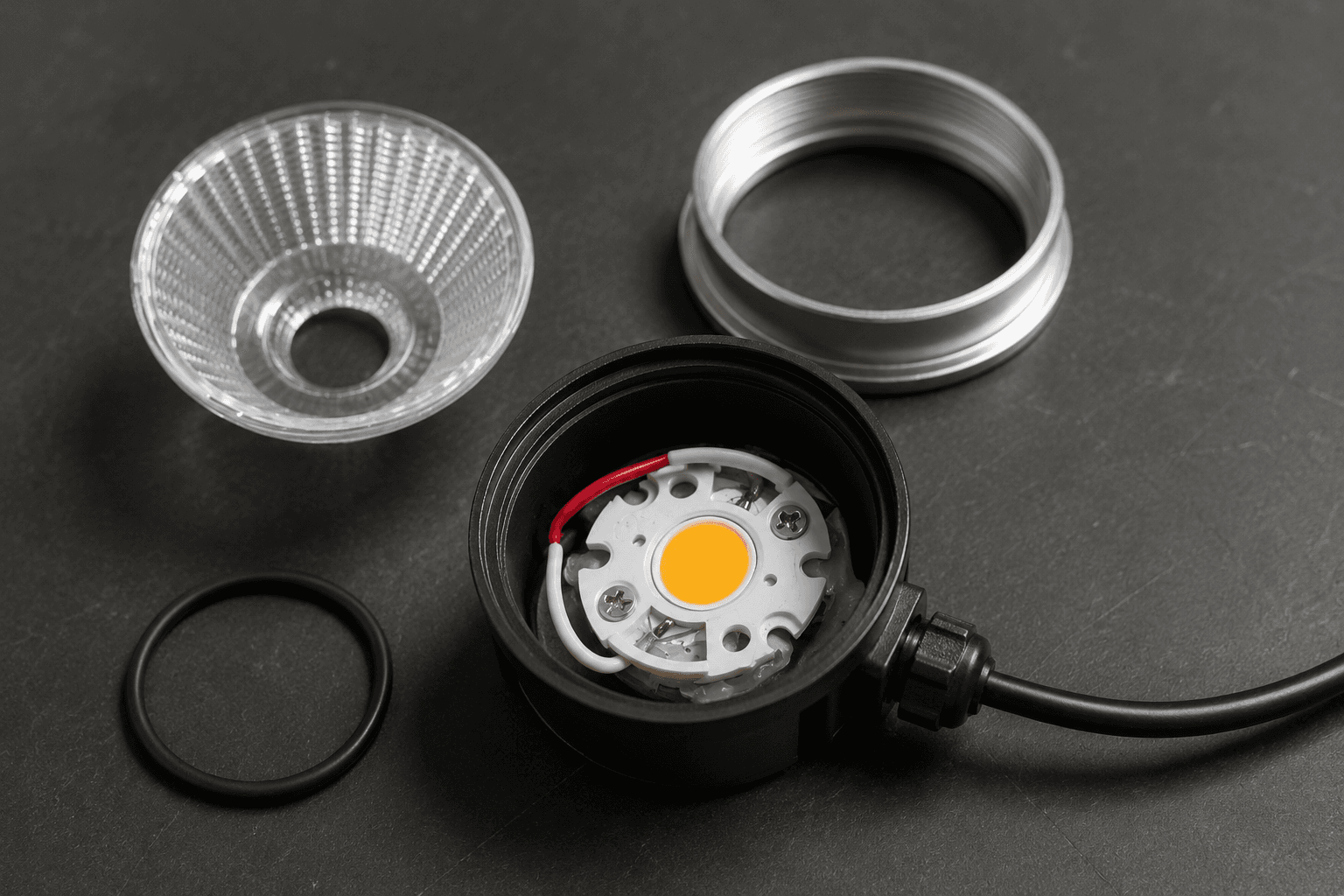
Potting for Electronics and Connections
Potting can protect an LED board, cable joint, connector area or selected driver electronics from moisture and salt. It can also secure wiring and reduce exposure to vibration or contamination. The compound, cure, adhesion and edge coverage must match the component and housing.
Potting also affects heat transfer and usually reduces serviceability. Air bubbles, incomplete cure or movement at an unprotected edge can limit its benefit. It does not make the entire luminaire suitable for permanent immersion, and thermal compatibility must be reviewed for the exact power and construction.
Connector Oxidation and Cable Entry Failures
Connector oxidation often begins outside the main housing. Common causes include a connector with a lower protection level, the wrong cable diameter for a gland, incomplete locking, excessive stripping, water travelling along a cable, or a junction box placed where water collects. Strain can also disturb a seal or expose conductors.
A complete review covers connector plating and material, cable specification, gland range, junction box, field joint, strain relief, cable routing, driver protection and maintenance access. A protected luminaire body cannot compensate for an unprotected joint or driver in a high-humidity location.
Condensation and Temperature Cycling
A luminaire warms during operation and cools after switch-off. Internal air and moisture respond to pressure and temperature changes, and night-time cooling can create condensation. This is not always the same as direct leakage, but repeated moisture can still oxidize terminals, mark reflectors and damage electronics.
Project teams should ask about internal air volume, sealing method, potting, pressure equalization where applicable, temperature-cycle testing, drainage or moisture management, and approved mounting direction. No single vent or seal should be assumed to solve every condensation condition.
Salt-Spray Testing: What Buyers Should Understand
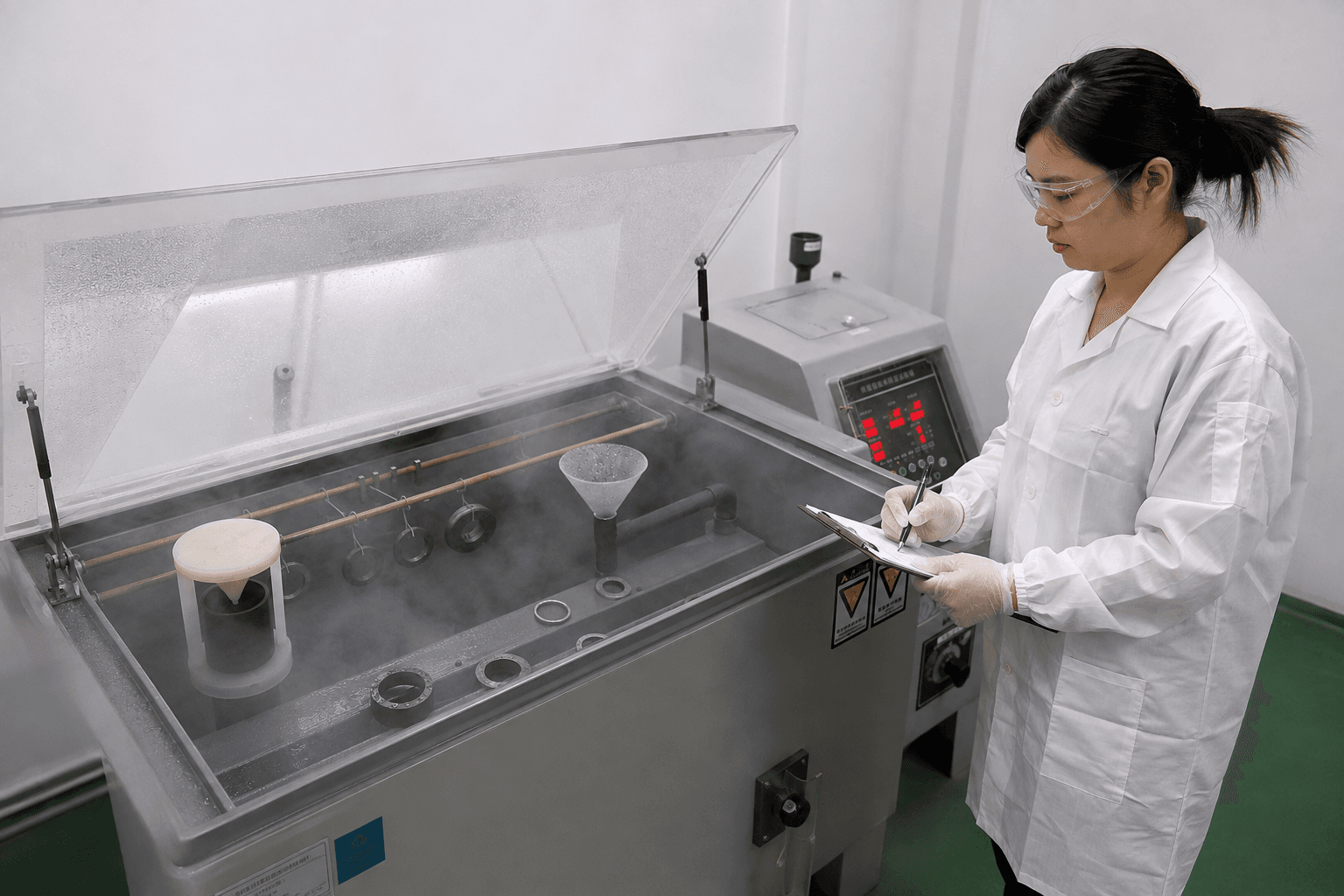
Salt-spray testing can reveal weaknesses in materials, coatings, fasteners, interfaces and assembly. It can compare design options and document where corrosion or coating damage appears. The report should identify the tested model, standard, duration, sample condition, evaluation criteria and whether a complete luminaire or only a material panel was tested.
Test hours are not a direct prediction of outdoor service life, and results from different standards or conditions are not automatically comparable. After exposure, the evaluation should include sealing areas, screws, connectors, surfaces and electrical function. A housing result does not prove that the driver and field wiring share the same protection.
High-Humidity and Salt-Spray Application Differences
Coastal hotels and outdoor decks
Coastal hotel lighting combines humid air, salt deposits, cleaning chemicals and strict appearance expectations. Outdoor deck lighting adds pooling, direct washing, floor-level cable entries and possible mechanical loads. Housing material, screws, coating, drainage and concealed drivers all require review.
Transport and high-humidity interiors
Transport lighting may add vibration, temperature cycling, compact installation and limited maintenance access. High-humidity interiors may have condensation, enclosed ceilings, chemical vapors and poorly ventilated driver locations. The dominant risk determines whether sealing, potting, connector retention or material treatment needs priority.
Specialist salt-exposed installations
Coastal, boat and yacht lighting can combine salt, humidity, vibration, restricted space and difficult maintenance. A downlight for these demanding environments should not be selected from housing material alone: fasteners, cables, drivers, connectors, seals and permitted mounting direction are part of the specification. Suitability must be confirmed for the exact product and installation.
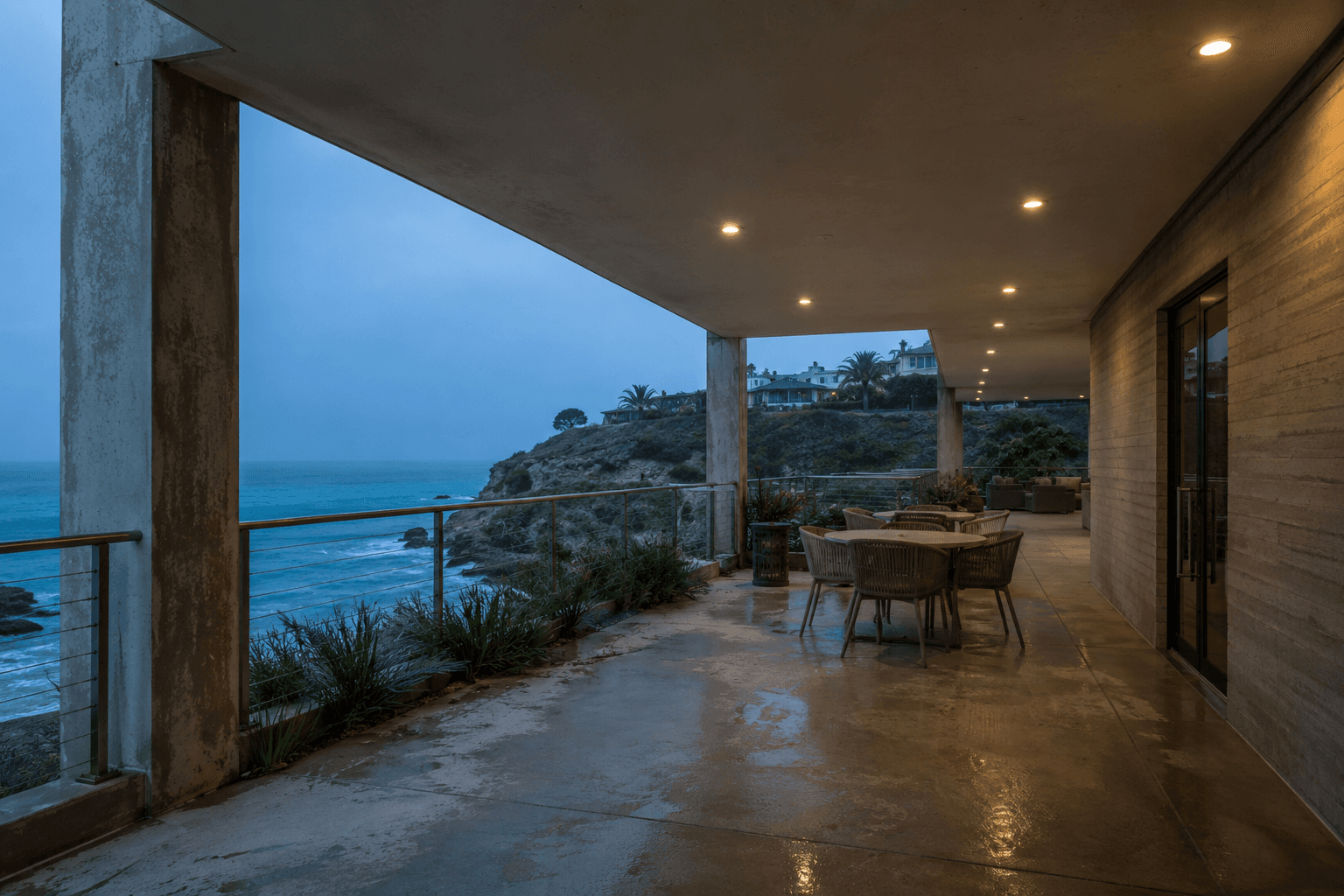
For related operating contexts, explore our coastal and demanding-environment application experience.
Common Design and Installation Mistakes
- Selecting only by IP rating.
- Assuming all stainless steel performs the same.
- Using stainless-steel screws without reviewing the aluminum interface.
- Ignoring coating at cut edges, machined faces and screw holes.
- Placing drivers or cable joints in unprotected locations.
- Blocking drainage openings or installing in an unapproved direction.
- Applying incompatible sealant or damaging coated surfaces during installation.
- Replacing original screws with lower-grade fasteners.
- Allowing salt deposits or cleaning chemicals to remain on the product.
- Reopening a sealed fitting without restoring the gasket.
- Treating salt-spray test hours as a lifetime guarantee.
- Failing to record the approved materials and maintenance method.
What Project Buyers Should Request from a Supplier
A project engineer, system integrator or buyer should request enough information to connect the tested product with the delivered configuration. This includes material specifications, stainless-steel grade, aluminum alloy where relevant, coating process, fastener and gasket materials, cable and connector specifications, driver protection, approved mounting directions, installation instructions and replacement-part information.
Where corrosion testing is relevant, request the tested model, standard, duration, sample condition, evaluation criteria and report. Confirm whether OEM or custom changes affect existing evidence. A corrosion resistant LED lighting supplier should explain how the housing, fasteners, seals, connectors and driver work together as one system.
- Product drawing and exact tested model
- IP report and corrosion or salt-spray report where relevant
- Material, coating, fastener, gasket, cable and connector specifications
- Driver location and protection requirements
- Approved mounting, installation and maintenance instructions
- Change-control rules for OEM or custom configurations
How ANOVA Supports Demanding Environment Projects
ANOVA's Engineering Capability page explains how material selection, surface treatment, corrosion-resistant fasteners, sealing structures, gaskets, O-rings, cables, connectors and thermal considerations are reviewed for demanding environments.
The Testing & Validation page outlines the purpose of IP protection, salt-spray, temperature and humidity cycling, and aging methods without treating test hours as a service-life prediction.
For a custom housing, sealing or component configuration, review the ODM Lighting Development Process. Materials, test requirements, IP rating, potting method and corrosion strategy must be confirmed for the exact product, mounting position and project environment.
Demanding Environment Lighting Checklist
- Application, location, indoor or outdoor use, distance from coast and salt exposure
- Direct spray, temporary immersion, humidity and condensation risk
- Temperature range, cycling, cleaning chemicals and vibration
- Mounting direction, drainage, ceiling or floor construction
- Housing material, stainless-steel grade, aluminum alloy and coating process
- Screw material, metal isolation, gasket and O-ring material
- Potting requirement, cable type, connector type and junction-box location
- Driver location and protection, IP rating and corrosion test requirement
- Maintenance access, replacement parts and cleaning plan
- OEM or custom requirement, project quantity and delivery schedule
Contact ANOVA
Long-term corrosion control requires materials, surface treatment, fasteners, galvanic interfaces, sealing, potting, cable entries, connectors, driver placement, drainage, testing, installation and maintenance to be reviewed together.
As a corrosion resistant lighting supplier and LED lighting manufacturer, ANOVA can discuss OEM requirements, custom housing and a custom sealing structure against the actual project specification. Use the inquiry button below to discuss a custom lighting requirement and confirm the exact configuration before ordering.
FAQ
What is corrosion resistant LED lighting?
It is lighting specified as a complete system for a corrosive environment, including housing materials, coatings, fasteners, seals, cables, connectors, driver protection, installation and maintenance.
Does an IP67 rating mean a light is corrosion-resistant?
No. IP67 addresses dust protection and temporary immersion under defined conditions. It does not by itself verify coating, fastener, connector or salt-spray corrosion resistance.
Is 316L stainless steel completely rust-proof?
No. 316L is suitable for some humid and chloride-exposed conditions, but deposits, crevices, contamination, chemicals and maintenance still affect its performance.
How can rusted screws be prevented in outdoor LED lighting?
Specify the fastener material, review its interface with the housing, prevent trapped water, protect tool-damaged areas and use the approved replacement screw during maintenance.
Why does paint peel from outdoor LED luminaires?
Possible causes include poor pretreatment, weak adhesion, sharp edges, coating damage, exposed machined surfaces, trapped moisture or chemical incompatibility.
How can connector oxidation be reduced?
Match the connector and cable to the environment, seal field joints correctly, provide strain relief and drainage, and keep the driver and junction box in approved protected locations.
What salt-spray test information should project buyers request?
Request the model, standard, duration, sample condition, acceptance criteria, before-and-after evidence and post-exposure functional checks. Test hours are not a direct service-life prediction.
How to prevent LED light corrosion in salt spray environments?
Review material grades, coating, fasteners, galvanic isolation, sealing, cable entries, connectors, drainage, testing and maintenance as one project-specific system.
What should be checked when selecting lighting for salt-exposed demanding environments?
Confirm salt exposure, vibration, mounting direction, housing and fastener materials, seals, cables, connectors, driver protection, drainage, test evidence and maintenance access for the exact model.