Commercial lighting projects often require multiple trim styles, beam angles, wattages and control options. When every combination becomes a separate integrated fixture, a lighting distributor or project contractor may need to manage a large number of SKUs. A modular downlight takes a platform approach: core components are combined around the application instead of treating every variation as an unrelated finished luminaire.
Maintenance creates a second decision point. If the LED source, driver or optic in an integrated LED downlight fails, the project may need to replace the complete fixture. When the original model is no longer available, the replacement can differ in ceiling cut-out, trim appearance, color temperature or beam effect.
This guide compares modular and integrated downlights by product structure, initial purchasing cost, project maintenance cost, SKU management, optical flexibility, appearance customization and suitability for hotel renovation lighting, retail lighting projects and multi-site commercial work.
Share your project type, ceiling cut-out, required beam angles, trim styles, dimming system and estimated quantity. ANOVA can help review suitable LED module, optical and downlight configurations for your project.
What is the difference between modular and integrated downlights?
The difference is mainly how the luminaire is divided into serviceable and configurable parts. Both structures can produce suitable commercial lighting when the optical, thermal, electrical and mechanical design is appropriate. The right choice depends on how much variation the project needs and how the installation will be maintained.
Modular downlight
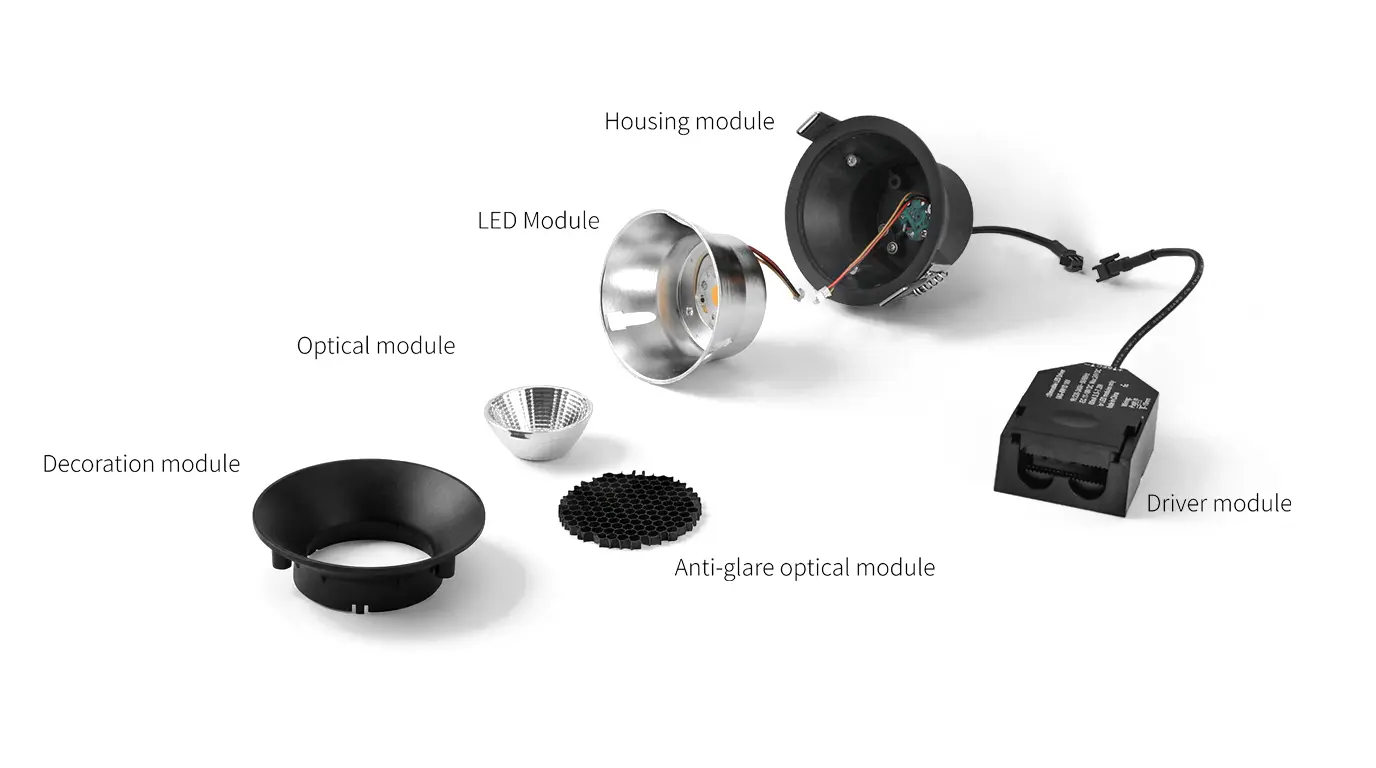
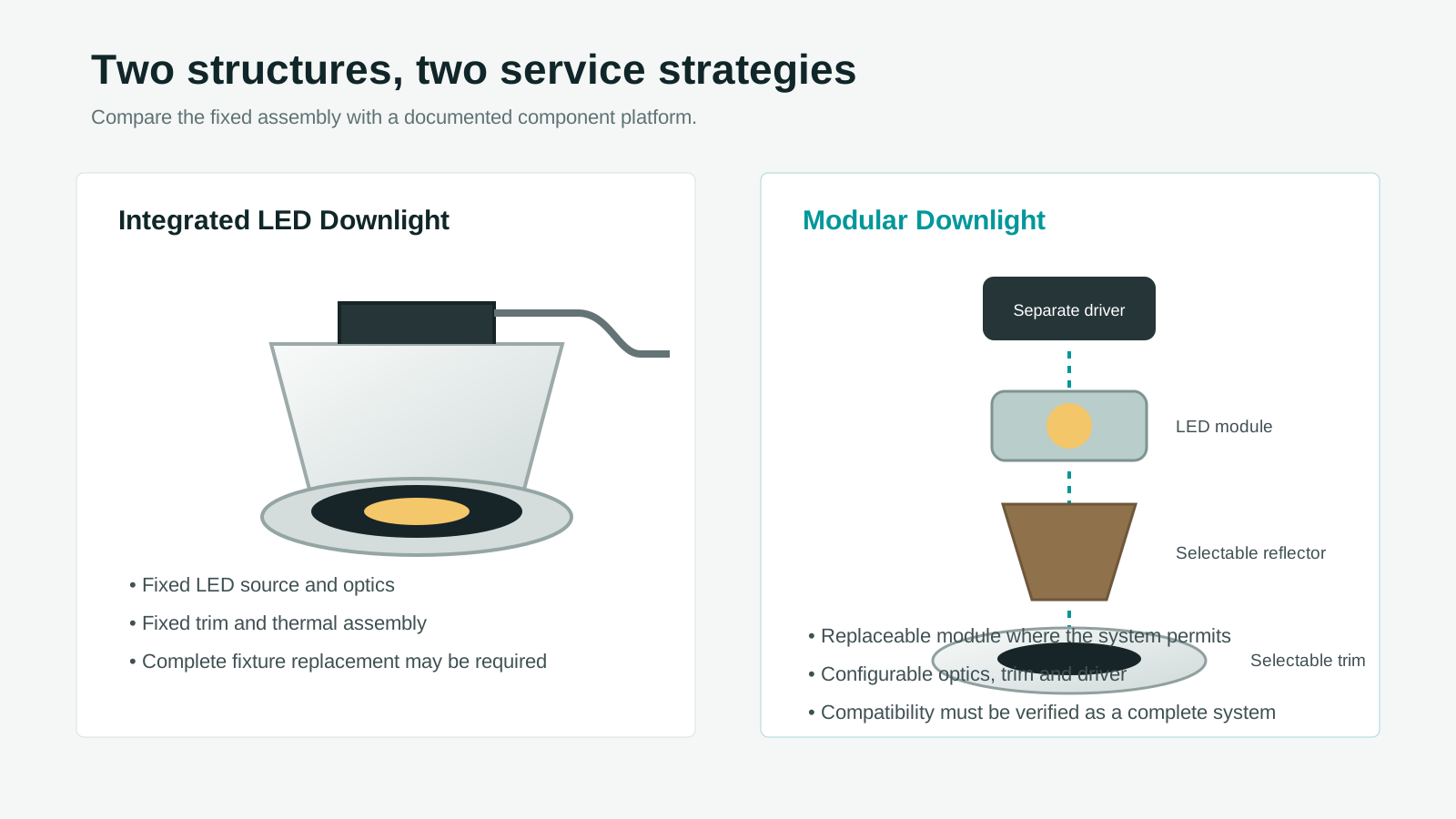
A modular downlight normally combines an LED lighting module, optical reflector or lens, trim, housing, driver and mounting accessory. The supplier defines which components can work together, allowing the project team to configure the visible appearance and lighting effect around a shared platform.
Modular does not mean that modules from every brand are interchangeable. Compatibility still depends on the mechanical interface, heat dissipation, driver current and voltage, optical position, fixing method and the supplier's approved platform. Substituting one component without checking the complete system can change performance or reliability.
Integrated LED downlight
An integrated LED downlight usually combines the LED source, thermal structure, optics and visible body as one fixed model. Its structure is direct and selection can be simple when a project needs one stable specification in a limited quantity.
The trade-off is that each wattage, trim, beam or control combination often becomes a separate complete fixture. If a non-serviceable component fails, maintenance may require replacement of the whole luminaire rather than the affected part.
| Decision factor | Integrated LED downlight | Modular downlight |
|---|---|---|
| Product structure | Fixed complete assembly | Approved module, optic, trim, housing and driver combination |
| Initial selection | Simple for one fixed specification | Requires a clear configuration matrix |
| Number of SKUs | Each combination is commonly a complete SKU | Core components can be shared across combinations |
| LED replacement | May require full-fixture replacement | Module may be replaced where the platform is serviceable |
| Driver replacement | Depends on fixture access and construction | Can be planned as a separate service part |
| Optical flexibility | Fixed to the selected model | Reflector or lens options can support several beams |
| Trim flexibility | A different trim generally means a different fixture | Several approved trims may share one platform |
| Maintenance | Straightforward only while matching fixtures remain available | Can simplify service when interfaces and spares are supported |
| Suitable projects | Small or stable specifications | Multi-zone, renovation, retail, hospitality and product-family programs |
Initial purchasing cost
A modular system is not automatically less expensive at the purchase stage. For a small project with one fixed specification, an integrated recessed downlight may have a direct quotation, simple packaging and little configuration work. A modular platform requires the supplier and buyer to define the module, optic, trim, driver and compatible accessories before approval.
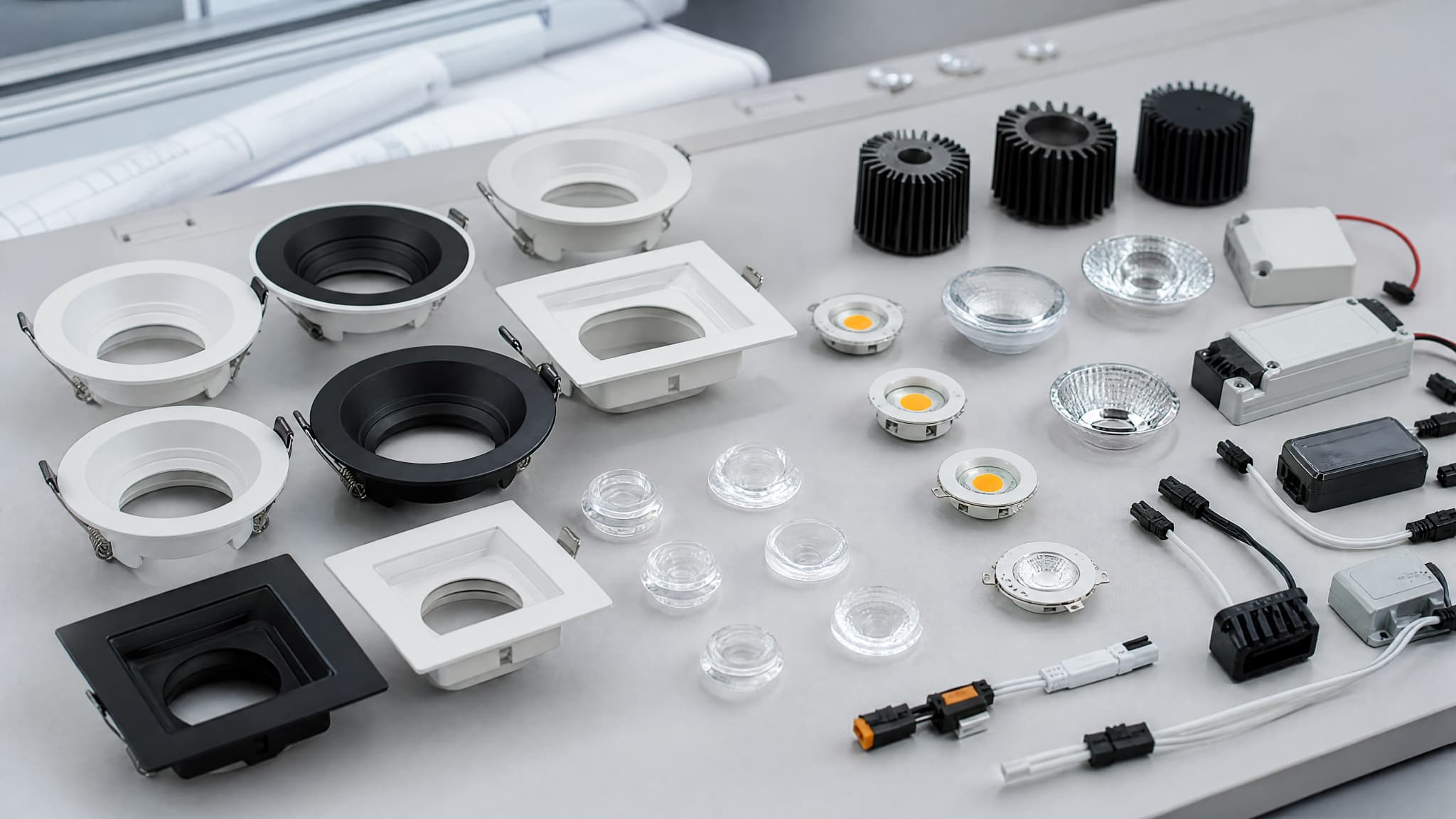
For a large project with several room types, wattages, beam angles and finishes, the comparison changes. A shared platform may reduce repeated development, duplicate samples and the number of full fixture models. Buyers should compare unit price together with tooling cost, sample cost, certification coverage, number of configurations, packaging, planned spare parts and project duration.
Long-term project maintenance cost
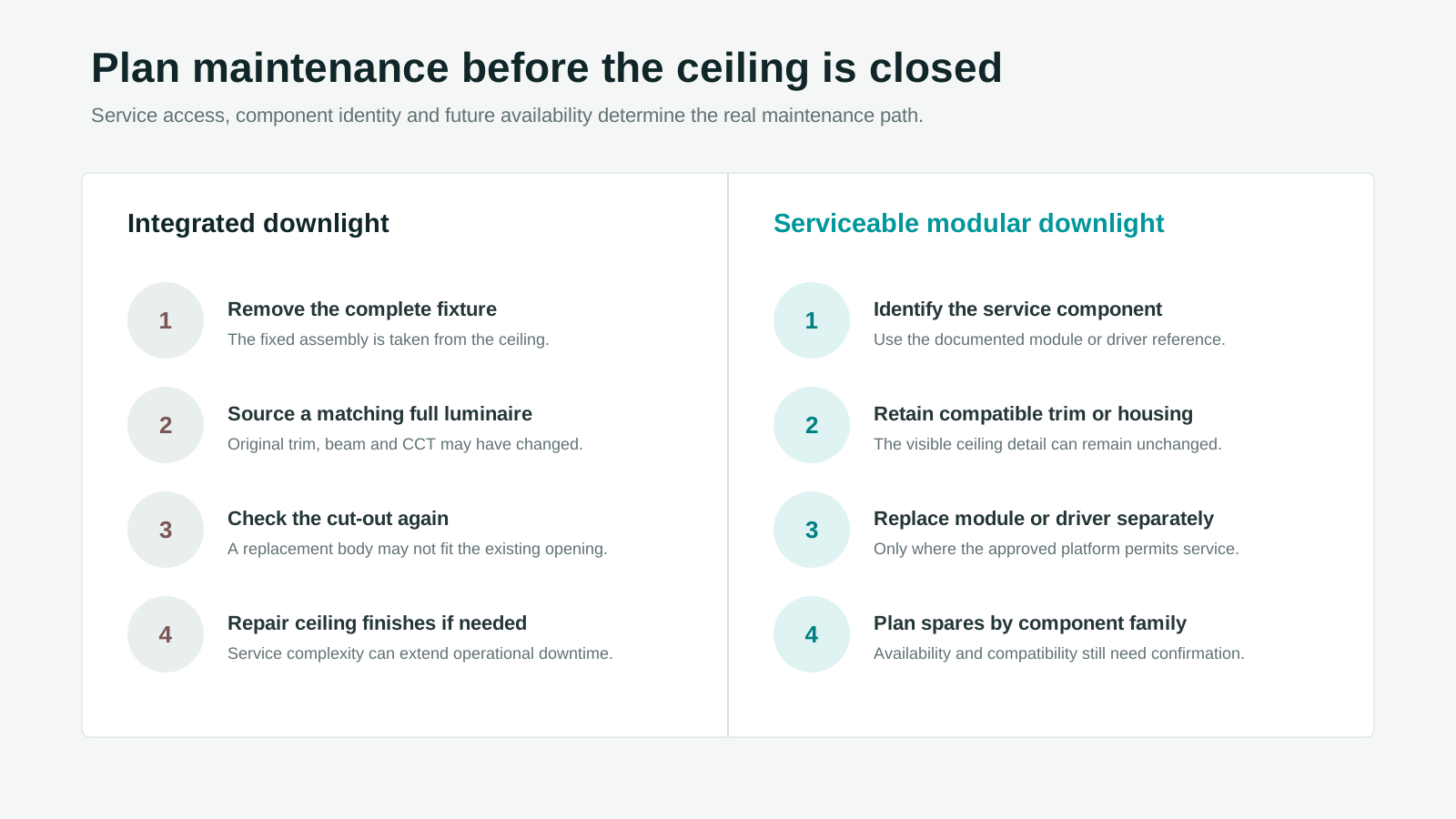
Maintenance is where structural differences become visible. With an integrated fixture, an LED failure may require full-luminaire replacement. If the original model has changed, a new trim can look different, the ceiling cut-out may not match, or the beam and color appearance may vary from neighboring fixtures. Maintenance staff may also need to identify many complete models across one property.
A serviceable modular downlight can allow the LED lighting module or driver to be replaced separately while retaining a compatible trim or housing. This can reduce ceiling disturbance, simplify spare-parts planning and preserve a more consistent appearance.
That advantage only exists when the supplier maintains the interface and can provide matching service components. No buyer should assume indefinite compatibility. The project specification should record module codes, driver matching, optic references, replacement method and the supplier's spare-parts policy.
SKU and inventory management
Too many SKUs affect more than warehouse space. A lighting distributor must forecast finished products; a lighting brand must maintain catalogues and technical files; a contractor must identify the correct fixture for each area; and a hotel maintenance team must locate the right replacement after installation.
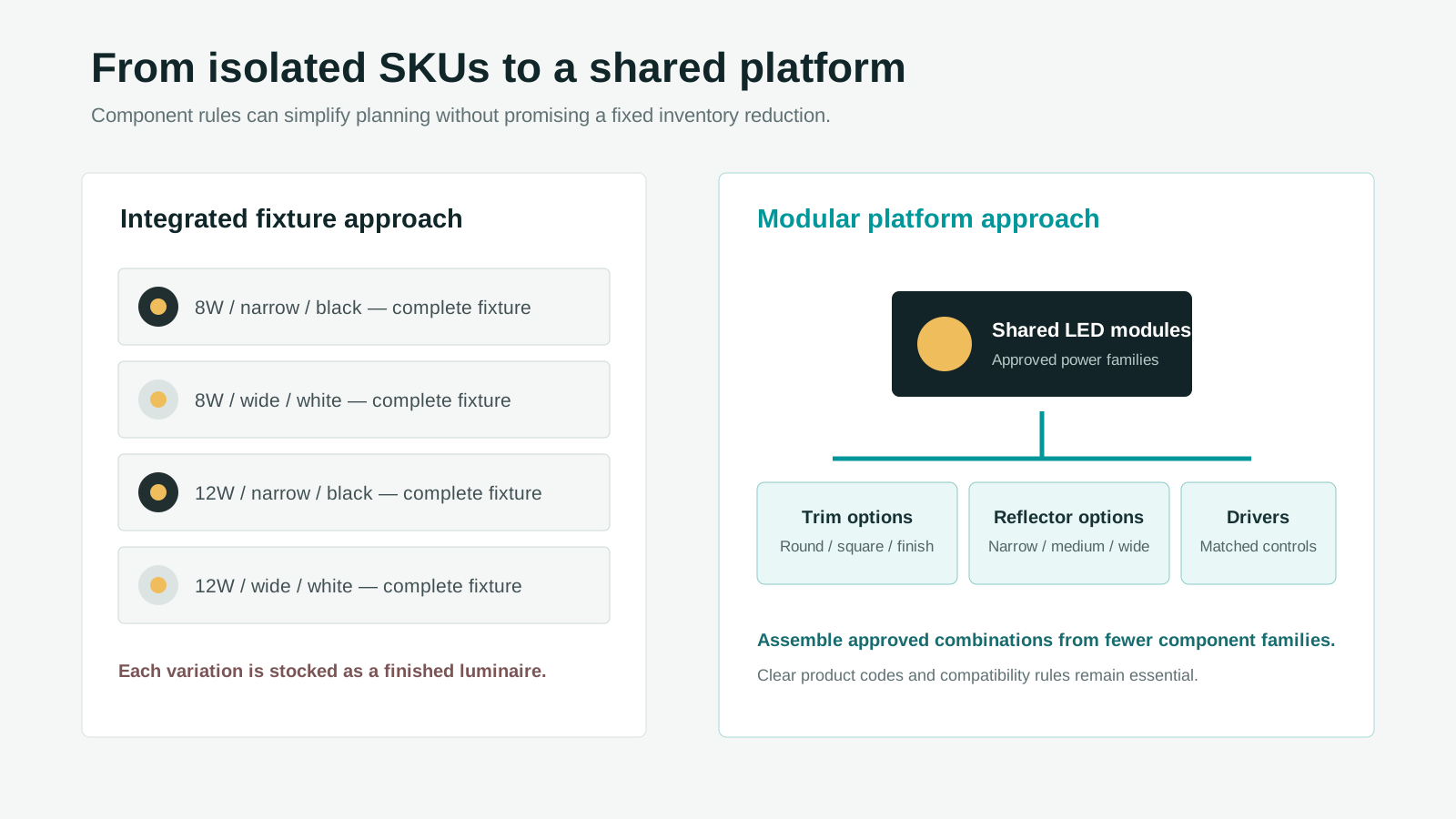
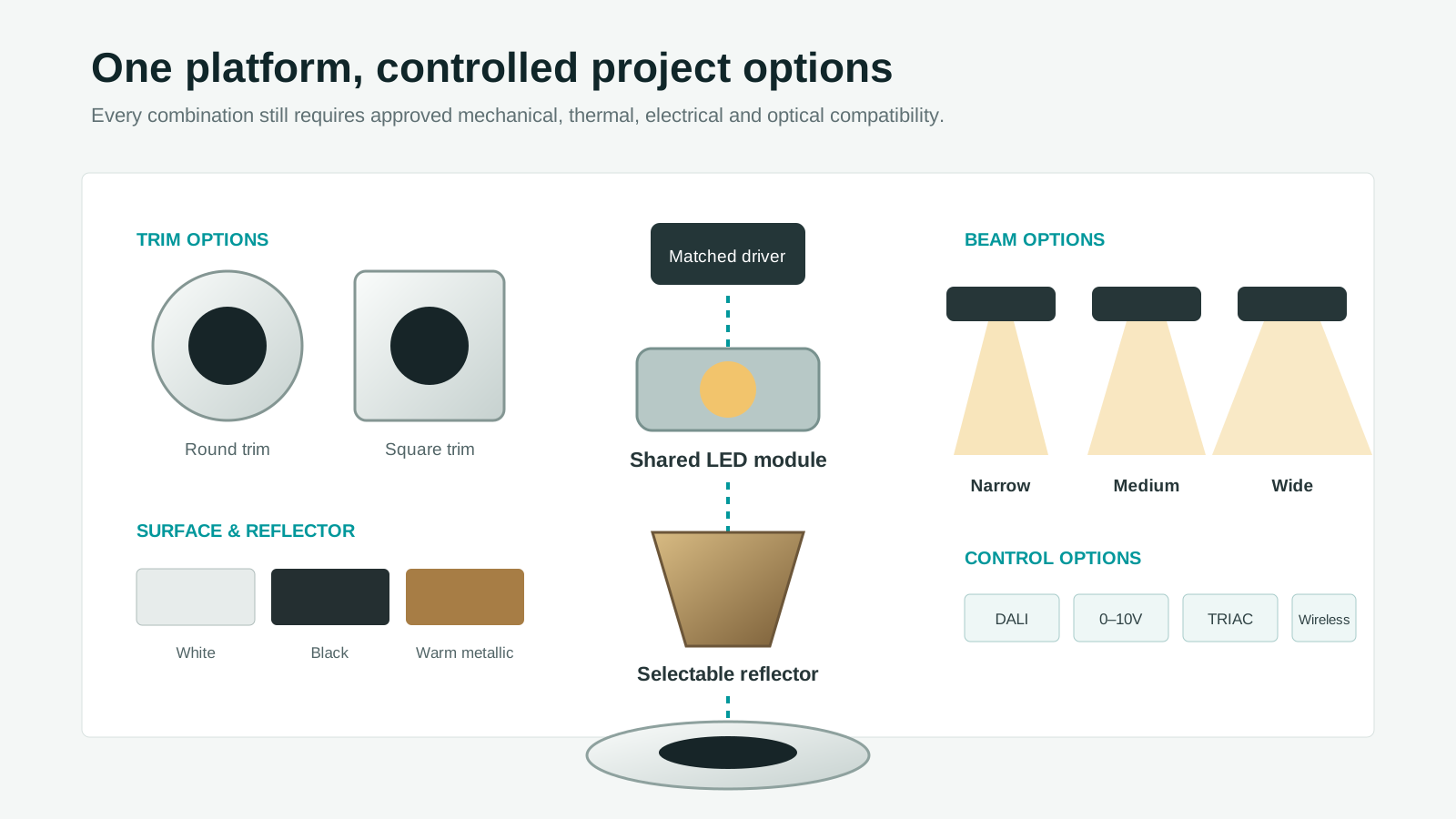
If every wattage, CCT, beam angle, trim color, cut-out size and dimming protocol becomes a complete fixture, the number of combinations grows quickly. A modular platform can organize demand around a smaller group of LED modules, several reflector options, several trims and matched driver choices.
This structure may reduce finished-product inventory, support more flexible order assembly, simplify spare-parts planning and make project changes easier to absorb. It still needs disciplined component numbering and approved combination rules; modularity without configuration control can create a different form of complexity.
Optical and appearance customization
A modular platform separates technical light distribution from the visible ceiling detail. This gives project teams more room to create different effects while retaining a common technical base.
Optical customization
Narrow, medium and wide beams serve different targets. Reflector shape, lens design, glare control and the position of the light source influence distribution and visual comfort. A retail display may need a narrow accent beam, while a hotel corridor may need a controlled medium or wide beam.
For a broader specification process covering glare, color and installation, see choosing commercial LED downlights.
Appearance customization
Round, square, trimless and recessed trims can respond to different ceiling concepts. Surface finish, trim color and reflector finish can also change the visible character of the luminaire. A modular structure can support these choices while keeping the technical platform consistent.
One module cannot be assumed to work across every power, diameter or thermal condition. Each visible combination still needs an approved mechanical fit, thermal path and optical position.
Key technical parameters for a modular downlight
Mechanical dimensions are only the beginning. Project buyers should confirm module diameter, ceiling cut-out, overall height, service access and trim or reflector compatibility. Electrical and optical data should be reviewed at the same time.
The checklist should include wattage, lumen output, efficacy, beam angle, CRI, R9, SDCM, CCT, driver current, dimming protocol and flicker performance. Where a requirement is critical, it should be confirmed for the exact approved combination rather than inferred from a different product in the same family.
Mechanical compatibility does not guarantee electrical, thermal or optical compatibility. The module, heat sink, driver and optic need to operate as one verified system. ANOVA's existing modular product information references high color-rendering and dimmable configurations, but final project values must be confirmed against the selected product and order specification.
- Mechanical: module diameter, cut-out, overall height, fixing method and service access.
- Electrical: power, driver current, voltage relationship, dimming protocol and flicker expectation.
- Thermal: heat-sink contact, permitted wattage and installation ventilation.
- Optical: lumen output, beam angle, reflector or lens, CRI, R9, CCT and color consistency.
- System: approved trim, reflector, housing and driver compatibility.
Common purchasing mistakes
Treating every modular product as interchangeable
Interfaces, driver current, thermal contact and fixing methods differ between suppliers. A similar diameter does not prove compatibility.
Comparing only the fixture price
Unit price does not include spare stock, installation, replacement labor, ceiling repair or the cost of maintaining a closed retail or hotel area.
Ignoring future availability
Buyers should ask how modules, drivers, trims and optical components will be identified and supplied for later project phases.
Creating too many combinations
A platform needs a controlled matrix. Without one, optional components can create as much catalogue and warehouse complexity as complete fixtures.
Confirming dimming too late
DALI, 0-10V, TRIAC and Casambi options serve different control conditions. Driver, wiring, control system and required dimming behavior should be aligned early.
Ignoring ceiling and cut-out conditions
In hotel renovation lighting, the existing aperture and limited ceiling depth may determine whether a proposed housing and service method are practical.
Using one specification for every space
Guest rooms, corridors, restaurants, retail displays and back-of-house areas need different beam, glare, color and control decisions.
How to choose for different project applications
Hotel renovation lighting
Existing ceiling cut-outs, limited depth, room downtime and replacement access come first. A modular structure may allow future module or driver service without changing the visible trim, but the existing opening and installation cavity must be checked before selection. Warm, consistent light and a documented spare-parts plan are particularly important across repeated rooms.
Retail lighting project
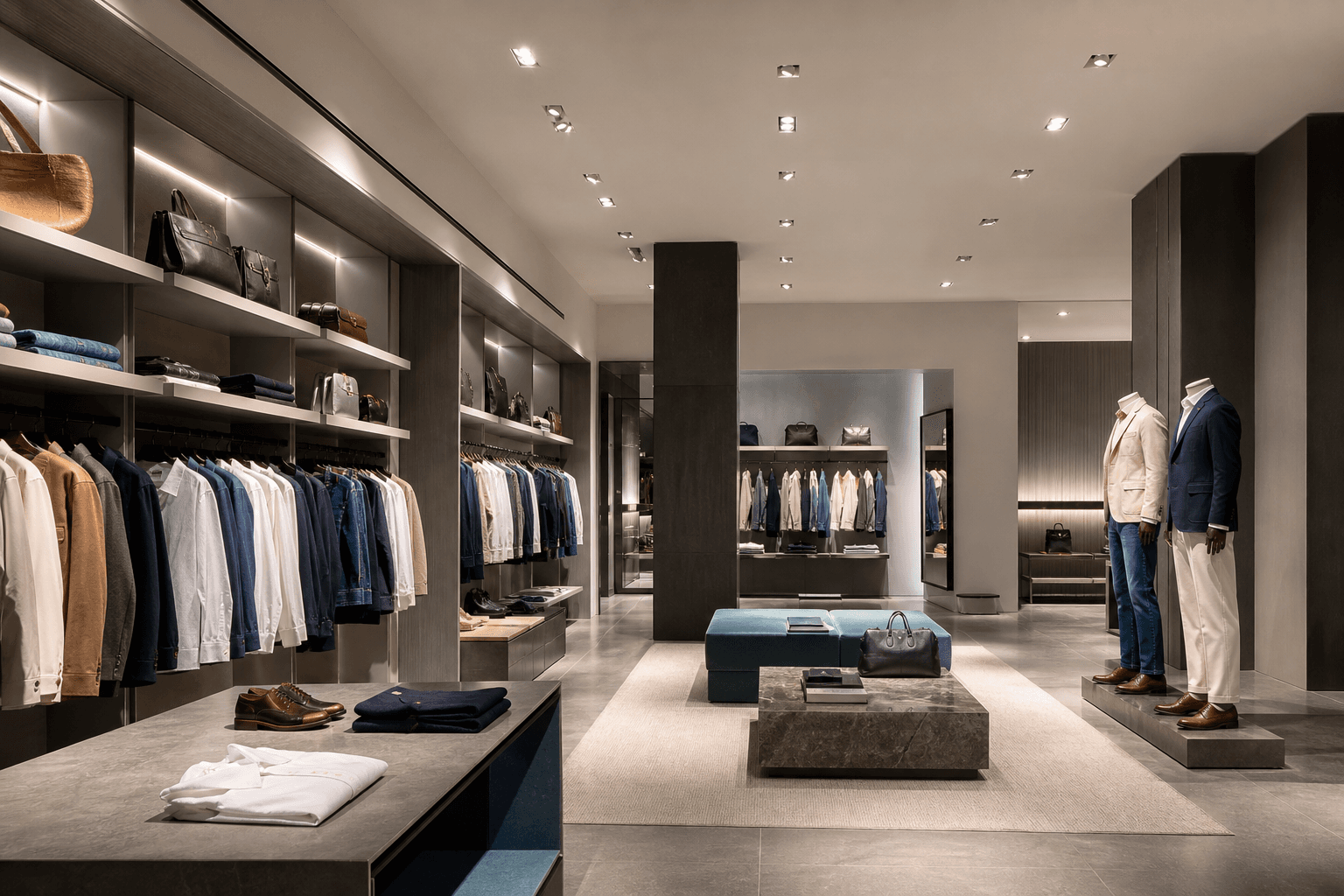
Retail spaces change displays and product ranges more often. Several beam angles, reflector options and high color-rendering configurations can help the same platform serve general circulation and focused merchandise lighting. Optical flexibility is usually more valuable here than in a single fixed-purpose room.
Commercial ceiling lighting
Offices, public areas and mixed-use interiors often need a uniform visible family across several functional zones. A shared platform can support this appearance while allowing different beams, outputs or control protocols, provided maintenance access is planned.
Chain stores and multi-site projects
A standard module platform can support regional stock, replacement consistency, simpler maintenance training and future store expansion. The specification should include clear component numbers, compatibility rules and an agreed spare-parts policy so regional teams assemble or replace the correct configuration.
When is an integrated downlight the better choice?
Integrated downlights are not automatically inferior. They may be the more practical choice when a small project has one fixed specification, low maintenance frequency, limited customization and a short or clearly defined project lifecycle.
An integrated design can also be sensible for simple residential or light-commercial applications, very restricted installation spaces, or a luminaire whose thermal and optical structure has been specifically optimized as one compact unit. The decision should reflect the project, not a general preference for one construction method.
When is a modular downlight the better choice?
A modular downlight becomes more useful when one project requires multiple trim designs, several beam angles, different wattages or future component replacement. Hotel renovations, retail displays, chain-store rollouts and lighting brands building a coordinated family are typical cases.
Distributors serving different project requirements may also benefit from shared modules and configurable visible parts. The value is strongest when the platform is supported by reliable compatibility documentation and spare-parts planning.
- A shared LED platform across several luminaires.
- Flexible trims, reflectors and optical distributions.
- Fewer complete-fixture SKUs.
- Easier LED or driver maintenance.
- Long-term spare-parts planning.
- OEM or custom product-family development.
How to evaluate a modular downlight supplier
A modular downlight supplier should provide more than separate components. The platform needs verified mechanical, electrical, thermal and optical compatibility.
Ask whether every approved configuration has a clear compatibility rule, matched driver, relevant thermal review and available beam information. Replacement modules, trims and reflectors should use stable product references, and changes that affect future orders should be communicated.
Lighting brands and project buyers should also review whether technical drawings and installation instructions are complete, whether consistent color and optical performance can be supported for the specified order, and whether OEM or custom development is available when a standard combination does not fit.
How ANOVA supports modular lighting projects
ANOVA develops project-based recessed downlight configurations around ANOVA LED lighting modules, matched optics, trims and drivers. Available directions include different beam-angle, power and color-temperature options, subject to the selected product and project specification.
The existing ANOVA Module Design page explains how shared light engines, housings, drivers and optical components can form a configurable product system.
Project support can cover hotel, retail and commercial ceiling lighting, with DALI, 0-10V, TRIAC and Casambi options where applicable. For lighting brands that need a coordinated family, ANOVA also provides OEM and custom lighting development based on confirmed technical and commercial requirements.
Modular downlight project checklist
Use this checklist before requesting a quotation or sample. It gives the supplier enough context to review the full configuration instead of proposing a module in isolation.
- Project type and installation area.
- Ceiling cut-out and available ceiling depth.
- Required wattage and lumen target.
- Beam angle and glare expectation.
- CRI, R9, CCT and color consistency requirement.
- Trim shape, trim finish and reflector finish.
- Dimming protocol and driver location.
- Module and driver replacement method.
- Spare-parts requirement and expected project lifetime.
- Quantity and delivery schedule.
- Certification requirement for the destination market.
- OEM, branding or customization requirement.
Contact ANOVA
Modular and integrated downlights do not have an absolute hierarchy. The better choice depends on the number of configurations, customization needs, inventory strategy, ceiling conditions, maintenance plan and expected project lifetime.
For a stable, single-specification project, an integrated fixture may be the simpler answer. For a hotel renovation, retail program, chain rollout or product family with several optical and visible options, a documented modular downlight platform can make selection and future service more manageable.
To review a practical configuration, explore ANOVA's LED module platform or share the project conditions with the ANOVA Lighting Team.
FAQ
What is the difference between a modular downlight and an integrated LED downlight?
A modular downlight combines approved modules, optics, trims, housings and drivers, while an integrated downlight uses a more fixed complete assembly. The modular approach offers more configuration and service options when the platform is properly supported.
Are modular downlights easier to maintain?
They can be. A serviceable platform may allow the LED module or driver to be replaced separately, but the benefit depends on access, documented compatibility and continued spare-part availability.
Is a modular downlight more expensive than an integrated downlight?
Not always. Integrated products may have a lower or simpler initial price for one fixed specification. Modular systems should be compared by total project cost, including configuration, inventory, spares and maintenance.
Can one LED lighting module work with different trims and reflectors?
Yes, when those trims and reflectors are approved for the module platform. Mechanical fit alone is insufficient; thermal position, optical alignment and driver matching also need confirmation.
Which downlight type is better for hotel renovation lighting?
A modular downlight can be useful where consistent appearance, limited downtime and replaceable components matter. Existing cut-outs, ceiling depth and maintenance access must still be checked before selection.
How can modular downlights reduce the number of SKUs?
Shared LED modules can be combined with selected trims, reflectors and drivers instead of stocking every option as a separate complete fixture. A controlled configuration matrix is essential.
What should be checked before choosing a modular downlight supplier?
Review compatibility rules, thermal and driver matching, beam data, technical drawings, product-change communication, replacement-part availability and support for the required OEM or custom configuration.
Is a modular downlight suitable for retail lighting projects?
Often yes. In a modular downlight vs integrated downlight for commercial projects comparison, retail commonly benefits from selectable beams, reflector options and easier adaptation when displays change.