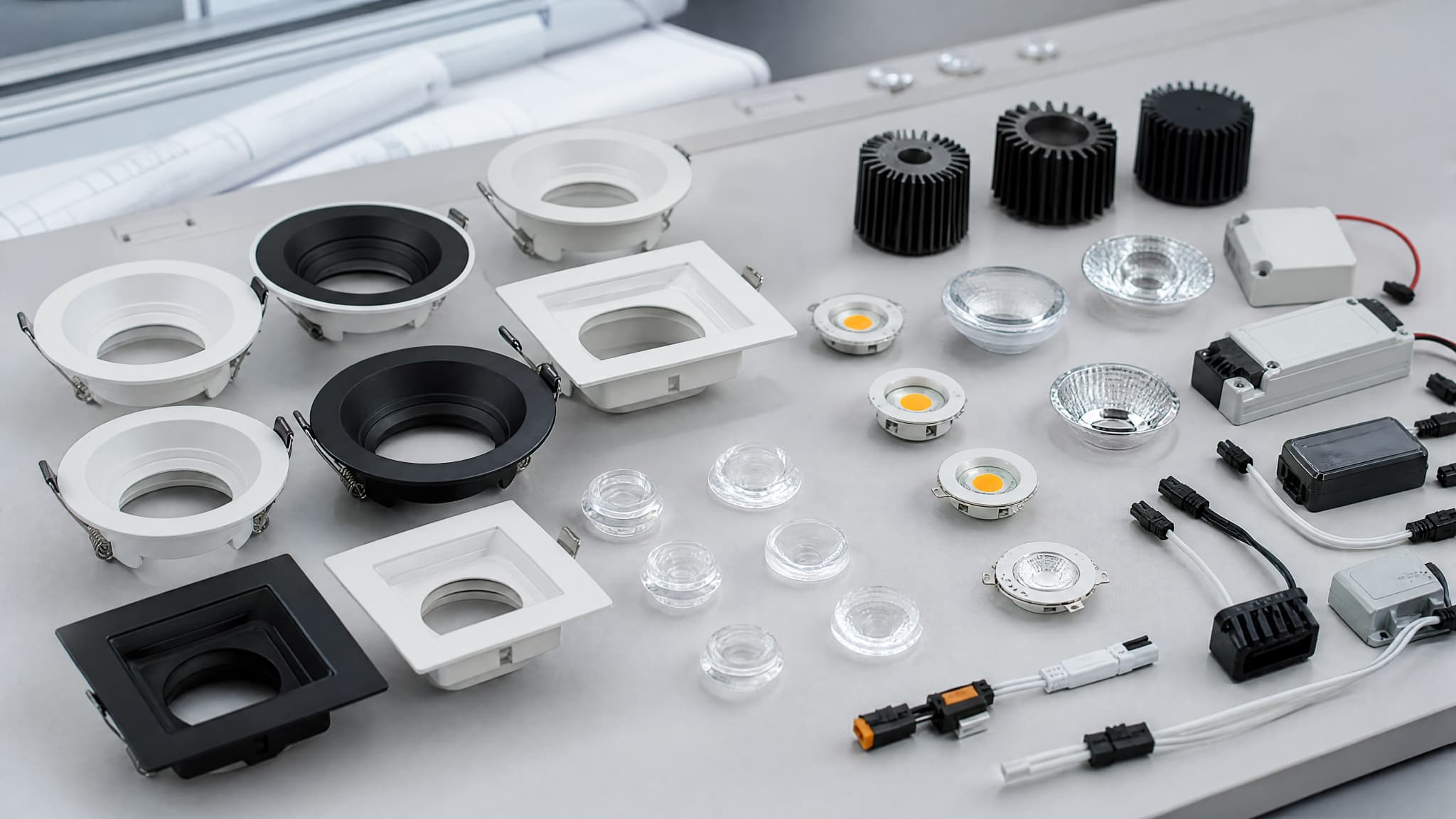
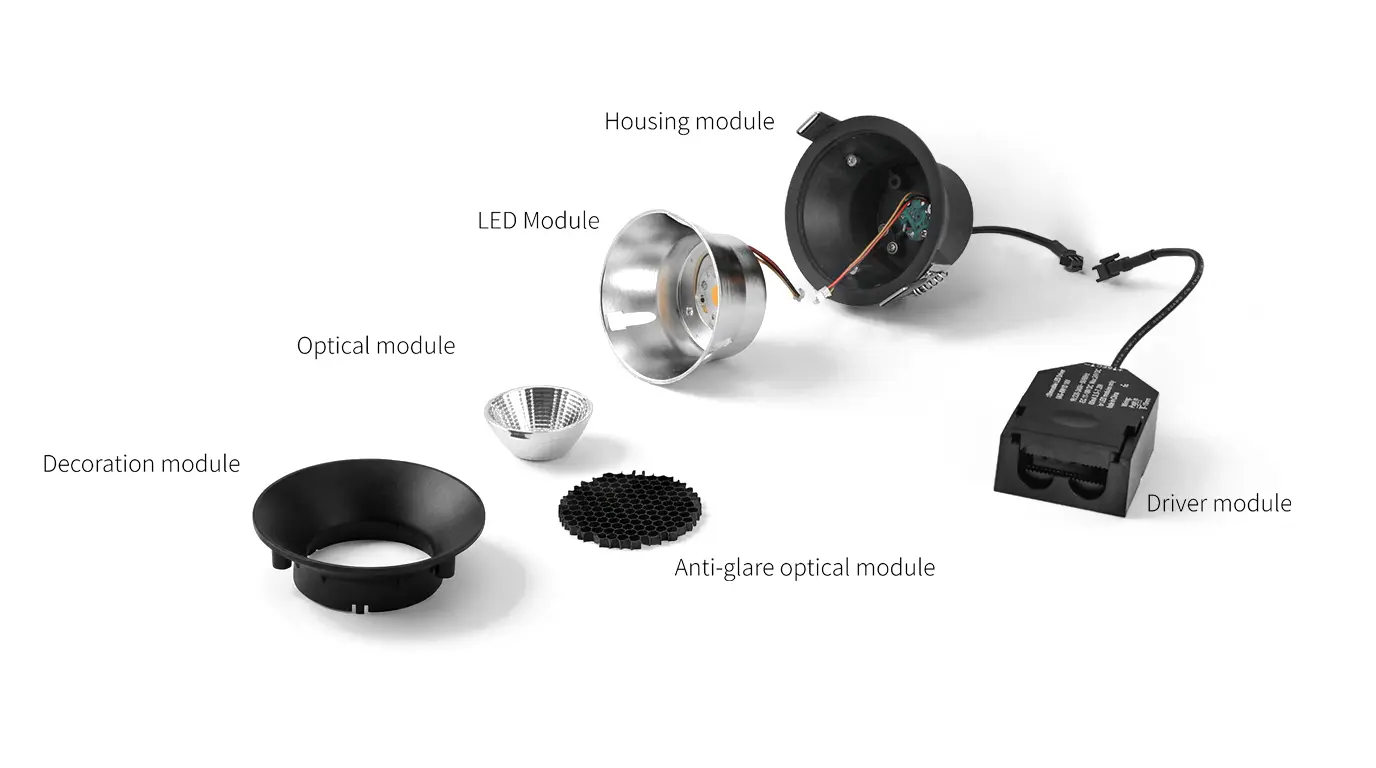
Traditional lighting development often treats each fixture as a separate product. That can create a large number of SKUs, repeated testing work and slower project response. Modular lighting design takes a different approach by separating the LED engine, optic, housing, trim and driver into configurable building blocks.
For lighting brands and importers, the value is not only technical. A modular platform can simplify product planning, sample preparation, spare part management and project customization.
Send your application, ceiling condition, beam angle and dimming requirements for a practical review.
Platform thinking instead of isolated fixtures
A modular lighting platform uses shared core components across several visible product forms. The same LED engine may work with different downlight housings, reflector finishes or driver options. This reduces duplication while still allowing buyers to serve different applications.
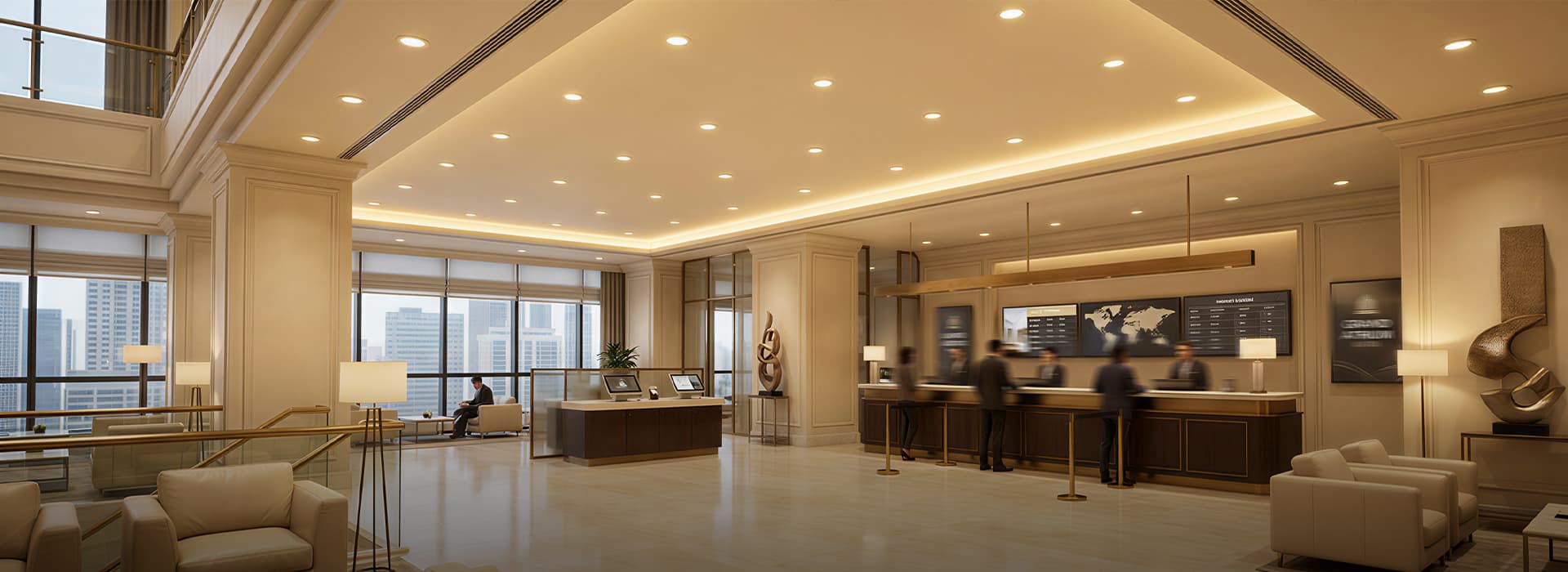
For example, a hotel project may require warm low-glare downlights, while a retail project may need high CRI accent lighting. A modular approach allows the product team to adjust the module, beam angle and trim without restarting the entire development process.
Reducing SKU pressure for importers and brands
Inventory becomes difficult when every combination is purchased as a finished fixture. Modular design can reduce pressure by separating common components from project-specific choices. Importers can hold fewer core components and configure more final combinations.
This is especially useful for markets where project requirements change frequently. Beam angle, CCT, CRI, trim color and dimming protocol may vary from one order to another, but the underlying platform can remain stable.
- Fewer core components can support more product combinations.
- Replacement and upgrade planning becomes easier.
- Sampling can be faster because the platform is already familiar.
Improving maintenance and upgrade paths
When the LED engine or driver can be replaced independently, maintenance becomes more practical. A project team may not need to replace the full fixture when the light source specification changes or a driver needs service.
This also supports longer product life. Future upgrades can focus on the component that needs improvement rather than discarding the full assembly.
Testing still matters in a modular system
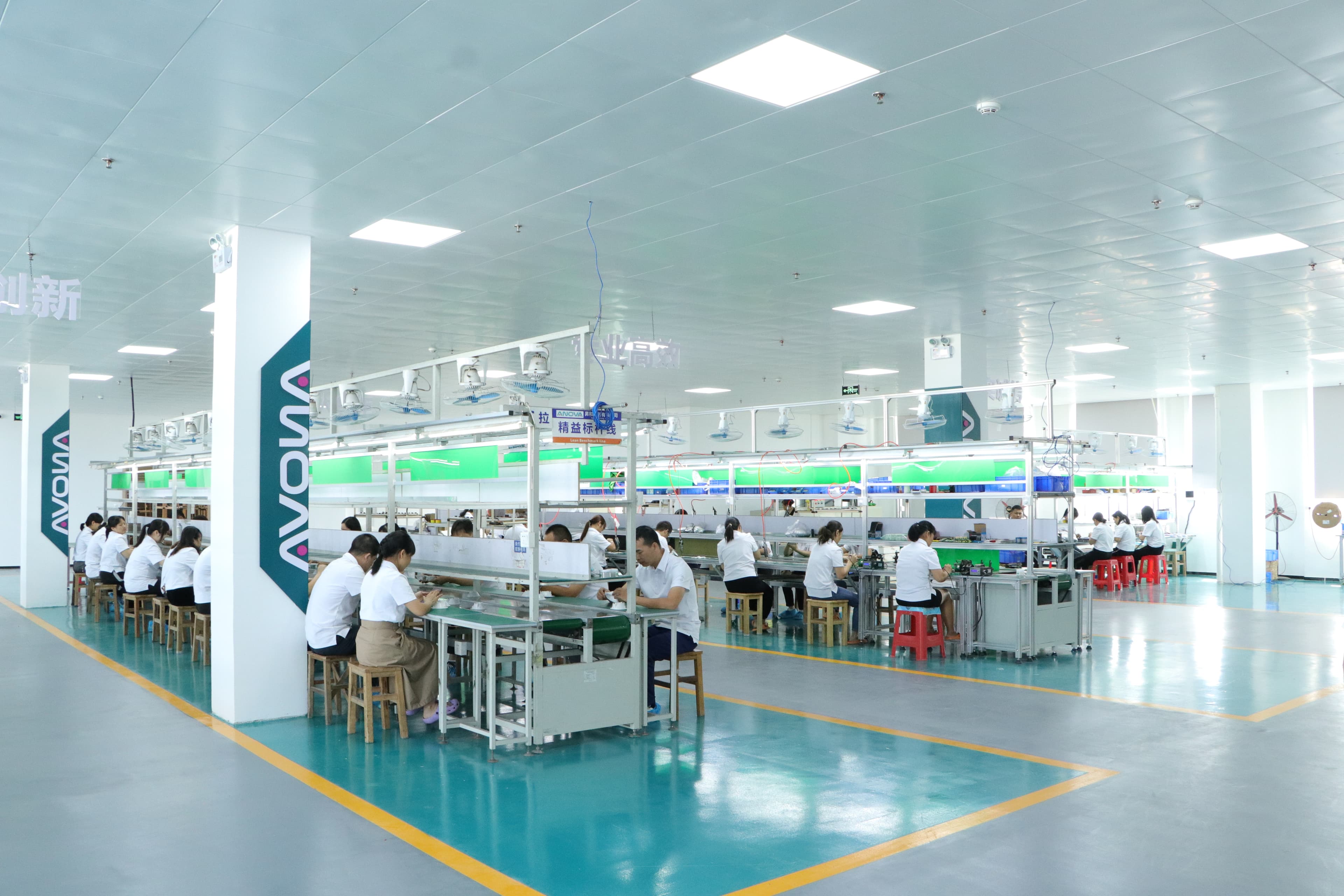
Modular does not mean casual assembly. Each approved combination still needs review for thermal behavior, optical performance, driver compatibility and mechanical fit. Factory testing and sample approval should be based on the exact configuration that will be shipped.
Professional buyers should ask which combinations are standard, which require additional validation and which changes may affect certification or lead time.
Conclusion
Modular lighting design is a practical way to balance flexibility and control. It helps buyers answer more project requirements without building an oversized product catalog.
The best results come when the buyer and manufacturer treat the platform as a system: LED engine, optic, housing, trim, driver and installation accessories working together.