Many commercial projects begin downlight selection by comparing wattage and lumen output. That is understandable because both numbers are easy to read on a datasheet. But they are not enough to predict how the lighting will feel after installation.
A recessed LED downlight with acceptable wattage and lumen output can still create visible glare, uneven illumination, poor color rendering, inconsistent color between luminaires, incompatible dimming or difficult replacement and maintenance. These problems often appear after the ceiling is closed, when changes are expensive and project schedules are tight.
Choosing a commercial LED downlight for a high-demand project is therefore a balance between visual comfort, lighting performance, installation conditions and long-term maintenance. The right product should support the space, not only satisfy a single number on a specification sheet.
Share your ceiling height, cut-out size, application, beam requirement, dimming system and project quantity. Our team can help review the downlight configuration for your project.
1. Why wattage and lumens are not enough
Two architectural downlights with the same wattage and similar lumen output can perform very differently in a hotel lobby, restaurant dining room or retail display area. The difference comes from the full optical and electrical system, not from power consumption alone.
Optical design affects how light leaves the luminaire. Beam distribution determines whether the floor, wall, table or merchandise receives the intended light. Cut-off angle influences whether the light source is visible to people walking through the space. Installation height, surface reflectance and luminaire spacing change how the same product behaves in different rooms.
Color quality and driver performance also matter. A downlight can be bright but still make materials look flat or food look less appealing. A driver can power the luminaire but still create unstable dimming if it is not matched with the control system. For commercial investigation and project search, buyers should avoid selecting from a single datasheet number in isolation.
- Review optical design, not only total lumen output.
- Check beam distribution against the actual ceiling height and spacing.
- Confirm driver and dimming behavior before project approval.
- Compare color quality and color consistency for luminaires installed in the same space.
2. Start with the project application
The same commercial LED downlight is not automatically suitable for every project. Hotel downlights, restaurant downlights, retail lighting and corridor lighting have different priorities. A product that works well for accent lighting may not create comfortable guidance in a corridor. A wide beam that feels calm in a circulation area may look too flat in a retail display.
Hotel downlights usually need visual comfort and a warm, consistent atmosphere. Guest rooms should support relaxation. Corridors should guide movement without harsh brightness. Reception and public areas often need a more layered effect, while maintenance access remains important because hotel operations cannot stop for complicated replacement work.
Restaurant downlights should support food color rendering, table-focused lighting and glare control. Dimming is often important because the atmosphere may change between daytime service and evening dining. Retail lighting usually needs stronger contrast, merchandise color accuracy and flexible beam angles because displays change over time. Corridor lighting depends more on uniformity, spacing, continuous guidance, low glare and maintenance efficiency.
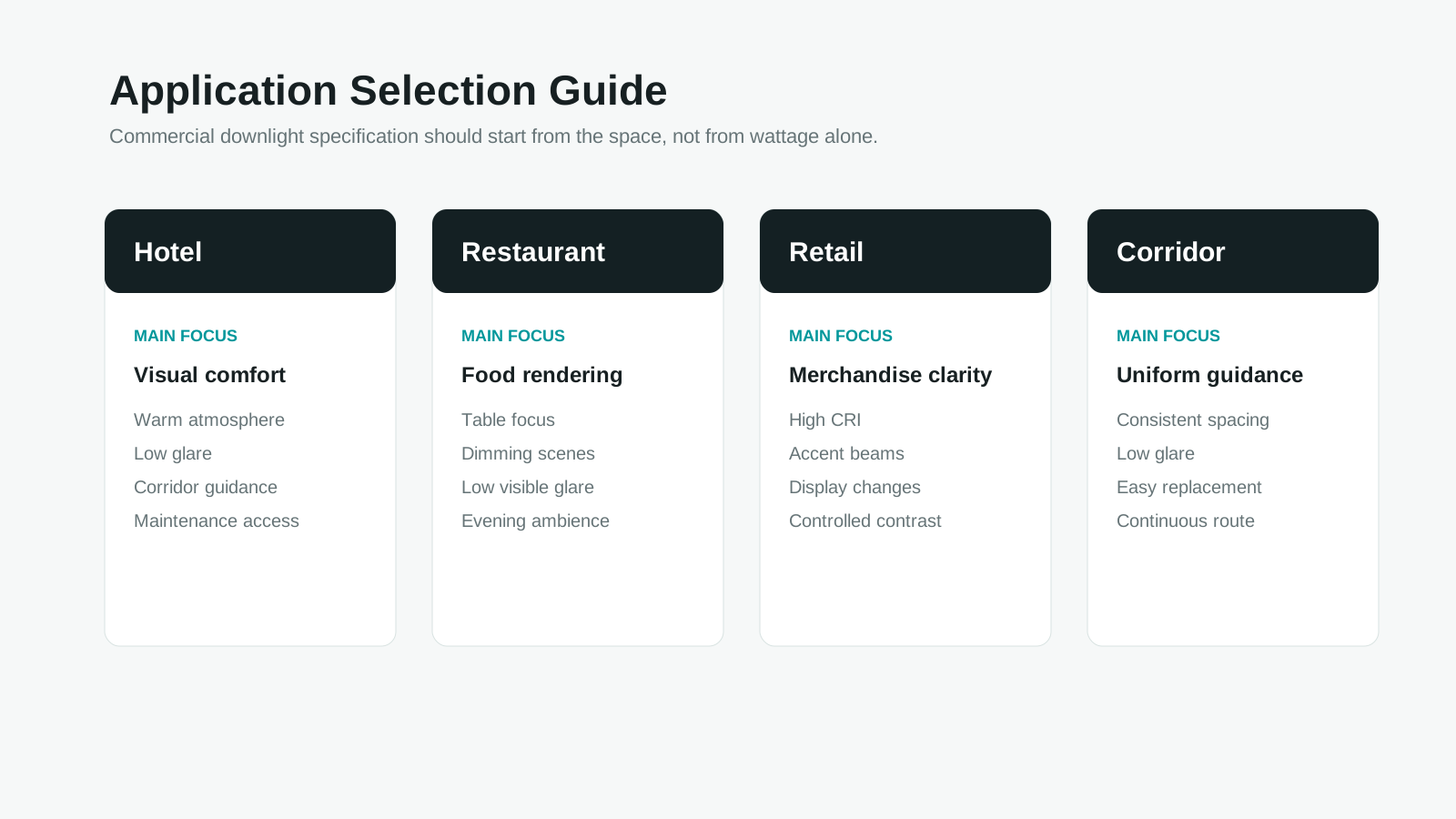
| Application | Main Lighting Goal | Recommended Beam Approach | Color Rendering Priority | Dimming Requirement | Maintenance Consideration |
|---|---|---|---|---|---|
| Hotel | Comfort, atmosphere and guidance | Medium or controlled wide beams for calm ambience; accent beams for public areas | High consistency and natural material appearance | Often useful for guest rooms and public areas | Easy access in corridors, rooms and shared spaces |
| Restaurant | Food presentation and table focus | Narrow to medium beams depending on table layout | Important for food, wood, fabric and skin tones | Important for day-to-evening scene changes | Driver access should be planned before ceiling closure |
| Retail | Merchandise clarity and visual contrast | Narrow or adjustable beams for displays; medium beams for general areas | Very important for product color accuracy | Depends on store concept and control system | Flexible aiming and future display changes matter |
| Corridor | Uniform guidance and safe movement | Medium or wide beams with controlled spacing | Moderate to high consistency across repeated luminaires | Usually simple control, unless connected to building system | Efficient replacement reduces operational disruption |
3. Evaluate glare control before increasing brightness
Downlight glare is one of the most common complaints in commercial interiors. It may come from an exposed light source, a shallow reflector, an inappropriate beam angle, excessive output, incorrect spacing or poor cut-off design. Increasing brightness can make the problem worse if the optical structure is not suitable for the space.
Low glare should not be achieved only by reducing brightness. A project still needs enough useful light on the target surface. Better results usually come from optical structure, cut-off angle, reflector design, deep-set light source placement and a layout that respects viewing angles.
For hotel, restaurant and corridor lighting, glare should be reviewed from normal eye positions: standing, seated, entering the room and walking along the route. A luminaire that looks acceptable from directly below may still feel uncomfortable from the side.
4. Select the right beam angle
Beam angle decides how concentrated or wide the light appears. A narrow beam is useful for accent lighting, display focus and higher ceilings where light needs to reach a target area with more intensity. A medium beam is often suitable for general commercial lighting where the project needs a balance between coverage and direction. A wide beam can work well for lower ceilings, circulation areas and uniform ambient lighting.
The right beam angle depends on ceiling height, luminaire spacing, target surface, desired contrast and room function. A retail wall may need a different beam than the aisle next to it. A hotel corridor may need continuous guidance rather than dramatic contrast. A restaurant table may need a focused pool of light without exposing the source to seated guests.
For high-demand projects, it is useful to test more than one beam angle before final approval. This gives designers and buyers a clearer view of beam edge, spill light, vertical surface brightness and whether the downlight supports the intended atmosphere.
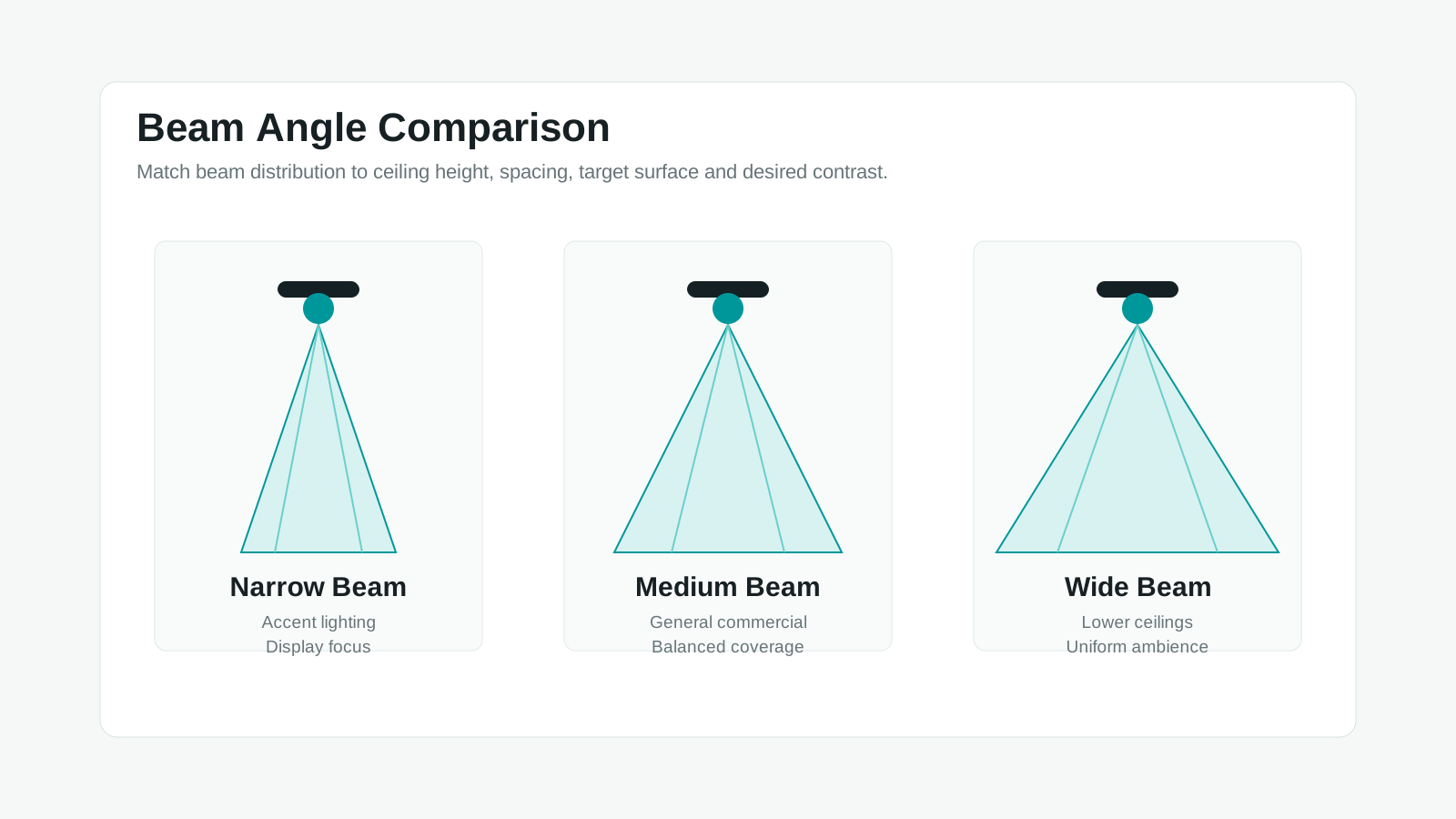
| Beam Approach | Typical Use | Project Notes |
|---|---|---|
| Narrow beam | Accent lighting, displays, high ceilings | Creates focus and contrast; spacing and aiming need careful review |
| Medium beam | General commercial lighting | Balances coverage and direction for many interiors |
| Wide beam | Lower ceilings, corridors, ambient lighting | Supports uniformity but may reduce contrast if overused |
5. Check CRI, R9 and color consistency
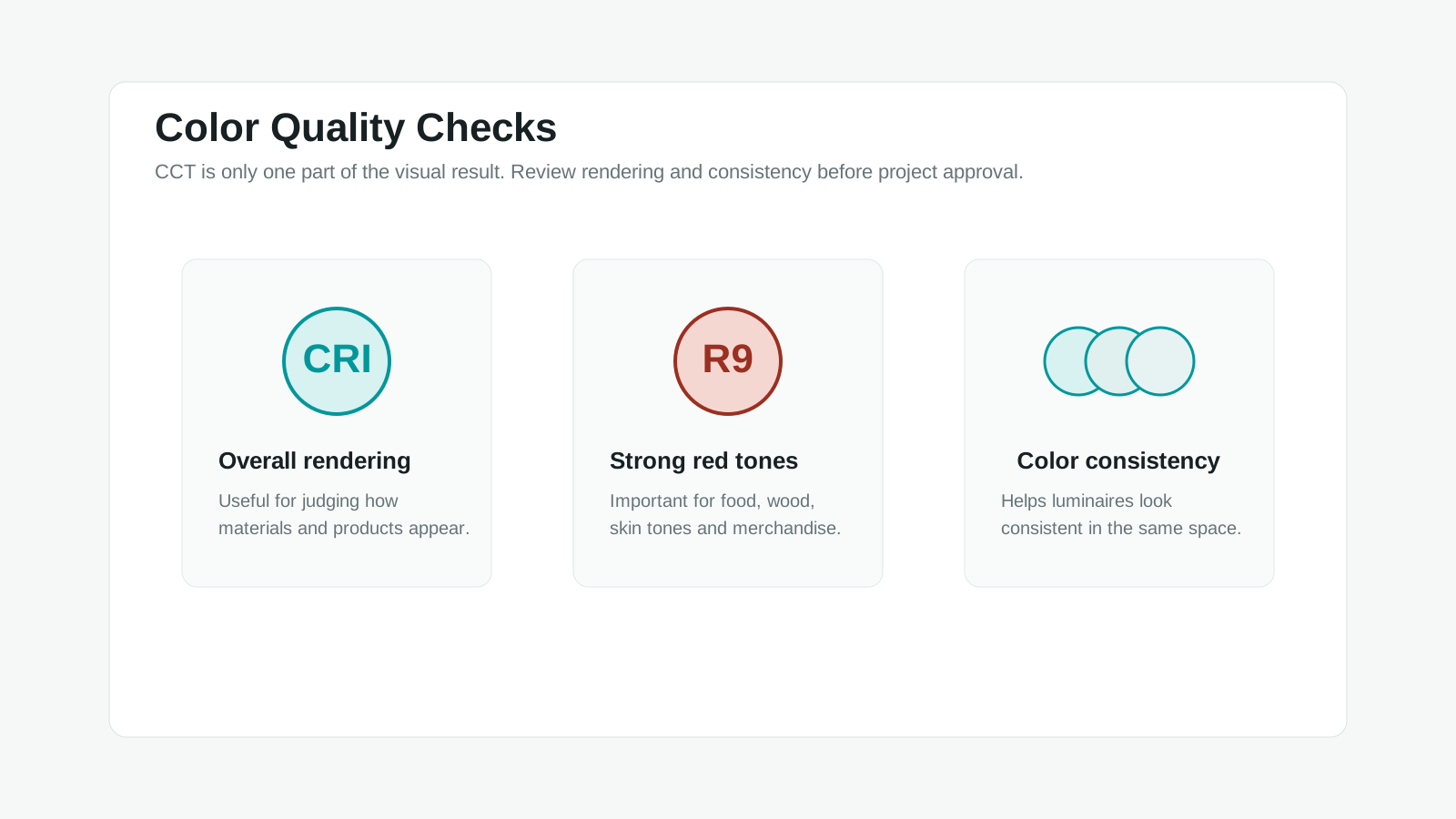
CCT tells you whether the light appears warm, neutral or cool. It does not tell you enough about how materials, food, skin tones or merchandise will look. For hotel downlight, restaurant downlight and retail lighting projects, color quality should be reviewed more carefully.
CRI affects overall color rendering. R9 is especially relevant for strong red tones, which can influence food, wood, skin tones and many retail products. Color consistency, often discussed through SDCM or binning control, affects whether multiple luminaires in the same space appear visually consistent.
ANOVA project materials already reference high color-rendering configurations such as CRI90 and CRI97+ in the existing modular platform content. For an actual order, buyers should still confirm the required CRI level, whether R9 is important for the application and how color consistency will be controlled for the project batch.
6. Consider modular design and future maintenance
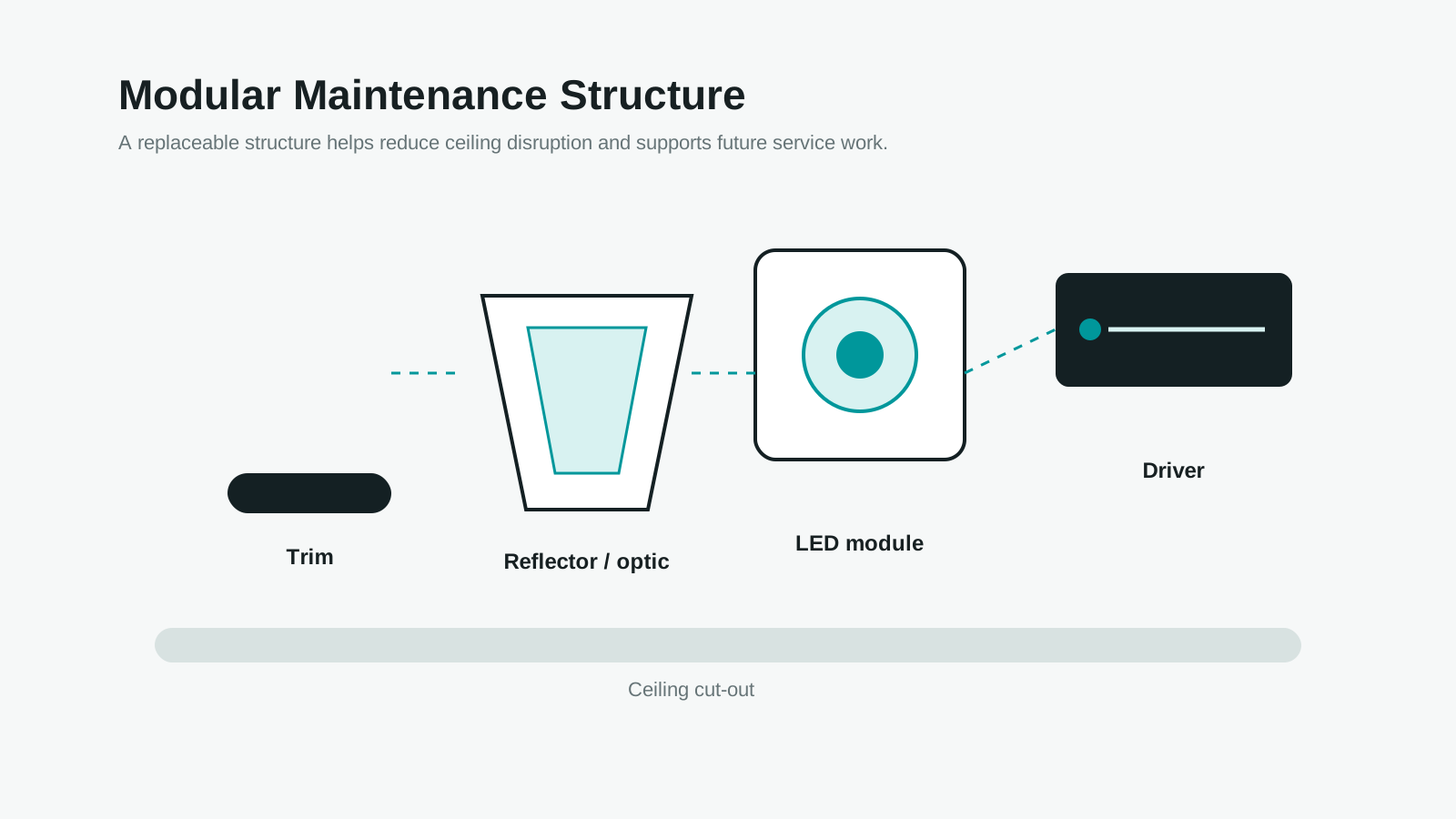
Difficult maintenance is often caused by the structure of the luminaire, not only by product failure. If the LED module, driver, reflector or trim cannot be accessed or replaced conveniently, maintenance can damage ceilings, delay operations and create inconsistent replacements over time.
A modular downlight structure can support optical module replacement, driver replacement, beam angle adjustment, trim or reflector changes and easier service planning. It can also help reduce ceiling damage because the project team may not need to remove the full fixture body for every service event.
This matters in hotels, corridors, restaurants and retail stores where downtime has a direct operational cost. A commercial LED downlight should be evaluated not only for the first installation, but also for how it will be maintained after several years of use.
7. Confirm dimming and control compatibility
Dimming should be confirmed early, not after products arrive on site. DALI, 0-10V, TRIAC and Casambi can all be useful, but they serve different project conditions. No dimming method should be treated as suitable for every commercial project.
DALI is often used for centralized control and larger commercial projects. 0-10V is common in many commercial dimming systems. TRIAC may be relevant for retrofit projects and some traditional wiring conditions. Casambi can support wireless control and flexible scene setting where the project allows that approach.
The project team should check the driver, control system, wiring and minimum dimming performance together. If compatibility is confirmed too late, the result may be flicker, limited dimming range, unstable low-end dimming or additional site work.
8. Check installation conditions
A recessed LED downlight is part of the ceiling system. Before ordering, project teams should confirm ceiling cut-out, ceiling depth, insulation conditions, driver location, ventilation, mounting surface, emergency lighting requirements, local electrical standards and access for maintenance.
These details directly affect product selection. A downlight that is optically suitable may still be impractical if the ceiling depth is not enough or the driver cannot be placed in an accessible location. Waiting until products arrive on site creates unnecessary risk.
For hotel and retail projects, installation conditions should be shared with the supplier during selection. Drawings, ceiling details, dimming requirements and project quantity help the supplier review whether the proposed configuration is realistic.
9. Common commercial downlight selection mistakes
Several selection mistakes appear repeatedly in commercial downlight projects. The first is choosing only by wattage. The second is using one beam angle throughout the project, even when rooms, ceiling heights and surfaces are different. The third is ignoring glare until after installation.
Other mistakes include selecting high CRI without checking R9 and color consistency, confirming dimming too late, overlooking ceiling depth, using non-replaceable structures in high-maintenance areas and choosing products without considering future availability.
These issues are avoidable when the specification process starts with application, installation and control requirements. A suitable downlight specification should be based on the space, installation conditions and control requirements rather than selected from a catalogue in isolation.
- Choosing only by wattage or lumen output.
- Using one beam angle throughout the whole project.
- Ignoring downlight glare until after installation.
- Checking CRI but not R9 or color consistency.
- Confirming dimming protocol after the ceiling plan is fixed.
- Overlooking ceiling depth, cut-out and driver access.
- Using non-replaceable structures in high-maintenance areas.
- Ignoring future availability for repeated project phases.
10. Commercial downlight project checklist
A clear checklist helps lighting designers, electrical contractors, hotel project buyers and lighting importers align before quotation, sampling or production. It also reduces the risk of receiving a product that is technically correct but unsuitable for the site.
The checklist below can be saved or forwarded during project discussions.
- Application: hotel, restaurant, retail, corridor or other commercial area.
- Ceiling height and luminaire spacing.
- Ceiling cut-out size and ceiling depth.
- Target lux level or required lighting effect.
- Beam angle and desired contrast.
- Glare requirement and viewing conditions.
- CRI, R9 priority and CCT.
- Color consistency expectation across luminaires.
- Dimming protocol: DALI, 0-10V, TRIAC, Casambi or non-dimmable.
- Driver location and access method.
- Maintenance method and replacement expectation.
- Emergency lighting requirement if relevant.
- Project quantity, packaging needs and delivery schedule.
11. How ANOVA supports commercial downlight projects
ANOVA supports project-based product selection for recessed and architectural downlight solutions. The existing product platform includes commercial LED downlights, LED modules and modular lighting design resources that help buyers discuss the downlight as a system: optic, module, trim, housing and driver.
Depending on the project requirement, ANOVA can discuss low-glare optical options, high color-rendering configurations, different beam angle choices, modular structures, DALI, 0-10V, TRIAC and Casambi options, and OEM or ODM customization where applicable.
This support is most useful when the buyer shares the application, ceiling height, cut-out size, beam requirement, dimming system and project quantity early. Those details make it easier to review whether a standard configuration is enough or whether a more project-specific approach is needed.
Conclusion
Commercial downlight selection is not a simple comparison of wattage and lumens. A high-demand project needs the right application fit, glare control, beam angle, color quality, dimming compatibility, installation planning and future maintenance path.
For hotels, restaurants, retail stores and corridors, the most reliable specification process starts from the space and works back to the luminaire. That approach helps avoid visible glare, uneven lighting, color inconsistency, dimming problems and difficult maintenance after installation.
FAQ
What is the best beam angle for commercial LED downlights?
There is no single best beam angle. Narrow beams are useful for accent lighting and displays, medium beams suit many general commercial areas, and wide beams support lower ceilings or circulation spaces. The choice should match ceiling height, spacing and target surface.
How can downlight glare be reduced?
Downlight glare can be reduced through optical design, cut-off angle, reflector structure, deep-set light source placement and correct spacing. Reducing brightness alone may not solve the problem if the luminaire design is unsuitable.
What CRI is suitable for hotel and retail lighting?
Hotel and retail projects often require high color-rendering configurations because materials, skin tones and merchandise appearance matter. Buyers should review CRI together with R9, CCT and color consistency instead of checking CCT alone.
What is the difference between architectural and standard recessed downlights?
Architectural downlights usually place more emphasis on visual comfort, beam control, finish quality, modular options and integration with the interior design. Standard recessed downlights may be adequate for basic illumination but may not meet demanding project expectations.
Are modular downlights easier to maintain?
They can be easier to maintain when the LED module, driver, trim or optical components are designed for practical access. The final result also depends on ceiling conditions, driver location and replacement compatibility.
Which dimming system should be used for a commercial project?
DALI is often used for centralized commercial control, 0-10V is common in many commercial systems, TRIAC may fit some retrofit conditions, and Casambi can support wireless scene control. The driver, wiring and control system must be checked together.
What information is needed before ordering commercial downlights?
Prepare the application, ceiling height, cut-out size, ceiling depth, target lighting effect, beam angle, CRI and CCT requirement, dimming protocol, driver location, maintenance expectation, quantity and delivery schedule.