
Selecting a lighting manufacturer is not only about comparing unit prices. Professional buyers need to understand whether the supplier can translate requirements into a stable product, prepare reliable samples, control production quality and support shipment documentation.
A strong supplier conversation should include engineering, product application, quality control and commercial communication. This checklist can help lighting brands, importers and project suppliers evaluate manufacturers more clearly.
Send your application, ceiling condition, beam angle and dimming requirements for a practical review.
Check engineering communication first
Good engineering communication shows up early. The manufacturer should ask about application, ceiling type, beam angle, CCT, CRI, driver protocol, target market and expected quantity. If the discussion starts and ends with wattage and price, important project details may be missed.
For ODM or OEM work, ask how the supplier reviews optical, thermal and mechanical requirements. A practical answer is more valuable than a long claim.
Review samples with clear approval criteria
Samples should be reviewed against agreed criteria: appearance, finish, beam effect, CCT, driver behavior, installation fit and packaging. Keep written notes so that changes are not lost before production.
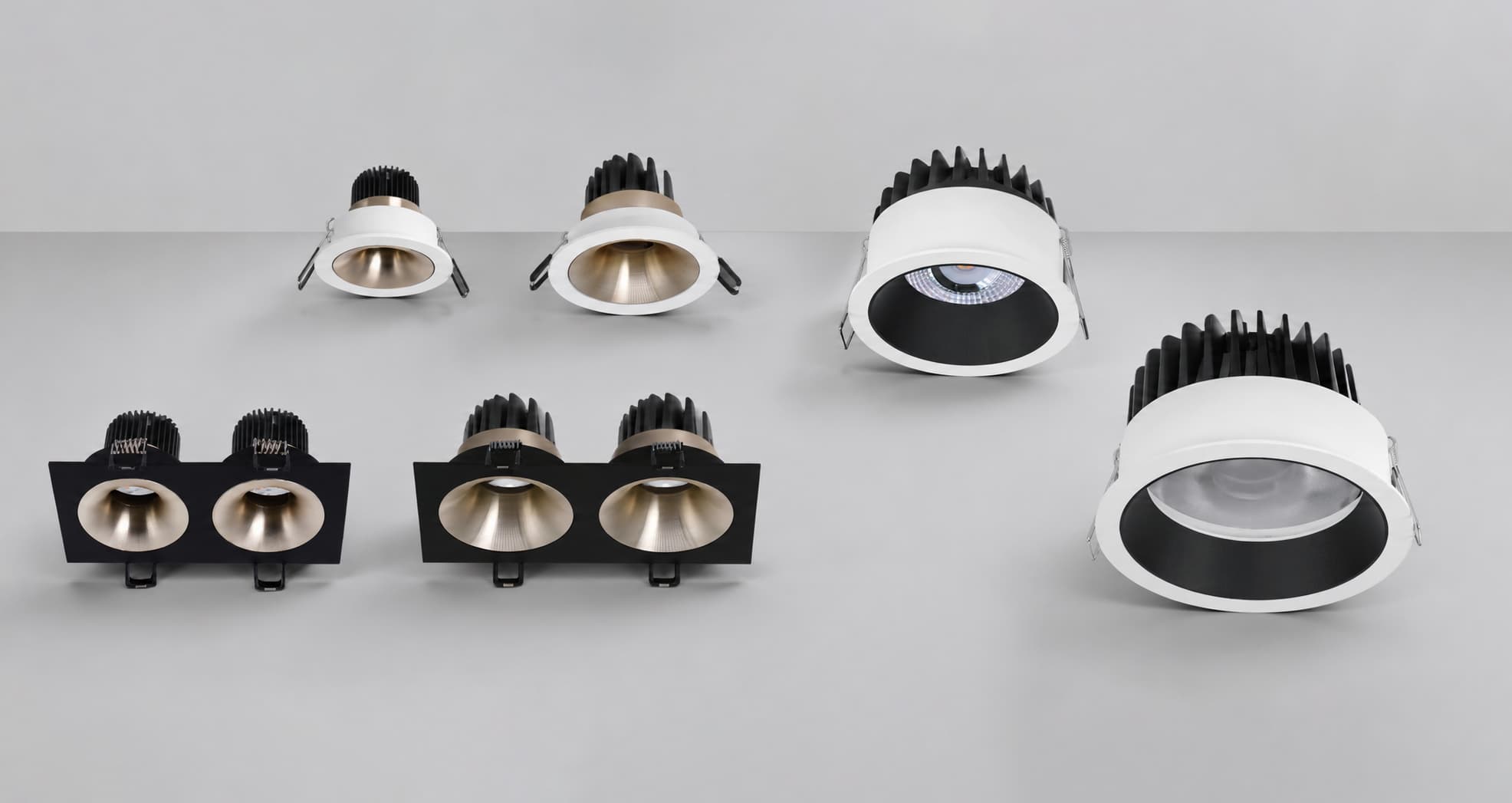
If several versions are being tested, mark each sample clearly. This avoids confusion when a project includes different beam angles, trims or dimming options.
- Confirm product code and configuration.
- Check visible finish and accessory completeness.
- Review beam effect in the intended application context.
- Record any requested changes before mass production.
Understand factory testing and shipment inspection
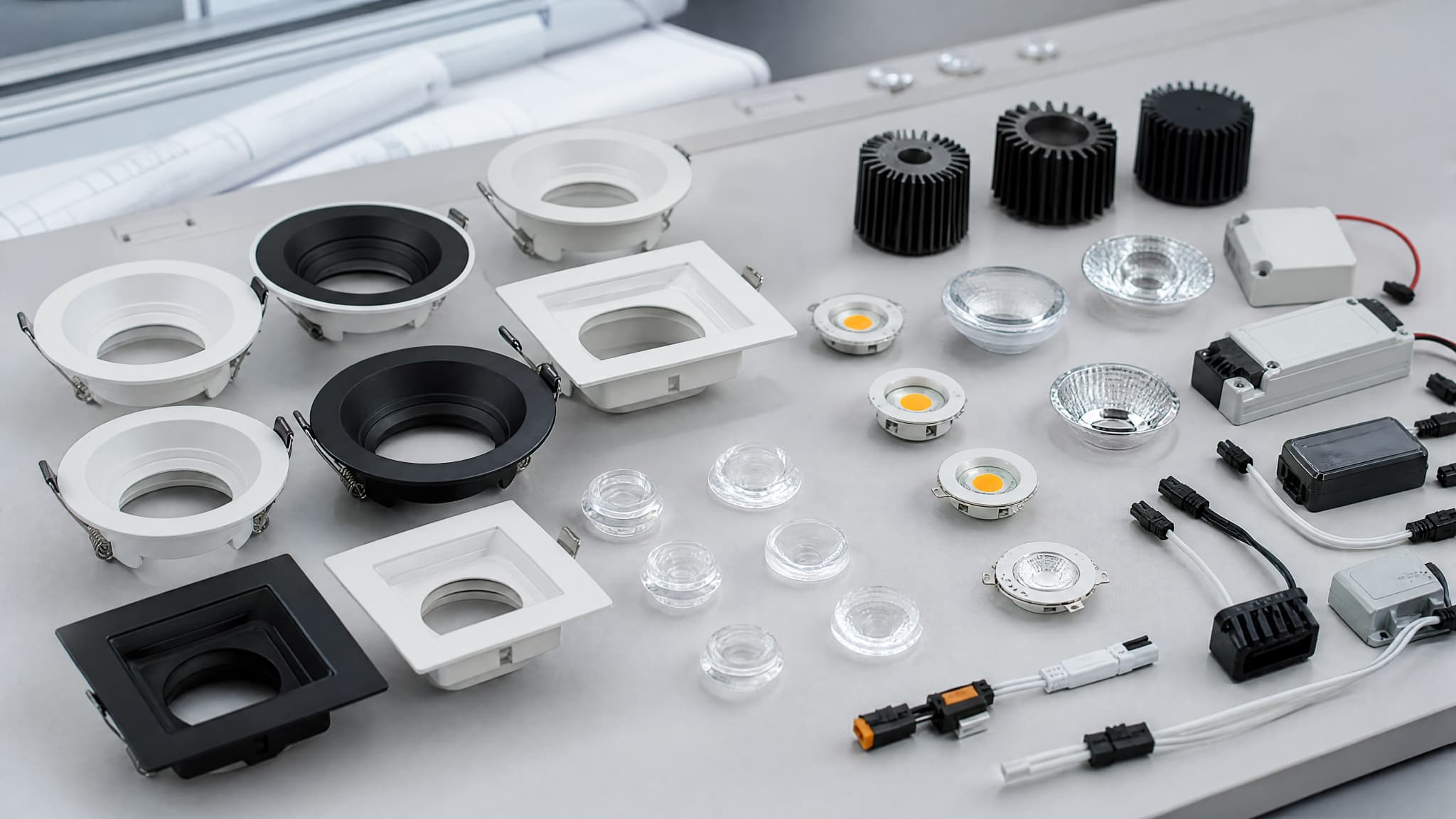
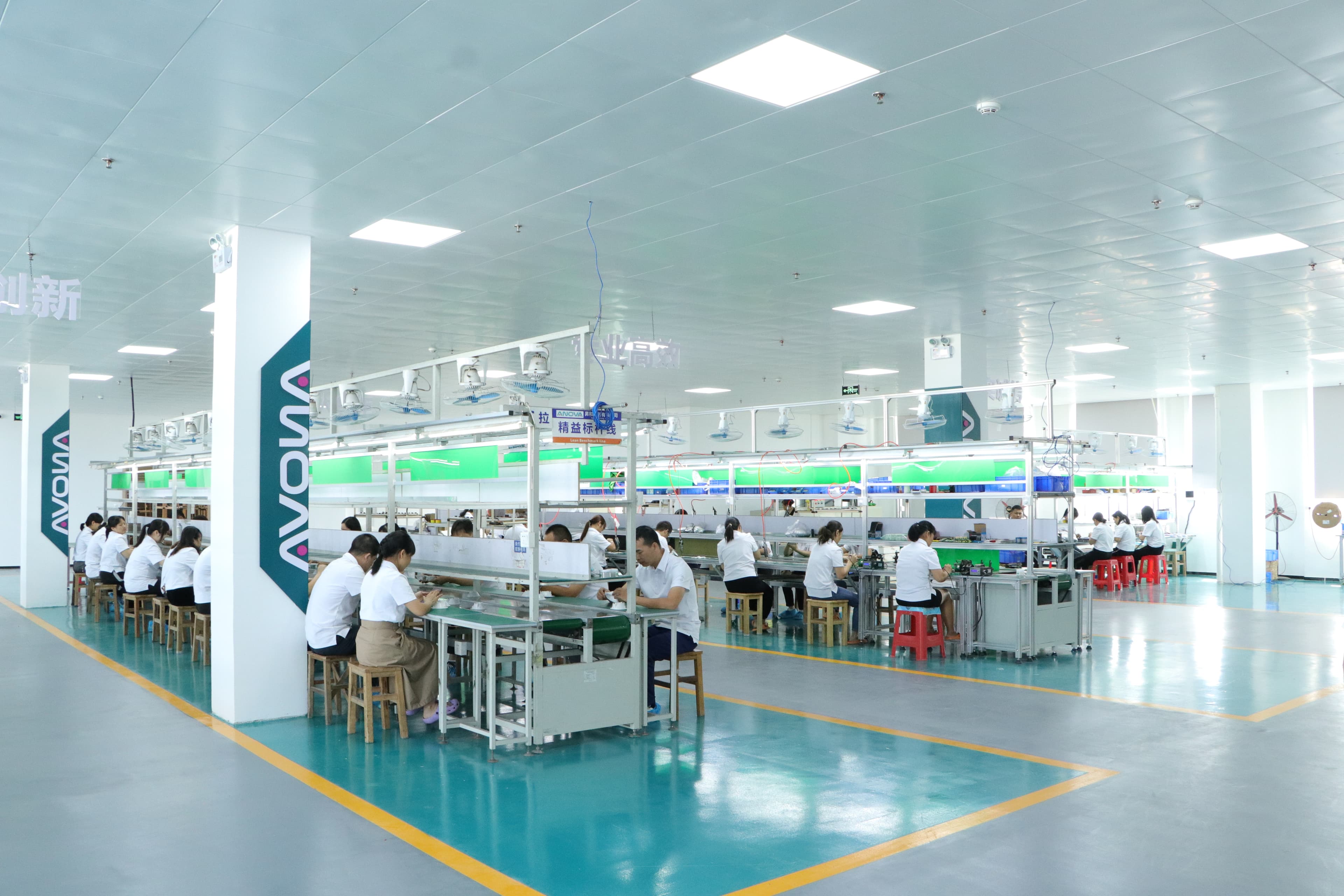
Factory testing should be aligned with the product type and application. For LED downlights and modules, buyers commonly care about electrical function, light output consistency, thermal management, driver matching and appearance quality.
Shipment inspection should verify that production goods match the approved sample and purchase order. Labels, packaging, quantities, accessories and visible finish should be checked before dispatch.
Ask for usable documentation
Professional buyers need more than product photos. Datasheets, installation notes, packaging information and clear product coding help the sales and project teams avoid mistakes.
For private label or OEM programs, documentation also supports local marketing and after-sales communication. Ask what can be prepared before the first production order.
Evaluate long-term fit, not only the first order
A manufacturer may be suitable for one urgent order but not for a long-term product platform. Consider whether the supplier can support repeat orders, configuration management, product updates and future project variations.
The best sourcing decision balances cost, reliability, communication speed and technical fit.
Conclusion
A reliable lighting manufacturer should help reduce uncertainty. The buyer should leave early discussions with clearer product direction, not only a price list.
Use engineering communication, sample discipline, factory testing and shipment inspection as the core evaluation points before committing to a long-term supplier.